


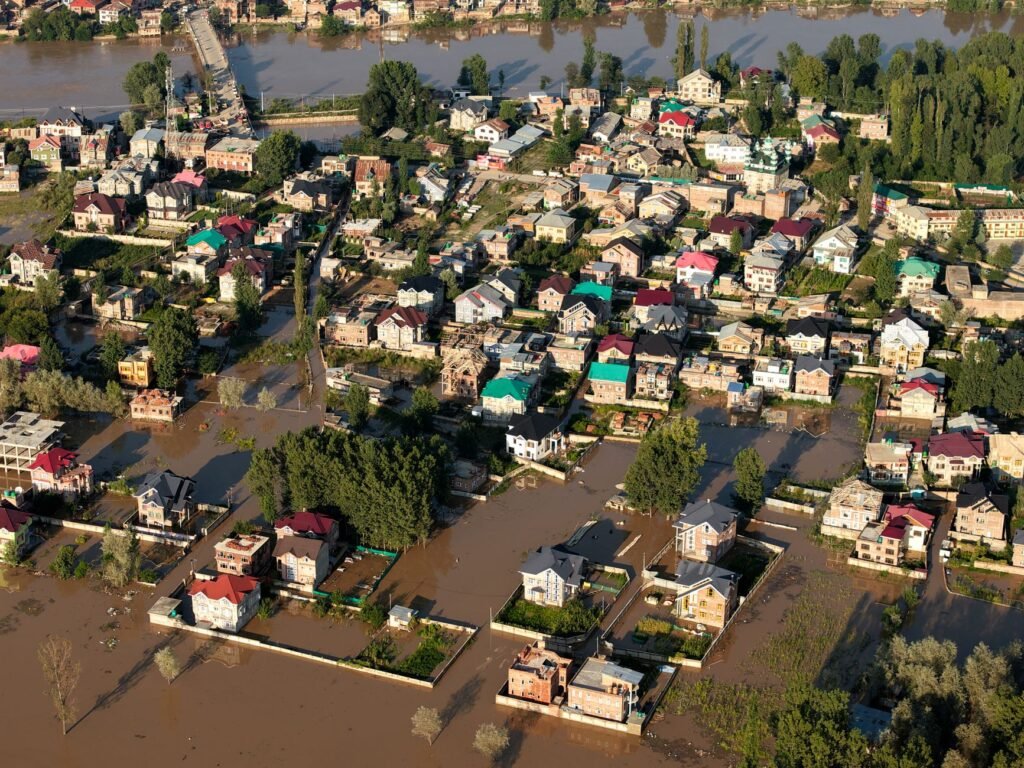
The Jammu and Kashmir government has identified 654 villages across the Kashmir Valley as vulnerable to flashfloods and landslides, posing a risk to an estimated population of 7.22 lakh people. This proactive measure comes as authorities work to bolster disaster preparedness in the region, which has experienced erratic weather patterns.
As a precautionary step, 1,505 individuals residing in these at-risk areas have already been relocated to designated rescue centers. Evacuation plans are reportedly in place for other vulnerable locations, according to officials who provided an update during a high-level meeting. Information reaching Tahir Rihat suggests that the Kashmir Division has established a comprehensive flood preparedness mechanism, with all Deputy Commissioners, district administrations, and relevant line departments placed on high alert. Rescue teams, evacuation centers, emergency equipment, and essential services have been strategically positioned to ensure a swift and coordinated response to any potential eventuality.
During the meeting, officials detailed the resources mobilized for rescue and relief operations. These include 744 rescue centers, 108 State Disaster Response Force (SDRF) boats, 25 Army boats, 98 satellite phones, and 102 identified helipads. Adequate emergency response funds have also been allocated to strengthen these efforts. District Emergency Operations Centers and the State Emergency Operations Centre are operating around the clock to monitor the evolving situation and coordinate response measures effectively.
The Chief Minister, who chaired the meeting, reviewed the ongoing restoration works, relief measures, and the overall flood preparedness across Jammu and Kashmir. The meeting was attended by key officials including the Minister for Health, Education and Social Welfare, Sakeena Itoo; Chief Secretary Atal Dulloo; Administrative Secretaries; the Divisional Commissioner of Kashmir; and other senior officers. Through video-conferencing, the Minister for Jal Shakti, Forest, Ecology and Environment and Tribal Affairs, Javed Ahmed Rana; the Minister for Youth Services & Sports, Transport, Information Technology, Food, Civil Supplies and Consumer Affairs, Science and Technology, ARI and Trainings, Satish Sharma; the Divisional Commissioner of Jammu; and all Deputy Commissioners also participated.
The Chief Minister underscored the critical need for maintaining a high state of preparedness to effectively manage flood-like situations that may arise due to unpredictable weather patterns. He emphasized the importance of implementing long-term flood mitigation strategies, acknowledging that recurring flood-like events necessitate sustained planning and the development of resilient infrastructure. The Chief Minister issued directives to the concerned departments to take all necessary steps to minimize loss of life and property. He also stressed the importance of restoring essential services, particularly drinking water and electricity, within a 24-hour timeframe, prioritizing vulnerable locations, and intensifying efforts to locate and retrieve any missing persons.
Further directives were issued to the Divisional Commissioners of Kashmir and Jammu to conduct an immediate assessment of the flood situation and identify the most severely affected districts. The Chief Minister also mandated that adequate funds, following the pattern established during the 2025–26 fiscal year, be placed at the disposal of the Deputy Commissioners in these districts to facilitate immediate relief, rehabilitation, and the restoration of damaged infrastructure. The meeting also included a review of the rescue and relief operations underway in the flood-affected districts of Poonch and Rajouri. The district administrations were instructed to ensure that all relief camps are adequately provisioned with essential food supplies, clean drinking water, and medical facilities for the displaced population.
Reports from the meeting indicated that joint rescue and relief operations, involving the civil administration, police, SDRF, National Disaster Response Force (NDRF), Army, Border Roads Organisation (BRO), and other line departments, were initiated immediately following the flashfloods and are continuing in the affected areas. The Chief Minister specifically directed officers to intensify efforts for the restoration of electricity supply in the worst-hit districts of Poonch and Rajouri, noting that the resumption of drinking water supply schemes is largely contingent upon the timely restoration of power infrastructure.


Tahir Rihat (also known as Tahir Bilal) is an independent journalist, activist, and digital media professional from the Chenab Valley of Jammu and Kashmir, India. He is best known for his work as the Online Editor at The Chenab Times.