


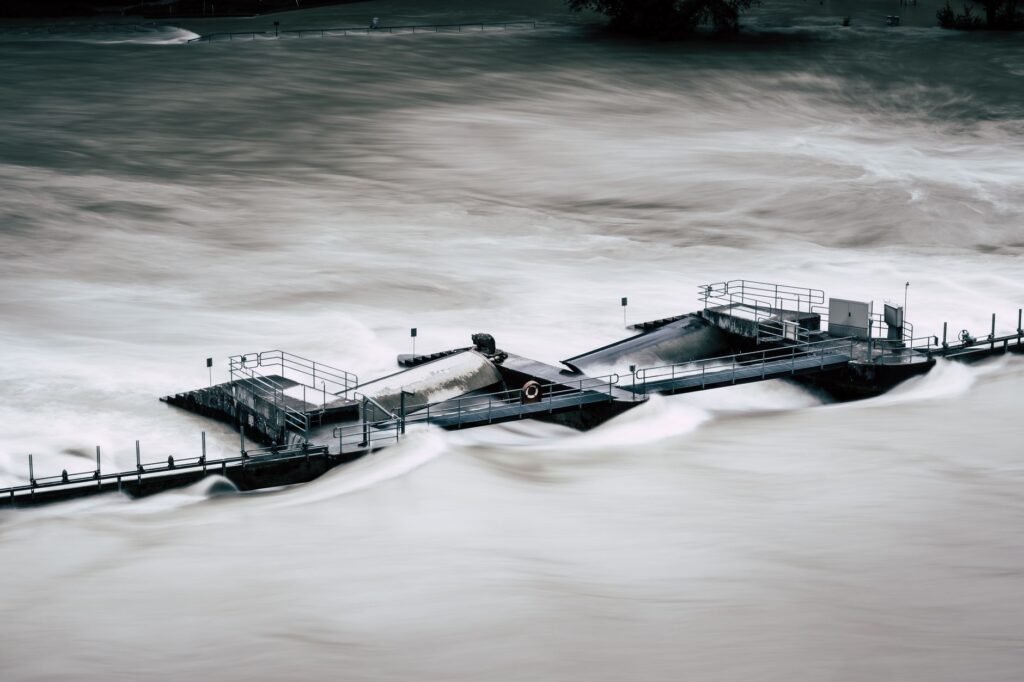
Authorities in Jammu and Kashmir have issued critical safety advisories urging the public to stay away from water bodies as several rivers, including the Chenab and Tawi, are flowing significantly above their danger levels following persistent rainfall across the region. The escalating water levels pose a serious risk of flooding and potential untoward incidents, prompting a heightened state of alert among disaster management agencies.
The Chenab River at Akhnoor recorded a water level of 35.8 feet at 5 pm on Wednesday, which is three notches above the alert level of 32 feet and approaching the evacuation threshold of 42 feet. Officials confirmed that the water level is continuously rising, and all relevant agencies are actively monitoring the dynamic situation. This surge is a direct consequence of incessant rainfall that has saturated the catchment areas, leading to increased water discharge into the river systems.
Information reaching Tahir Rihat suggests that the Tawi River in Jammu is also experiencing elevated water levels, exceeding the danger mark. In response to this critical development, the National Disaster Response Force (NDRF) has initiated public awareness campaigns in vulnerable areas. NDRF personnel have been deployed to strategic locations, including the Gujjar Nagar bridge, equipped with loudspeakers to broadcast safety warnings. These warnings are aimed at preventing people from venturing near the riverbanks, stopping on bridges, parking vehicles close to the swollen waters, and engaging in risky activities such as taking selfies in proximity to the dangerous currents.
The NDRF’s proactive measures underscore the seriousness of the current hydrological conditions. Residents in areas adjacent to these rivers have been strongly advised to remain vigilant and adhere strictly to the safety guidelines issued by the authorities. The objective is to mitigate any potential loss of life or property and ensure public safety during this period of heightened flood risk. The continuous monitoring by agencies is crucial for timely intervention and effective disaster management.
Beyond the Chenab and Tawi, other river systems in the Union Territory are also showing alarming trends. The Ujh River in Kathua district continues to flow above its danger level of 20 feet. Similarly, the Tarnah Nullah has reached its danger mark of 4.5 feet, and the Basanter River in Samba district has touched its danger level of 4.6 feet. These readings indicate a widespread impact of the recent weather patterns on the region’s riverine ecosystems and highlight the pervasive nature of the flood threat across multiple districts.
The increased water levels in these rivers are a direct indicator of the heavy precipitation received in the higher reaches and the plains. Such conditions necessitate a coordinated response from all stakeholders, including local administration, disaster response teams, and the public. The historical context of rainfall-induced flooding in Jammu and Kashmir further emphasizes the need for preparedness and adherence to official advisories. The authorities are likely to be coordinating relief and rescue efforts should the situation escalate, with evacuation plans in place for low-lying areas if necessary.
The current scenario demands a cautious approach from all residents living in proximity to these water bodies. The continuous monitoring of river levels, coupled with effective communication of warnings, forms the cornerstone of disaster preparedness. The NDRF’s intervention with public awareness measures is a testament to the immediate threat perceived by the authorities. The coming hours and days will be critical in assessing whether the water levels stabilize or continue to rise, potentially necessitating more stringent measures to safeguard lives and property across the affected districts of Jammu and Kashmir.


Tahir Rihat (also known as Tahir Bilal) is an independent journalist, activist, and digital media professional from the Chenab Valley of Jammu and Kashmir, India. He is best known for his work as the Online Editor at The Chenab Times.