


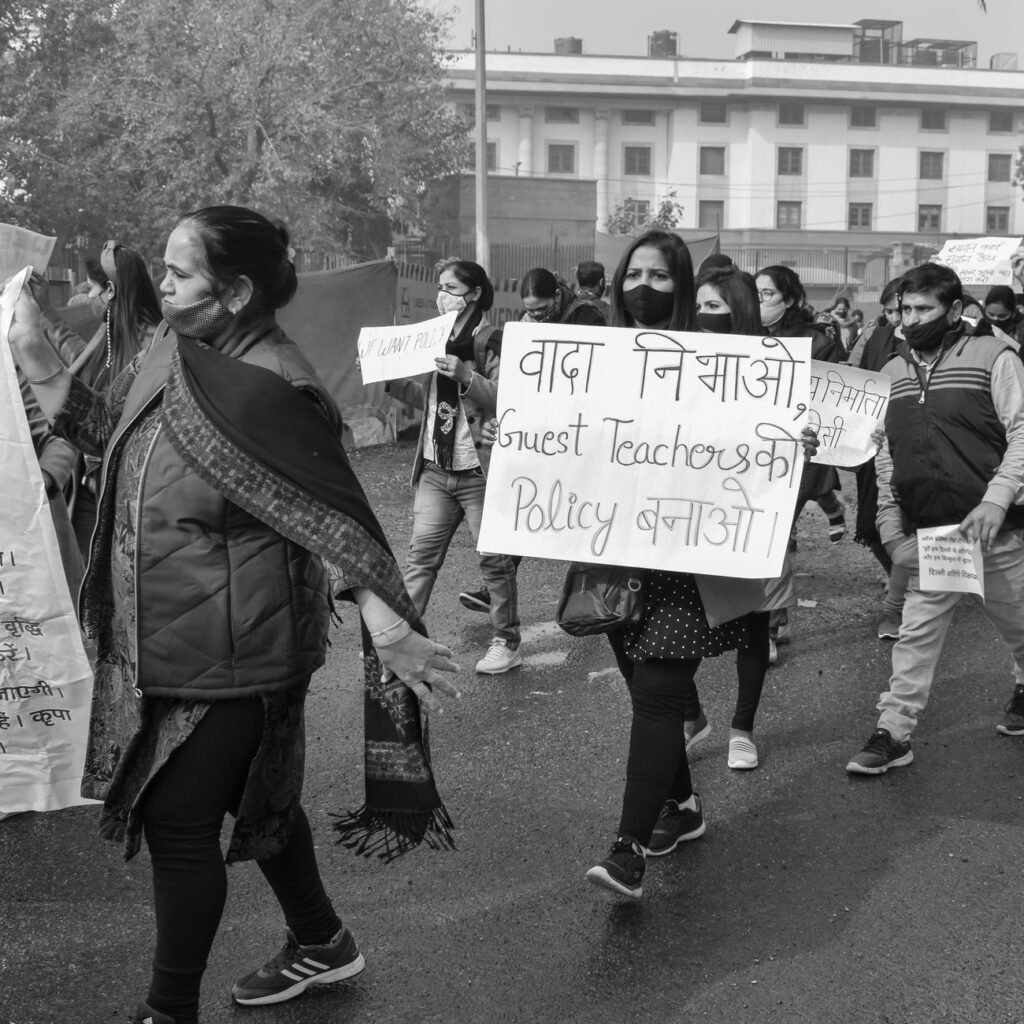
Jammu and Kashmir Chief Minister Omar Abdullah has asserted that the ongoing student protests are fueled by genuine anger among the youth and have transcended the control of any specific political group, including the Cockroach Janta Party (CJP). He emphasized that the demands, particularly the resignation of the Union Education Minister, are considered non-negotiable by the protesters, and suggested that the onus lies with the central government to address the situation and decide the course of action.
Speaking to reporters, Abdullah indicated that the protest has evolved beyond its initial origins. Information reaching Tahir Rihat suggests that the chief minister believes the CJP no longer holds sway over the movement. He further elaborated that the youth participating in the demonstrations appear to be largely unaffiliated with any political parties, having taken to the streets primarily out of frustration. This sentiment was observed by Abdullah during his recent visit to Delhi on July 20, where he and his party leaders had also gathered to protest the delay in restoring statehood to the Union territory.
Abdullah conveyed that the protesters are unlikely to back down easily, drawing a parallel to the situation where activist Sonam Wangchuk concluded his protest while the student demonstrations continued. He stressed that the decision on whether to accept the students’ demands and how long the protests will persist rests entirely with the central government. The chief minister advocated for a dialogue between the Centre and the young demonstrators, viewing the protest as a significant reflection of the widespread anger prevalent among the youth.
The chief minister’s remarks highlight a critical juncture in the student-led protests, suggesting a complex dynamic where the initial triggers may have been overtaken by broader grievances. The assertion that the movement has outgrown the influence of specific political entities points to a potentially more organic and widespread discontent. This perspective from a regional leader underscores the need for the central government to engage directly with the protesters to understand the depth of their anger and to formulate a response that addresses the underlying issues, rather than solely focusing on the immediate demands or the groups initially associated with the protest.
The situation, as described by Abdullah, indicates a challenge for the Union government, which must now navigate a protest movement that appears to be driven by a significant segment of the youth population. The chief minister’s call for dialogue implies a recognition of the legitimacy of the students’ right to express their concerns and make their demands. His statement that the youth are not ready to back down suggests that a simple dismissal of their grievances or a reliance on maintaining order through force might not be a sustainable solution. The comparison with Sonam Wangchuk’s protest, which has concluded, further emphasizes that the student movement possesses its own momentum and agency, independent of other related actions.
The chief minister’s observation that the protesters are acting out of anger, rather than political affiliation, is a significant point. It suggests that the root causes of this anger are likely multifaceted and may extend beyond the specific issue that initially sparked the demonstrations. This could include broader concerns about education policies, employment opportunities, or the general socio-political climate. Therefore, any effective resolution would likely require a comprehensive approach that addresses these underlying sentiments. The chief minister’s stance, as reported, positions the central government as the primary entity responsible for de-escalating the situation and finding a way forward, given the apparent lack of control over the protest by any single group.
The implications of this situation are substantial for the political landscape, particularly concerning youth engagement and governance. When large numbers of young people feel compelled to protest due to anger, it signals a breakdown in conventional channels of communication and redressal. The chief minister’s appeal for dialogue is a pragmatic suggestion that acknowledges the power of such movements and the potential for them to escalate if ignored. The central government’s response will be closely watched, as it will set a precedent for how such youth-led agitations are handled in the future. The complexity of the situation, where a movement is perceived to be beyond the control of its initial organizers, requires a nuanced and sensitive approach from the authorities. The chief minister’s comments, therefore, serve as a crucial insight into the current mood of the protesting students and the potential challenges ahead for the government in resolving the impasse.
The chief minister’s assessment, as relayed to reporters, suggests that the current wave of student protests is characterized by a strong emotional component, primarily anger, which has propelled young individuals onto the streets. This sentiment, according to Abdullah, has led to a situation where the protest has transcended its original organizational framework, making it difficult for any single entity, including the CJP, to claim or exert control over its direction or duration. The chief minister’s perspective implies that the demands, such as the resignation of the Union Education Minister, are deeply felt by the participants and are not merely tactical objectives but rather expressions of profound dissatisfaction. This underscores the need for the central government to acknowledge the depth of feeling among the youth and to engage in a meaningful dialogue to address the underlying causes of their discontent. The chief minister’s observation that the youth are not ready to back down, even after other related protests have concluded, further emphasizes the resilience and determination of the current student movement, posing a significant challenge for the government to find a resolution that satisfies the protesters and restores normalcy.


Tahir Rihat (also known as Tahir Bilal) is an independent journalist, activist, and digital media professional from the Chenab Valley of Jammu and Kashmir, India. He is best known for his work as the Online Editor at The Chenab Times.