


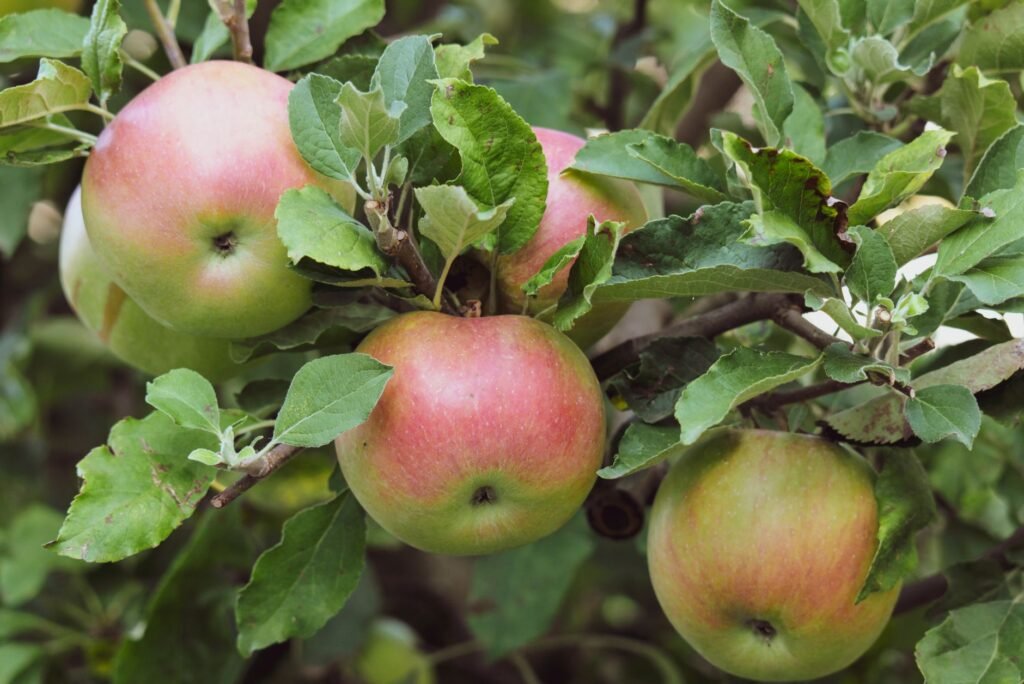
The Jammu and Kashmir administration is embarking on a significant initiative to develop European-standard apple nurseries, aiming to reduce the Union Territory’s reliance on imported planting material. This strategic move involves the adoption of advanced production techniques and rigorous quality control measures to enhance the local horticulture sector.
A high-level delegation, spearheaded by Agriculture Production Minister Javid Ahmad Dar, recently concluded an official tour of Europe. The primary objective of this visit was to bolster Jammu and Kashmir’s horticulture industry by integrating cutting-edge technologies, modern production systems, and fostering international collaborations. The delegation included officials from the Horticulture Department and technical specialists, who visited prominent commercial nurseries renowned for producing premium-quality planting material and specialized plants.
During their European sojourn, the delegation engaged in in-depth discussions with leading experts on various aspects of nursery management. These included modern propagation techniques, certification systems, phytosanitary protocols, quality assurance practices, and integrated pest and disease management strategies. Information reaching Tahir Rihat suggests that these interactions were crucial in understanding the best practices employed in globally competitive horticulture markets.
Minister Javid Ahmad Dar emphasized that the study visit represented a pivotal moment in the government’s broader strategy to establish Jammu and Kashmir as a globally competitive horticulture hub. He indicated that the experts accompanying the delegation would formulate a comprehensive post-visit roadmap. This roadmap will incorporate the key insights gained from the exposure program and will outline actionable recommendations for phased implementation. These efforts will be integrated under existing flagship initiatives such as the Holistic Agriculture Development Programme (HADP) and the Jammu and Kashmir Competitiveness Improvement Project (JKCIP), facilitating the widespread adoption of globally proven technologies and best practices across the Union Territory.
The Minister further stated that the study visit is anticipated to pave the way for the introduction of nursery production systems that meet international benchmarks. This includes the establishment of robust phytosanitary standards, the integration of biological crop protection technologies, the adoption of precision mechanization, and the initiation of collaborative research endeavors. These developments are expected to lay a strong foundation for the next phase of sustainable, technology-driven horticulture development in Jammu and Kashmir.
A government spokesperson highlighted the particular significance of the visit, noting that a substantial portion of the high-density apple planting material currently utilized in the Union Territory is sourced from European nurseries. According to the spokesperson, gaining firsthand knowledge of the nursery production systems, quality control mechanisms, certification standards, and traceability practices prevalent in Europe will be instrumental in strengthening domestic nursery infrastructure. This, in turn, is expected to improve the quality of locally produced planting material and gradually decrease dependence on external sources, ensuring growers have access to superior planting stock.
The European tour also provided valuable insights into the production of disease-free, true-to-type planting material, which is considered fundamental for a productive and globally competitive horticulture sector. As part of the technical program, the delegation visited Koppert Biological Systems, where discussions focused on biological crop protection, integrated pest management (IPM), bio-inputs, and other sustainable horticultural practices. The spokesperson added that this exposure is expected to accelerate the adoption of environmentally sustainable technologies, reduce reliance on chemical pesticides, and promote climate-smart horticulture throughout Jammu and Kashmir.
Furthermore, the delegation examined state-of-the-art horticultural machinery designed for nursery operations, precision orchard management, planting, pruning, spraying, harvesting, and post-harvest handling. These advanced technologies hold considerable potential to enhance productivity, reduce production costs, improve labor efficiency, and promote mechanization across the entire horticulture sector. The visit also included stops at internationally acclaimed research and breeding institutions dedicated to apple and temperate fruit improvement.
Discussions at these institutions centered on establishing long-term collaborations between Sher-e-Kashmir University of Agricultural Sciences and Technology of Kashmir (SKUAST-Kashmir), the Department of Horticulture, and European institutions. Key areas for collaboration include germplasm exchange, advanced breeding technologies, genomics, climate-resilient fruit production, precision horticulture, nursery development, researcher exchange programs, capacity building, and joint research initiatives. These partnerships are envisioned to drive innovation and sustainable growth in the region’s fruit cultivation.


Tahir Rihat (also known as Tahir Bilal) is an independent journalist, activist, and digital media professional from the Chenab Valley of Jammu and Kashmir, India. He is best known for his work as the Online Editor at The Chenab Times.