


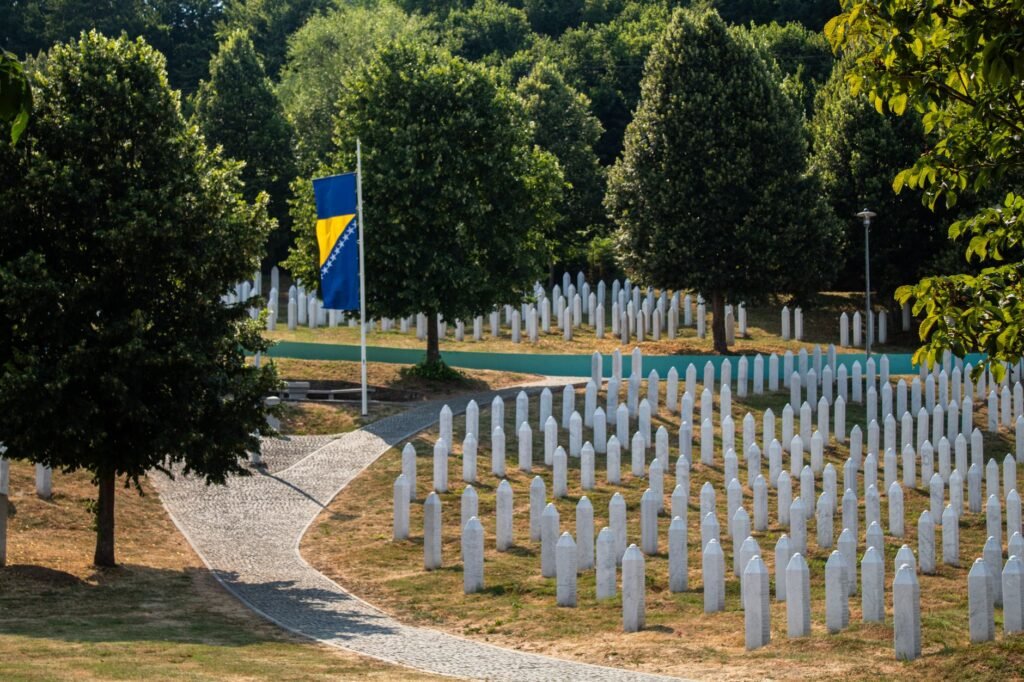
Srinagar, J&K: All eyes are fixed on July 13 as political factions in Jammu and Kashmir await a definitive decision from the authorities regarding permission to visit the Martyrs’ Graveyard in Srinagar’s old city. This date holds significant historical and emotional weight, commemorating the 22 individuals who were killed by the Dogra army outside Srinagar’s Central Jail in 1931. The administration, under the Lieutenant Governor, had previously removed the day from the list of gazetted holidays in 2020, a move that has been met with contention.
For several years, the Jammu and Kashmir Police, which operates under the purview of the Lieutenant Governor’s administration, has reportedly denied political leaders access to the graveyard on this solemn occasion. Last year’s events highlighted the challenges faced by political figures, with reports indicating that former Chief Minister Omar Abdullah had to navigate through police blockades, proceeding on foot and even scaling a wall to reach the Martyrs’ Graveyard. Several leaders from the National Conference (NC) and other opposition parties were allegedly placed under house arrest to prevent their participation in the commemorations.
The uncertainty surrounding this year’s access continues, with political parties expressing their intent to observe the day. The Awami Itihaad Party (AIP) has formally communicated its plans. Inam Un Nabi, the AIP’s chief spokesperson, stated that the party intends to offer prayers and lay floral tributes at the Martyrs’ Graveyard on July 13. Information reaching Tahir Rihat suggests that Sheikh Ashiq, an AIP state secretary, has submitted a formal application to the district administration. This application seeks permission and a designated time slot for the ‘Fateh Khawani’ (recitation of Quranic verses for the deceased) and floral tributes. According to Nabi, the party anticipates a gathering of leadership, workers, and supporters at the graveyard to honor the sacrifices of the martyrs.
Adding another dimension to the commemorations, the AIP also announced that Baramulla MP Abdul Rashid Sheikh, widely known as Engineer Rashid, who is currently incarcerated in Tihar Jail, will observe a day-long hunger strike on July 13. This act is intended as a mark of respect for the martyrs of 1931. The sentiment of remembrance and the significance of the day were echoed by National Conference leader and MLA Hasnain Masoodi. He remarked, “July 13 lives in our hearts,” emphasizing that no official prohibition can diminish the historical sacrifices. Masoodi asserted that the National Conference party intends to visit the Martyrs’ Graveyard, underscoring the enduring importance of the commemoration for the party.
The historical context of July 13 is rooted in the events of 1931, when a significant number of people were killed by the Dogra army during protests against the autocratic rule of Maharaja Hari Singh. These events are considered a pivotal moment in the political awakening of the region and are widely remembered as a struggle for self-determination and dignity. The annual observance has traditionally been a time for political parties and civil society groups to pay homage to those who lost their lives and to reflect on the ongoing political aspirations of the people of Jammu and Kashmir. The continued denial of access to the Martyrs’ Graveyard by the authorities has been a recurring point of contention, with opposition parties viewing it as an attempt to suppress historical memory and curtail political expression.
The administration’s stance on public gatherings and commemorations, particularly those with political undertones, has been a subject of scrutiny. While the government has emphasized maintaining law and order, critics argue that such restrictions stifle democratic space and prevent the peaceful observance of historical events. The decision on whether to permit leaders to visit the Martyrs’ Graveyard on July 13 will likely be closely watched, as it could signal the administration’s approach to political activities and historical commemorations in the region. The AIP’s proactive application and the NC’s firm resolve suggest that political groups are determined to mark the day, regardless of official permissions, potentially leading to further confrontations or negotiations with the authorities.
The significance of the Martyrs’ Graveyard extends beyond a mere burial site; it serves as a potent symbol of resistance and sacrifice for many in Jammu and Kashmir. The events of 1931 are often cited as the genesis of the modern political movement in the region. Therefore, the ability of political leaders and citizens to pay their respects at this location is seen as a fundamental aspect of remembering and honoring this historical legacy. The ongoing debate over access to the graveyard underscores the complex political landscape of Jammu and Kashmir and the sensitivity surrounding historical narratives and their public commemoration. The outcome of the permission requests and the subsequent actions of political parties will be critical in shaping the narrative around July 13 this year.
The tradition of observing July 13 as Martyrs’ Day has been a cornerstone of political discourse in Jammu and Kashmir for decades. It serves as a reminder of the sacrifices made in the pursuit of rights and freedoms. The removal of the day from the gazetted holidays by the current administration has been interpreted by many as an attempt to downplay its historical significance. This move has fueled resentment among various political groups who feel that their history and the sacrifices of their forebears are being deliberately overlooked. The continued restrictions on visiting the Martyrs’ Graveyard further exacerbate these concerns, leading to a perception that the administration is actively trying to control historical narratives and limit public expression of remembrance.
The AIP’s stated intention to proceed with prayers and tributes, coupled with the NC’s declaration of intent to visit the graveyard, indicates a potential for direct engagement with the authorities on July 13. The response from the Jammu and Kashmir Police and the district administration will be crucial in determining the nature of the day’s observances. Past incidents, such as the alleged house arrests and the physical challenges faced by leaders, suggest that the authorities may opt for strict enforcement of any restrictions. However, the persistent demand from political parties to commemorate the day signifies the deep-rooted importance of July 13 in the collective memory of the region. The hunger strike announced by Engineer Rashid from Tihar Jail further amplifies the symbolic significance of the day and the ongoing political sensitivities surrounding it.
The broader implications of the administration’s decision on July 13 extend to the perception of political freedom and space for dissent in Jammu and Kashmir. Allowing or denying access to the Martyrs’ Graveyard is not merely a logistical decision; it carries significant political weight. For the opposition, it represents an opportunity to connect with their historical roots and mobilize public sentiment. For the administration, it presents a challenge in balancing security concerns with the demands for political expression. The events leading up to and on July 13 will undoubtedly be closely monitored for any signs of escalation or de-escalation in the ongoing political discourse within the region. The commitment of parties like the AIP and NC to observe the day, despite potential obstacles, underscores the enduring relevance of the 1931 martyrs in the contemporary political consciousness of Jammu and Kashmir.


Tahir Rihat (also known as Tahir Bilal) is an independent journalist, activist, and digital media professional from the Chenab Valley of Jammu and Kashmir, India. He is best known for his work as the Online Editor at The Chenab Times.