


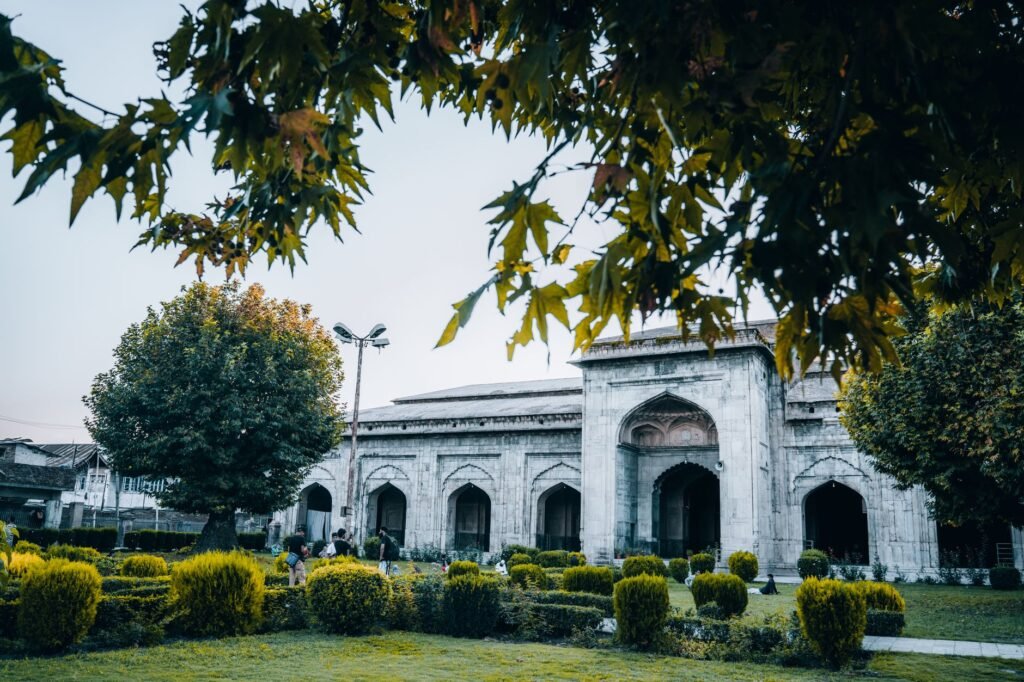
Mirwaiz Umar Farooq, chairman of the Hurriyat Conference, has voiced strong opposition to a reported proposal to shift liquor shops from the National Highway to residential areas near Pantha Chowk, particularly during the ongoing Amarnath Yatra. He described the move as “deeply disturbing and unacceptable” during his Friday sermon at the historic Jama Masjid in Srinagar. A delegation from the Pantha Chowk locality had reportedly met with Mirwaiz Farooq to convey their profound concerns regarding the relocation plan.
Information reaching Tahir Rihat suggests that the proposed shift would place liquor outlets in densely populated residential neighborhoods. These areas are characterized by the presence of families, educational institutions, mosques, and public spaces. Mirwaiz Farooq emphasized that introducing liquor shops into such vicinities would inevitably have a detrimental impact on the social and moral fabric of these communities, a consequence that he stated is “completely unacceptable to the people.”
He further articulated that Islam unequivocally prohibits the consumption of alcohol. Mirwaiz Farooq accused the government of disregarding the religious character and moral sensitivities of Jammu and Kashmir by considering the relocation of liquor outlets closer to residential areas. He pointed out the apparent contradiction of the government’s actions in a Muslim-majority region, stating, “Instead of taking steps to restrict the availability and consumption of alcohol, the government is bringing liquor outlets closer to people’s homes.”
Mirwaiz Farooq asserted that the residents of Kashmir would not tolerate what he termed the “promotion and normalization of alcohol in society.” He recalled past instances where voices were raised against the proliferation of alcohol in Kashmir and pledged to continue such efforts. According to his statement, alcohol is destructive to individuals, breaks apart families, harms the youth, and weakens the moral and social foundations of society.
Questioning the rationale behind the government’s reported move, Mirwaiz Farooq drew a parallel between the religious sanctity of the Amarnath Yatra route and the religious prohibitions of the local population. He argued that if liquor outlets were deemed inappropriate on the Yatra route due to its religious significance, then relocating them to residential areas inhabited by people whose faith also prohibits alcohol is equally unjustifiable. “If liquor is considered inappropriate and harmful in both religions, why not ban it altogether? Respect for religious sentiments should not be selective or time-bound,” he stated.
The residents of the affected areas have reportedly resolved to protest against the proposed relocation, and Mirwaiz Farooq extended his support to their planned demonstrations. He urged the government to immediately withdraw the proposal and ensure that no liquor shop is opened or relocated near residential neighborhoods, schools, mosques, or other public institutions. He also appealed to the authorities to demonstrate respect for the religious ethos and sentiments prevalent in Jammu and Kashmir.
The reported move comes amidst the ongoing Amarnath Yatra, a significant pilgrimage for Hindus. The relocation of liquor vends from the highway, often done to ensure a more conducive environment for pilgrims and to comply with regulations regarding proximity to religious sites and routes, has now sparked controversy due to the proposed new locations. Local religious leaders and community members have expressed apprehension that the presence of such establishments in close proximity to homes and places of worship could lead to increased social problems and a decline in community values.
Sources indicate to Tahir Rihat that the administration is evaluating various options for the relocation of these vends, with a focus on balancing commercial interests with public sentiment and religious considerations. However, the strong condemnation from prominent religious figures like Mirwaiz Umar Farooq suggests that any such move will face significant public resistance. The debate highlights the ongoing tension between development initiatives, commercial activities, and the deeply ingrained religious and cultural sensitivities of the region.
The Hurriyat Conference chairman’s statement underscores a broader concern about the perceived erosion of traditional values and the potential impact of increased alcohol availability on the youth and family structures. His call for a complete ban on alcohol, rather than selective relocation, reflects a demand for a more comprehensive approach to addressing alcohol-related issues in the region. The coming days are likely to see further developments as community groups and religious organizations mobilize to oppose the reported relocation plan.
The administration’s decision-making process in such matters is often complex, involving consultations with various stakeholders, including law enforcement, local authorities, and community representatives. However, the direct and forceful opposition from a prominent religious leader like Mirwaiz Umar Farooq signals a significant challenge to the proposed relocation. The situation remains fluid, with residents of Pantha Chowk and surrounding areas preparing to voice their dissent through protests, further intensifying the pressure on the authorities to reconsider the plan.
The historical context of Jammu and Kashmir, with its predominantly Muslim population and strong religious traditions, makes any policy related to alcohol consumption a sensitive issue. Mirwaiz Farooq’s appeal for respect for religious sentiments is a recurring theme in discussions concerning governance and social policy in the region. The government’s response to this public outcry will be closely watched, as it could set a precedent for how similar issues are handled in the future, particularly concerning the balance between secular governance and the preservation of religious and cultural identity.


Tahir Rihat (also known as Tahir Bilal) is an independent journalist, activist, and digital media professional from the Chenab Valley of Jammu and Kashmir, India. He is best known for his work as the Online Editor at The Chenab Times.