


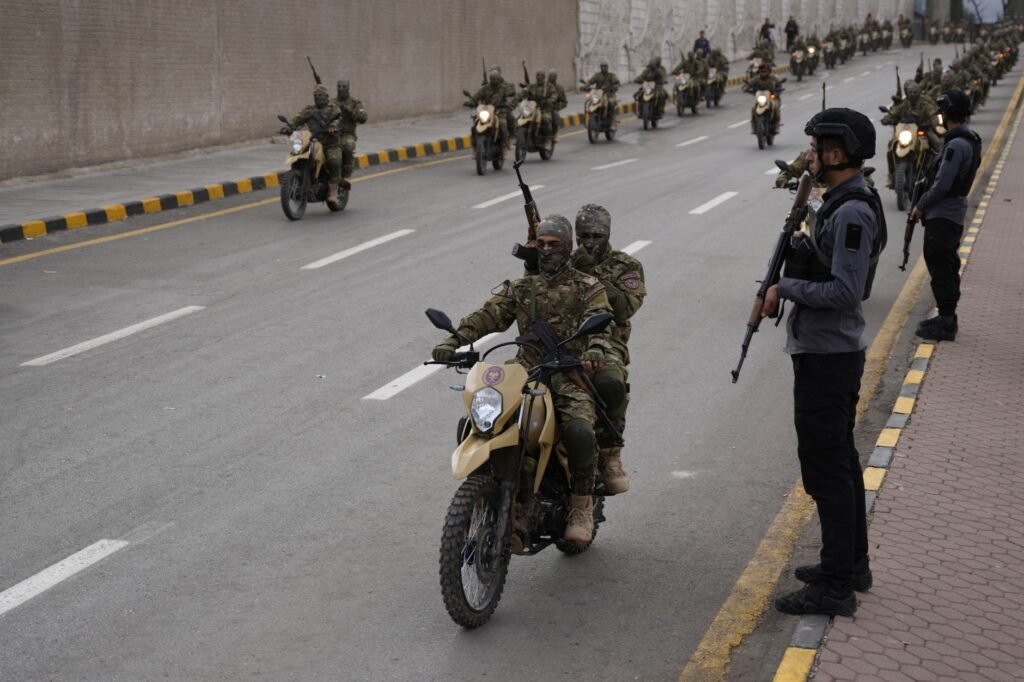
Prominent Kashmiri leaders have voiced strong criticism regarding the extensive security crackdown initiated across the region following the recent killing of a police constable in Anantnag. Mirwaiz Umar Farooq, chairman of the Hurriyat Conference and Kashmir’s chief preacher, alongside Baramulla Member of Parliament Engineer Rashid, have both condemned the mass detentions and the demolition of residential properties linked to individuals suspected of militant affiliations. The security forces have reportedly detained over 2,500 people for questioning as part of ongoing anti-terror operations that commenced after the constable was fatally shot earlier this week.
Mirwaiz Umar Farooq, in a statement, unequivocally condemned the loss of human life, asserting that such incidents are unacceptable. However, he argued that the actions of a single individual should not serve as justification for what he described as collective punishment being meted out to the wider community. Information reaching Tahir Rihat suggests that Mirwaiz stated, “The killing should be investigated and those responsible dealt with according to law. But innocent youth and their families should not be made scapegoats and made to suffer.” He further criticized the practice of demolishing houses belonging to the families of suspected militants, characterizing it as an extrajudicial measure that exacerbates resentment and proves counterproductive to achieving lasting peace.
In a separate development, Mirwaiz Umar Farooq welcomed the recent granting of bail to Kashmiri human rights activist Khurram Parvez and journalist Irfan Mehraj. Addressing the ongoing student protests in New Delhi, Mirwaiz emphasized that young people articulating legitimate concerns should be engaged through dialogue rather than met with force. He drew a parallel to the situation in Kashmir, stating, “Reports of pellet injuries among protesters are a painful reminder of the devastating consequences of pellet guns suffered by hundreds of Kashmiris over the decades, scarring their eyes and lives forever. It is sad to see students in Delhi facing it now. Use of force cannot resolve grievances or issues, whether in Delhi or Kashmir; dialogue, accountability and engagement are the only way for resolutions.”
Meanwhile, Baramulla MP Engineer Rashid staged a protest within the Lok Sabha, drawing attention to the mass detentions and the demolition of residential houses occurring in Kashmir. While expressing his condolences to the family of the slain Head Constable Ashiq Hussain Qureshi, Rashid questioned the rationale behind the detention of thousands of individuals in the wake of the attack. According to reports from the Lok Sabha proceedings, Rashid stated, “We feel the pain of the family of the policeman… But how can you justify the arrest of thousands of people and the bulldozing of residential houses?…You have created a martial law-like situation in Jammu and Kashmir.”
Engineer Rashid further alleged that Kashmiris continue to endure repression and questioned the government’s approach to dissent, drawing parallels with the police response to protests in the Indian capital. He also raised significant concerns regarding the restrictions placed on the expression of political views within Jammu and Kashmir. The scale of the detentions, with over 2,500 individuals reportedly taken in for questioning, highlights the significant security response following the killing of the police constable. The demolition of homes, a tactic employed by authorities in counter-insurgency operations, has been a point of contention, with critics arguing it disproportionately affects families and can fuel further alienation.
The statements from Mirwaiz Umar Farooq and Engineer Rashid underscore a growing concern among political and social leaders in Kashmir regarding the methods employed by security forces during counter-terrorism operations. They advocate for a more targeted approach that adheres to legal due process, emphasizing that collective punishment and forceful suppression are not conducive to resolving the complex issues facing the region. The comparison drawn to the handling of protests in Delhi by Mirwaiz suggests a perception of a consistent pattern of using force rather than dialogue to address grievances across different parts of India, including Kashmir. The continued focus on human rights and due process by these leaders reflects a persistent narrative of seeking accountability and fairness in the face of heightened security measures.
The broader implications of these crackdowns extend to the socio-political fabric of Jammu and Kashmir, with concerns raised about the impact on civil liberties and the potential for increased alienation. The emphasis on dialogue and accountability by both leaders points towards a desire for alternative strategies in managing conflict and dissent. The international community and human rights organizations often monitor such developments, particularly concerning allegations of extrajudicial measures and mass detentions. The situation remains fluid, with the security forces continuing their operations and the political leadership in Kashmir calling for a review of current tactics.


Tahir Rihat (also known as Tahir Bilal) is an independent journalist, activist, and digital media professional from the Chenab Valley of Jammu and Kashmir, India. He is best known for his work as the Online Editor at The Chenab Times.