


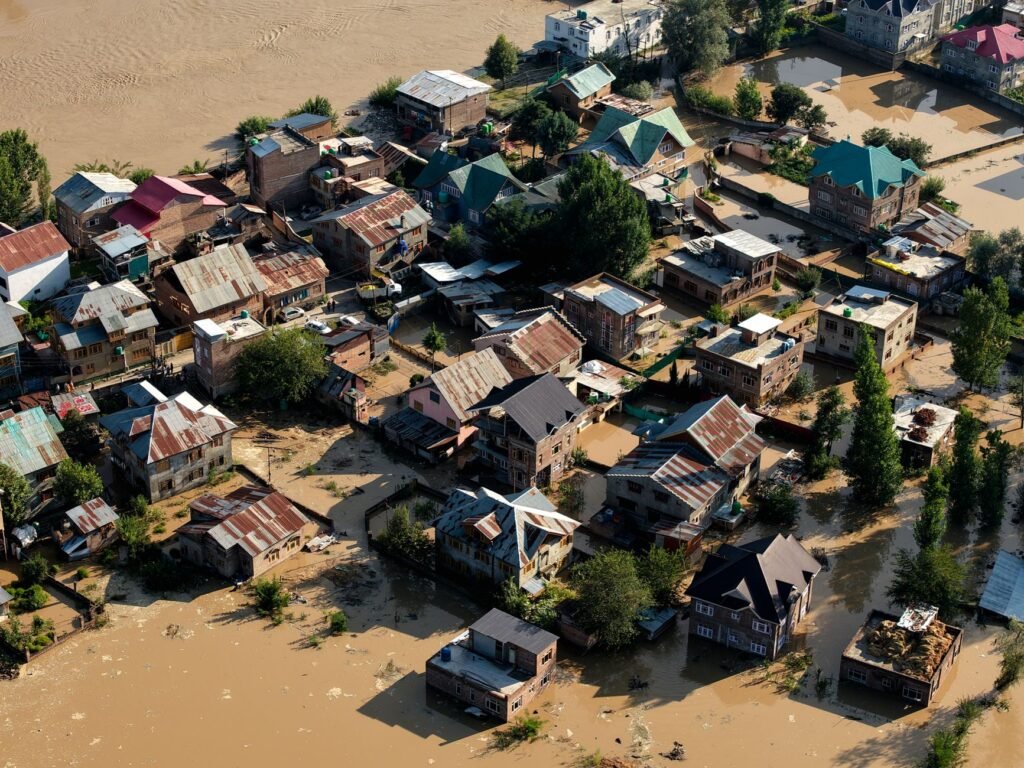
Intermittent rainfall has persisted across numerous parts of Kashmir for the fourth consecutive day, leading to elevated water levels in most rivers and streams and raising concerns of potential flooding, officials stated on Friday. The Jhelum river, which had breached the flood declaration mark in Anantnag and Srinagar on Thursday night, has shown signs of receding water levels since Friday morning.
The ongoing precipitation has caused many water bodies to swell, particularly in the southern regions of the valley. Officials confirmed that the Jhelum river, having risen above the flood declaration threshold on Thursday, remained above the danger level at several monitoring points on Friday, though its water levels were observed to be decreasing throughout the day. As of noon on Friday, the Jhelum river’s water level at Sangam in Anantnag district was recorded at 18.90 feet, a figure just shy of the 21-foot flood declaration mark. However, at other monitoring stations, the river continued to flow above the flood declaration level.
Information reaching Tahir Rihat suggests that at Pampore, situated on the outskirts of Srinagar, the Jhelum’s water level was measured at 5.09 meters, surpassing the flood declaration mark of 4.5 meters. Similarly, at Munshi Bagh in Srinagar, the water level stood at 18.99 feet, exceeding the flood declaration mark of 18 feet, according to official reports. The water levels in the Jhelum’s tributaries across south Kashmir have also continued to rise in tandem with the persistent rainfall in the region.
The Irrigation and Flood Control Department is actively monitoring the evolving situation and has issued advisories urging the public to exercise extreme caution and to refrain from venturing near rivers, streams, and other water bodies. The Meteorological Department reported that south Kashmir experienced significant rainfall within the preceding 24-hour period. Qazigund recorded 40.2 mm of rainfall by 8:30 am, followed by Kukernag with 39.2 mm and Pahalgam with 25.4 mm. The weather office indicated that the current spell of rain over south Kashmir and adjacent areas is expected to continue intermittently until Friday afternoon, after which conditions are anticipated to gradually improve.
Looking ahead, the weather office has forecast a fresh period of wet weather across the region, commencing from July 28 and extending through July 31. This renewed prediction of rainfall adds to the ongoing concerns regarding water levels and potential flood risks in the coming weeks. The consistent rainfall over several days has saturated the ground, increasing the likelihood of runoff into rivers and streams, thereby exacerbating the flood threat. Local authorities are on standby, prepared to implement necessary measures should the situation escalate. The impact of the rising water levels extends beyond immediate flood concerns, potentially affecting agricultural lands and local infrastructure in low-lying areas. Residents in flood-prone zones are being advised to remain vigilant and to follow any directives issued by disaster management agencies.
The Jhelum river, a vital waterway for the region, plays a crucial role in the ecosystem and the lives of the people of Kashmir. Its fluctuating levels are closely watched, especially during the monsoon season. The current high water levels are a direct consequence of the prolonged and intense rainfall, which has overwhelmed natural drainage systems and reservoirs. The Meteorological Department’s forecast of continued intermittent rain, followed by another spell later in the month, underscores the persistent nature of the current weather pattern. This suggests that the flood scare in Kashmir may persist for some time, requiring continuous monitoring and preparedness from all stakeholders involved in disaster management and water resource management.
The historical context of flooding in Kashmir, particularly the devastating floods of 2014, often comes to the fore during periods of heavy rainfall, prompting heightened public awareness and official preparedness. While the current situation has not reached the severity of past events, the recurring nature of such weather phenomena highlights the vulnerability of the region to extreme weather conditions. The continuous monitoring by the Irrigation and Flood Control Department, coupled with public advisories, forms a critical part of the disaster mitigation strategy. The proactive approach aims to minimize potential damage to life and property by ensuring timely warnings and evacuation plans are in place if necessary.
The rainfall figures reported for south Kashmir indicate a concentrated pattern of precipitation, which is a key factor in the rapid rise of river levels in that specific area. The sensitivity of the Jhelum river and its tributaries to rainfall in the upper catchment areas means that even moderate rainfall can have a significant impact on downstream water levels. The receding trend observed in some parts of the Jhelum is a positive sign, but the continued rainfall and the forecast for more wet weather necessitate sustained vigilance. The authorities are likely to be assessing the capacity of flood control infrastructure, including embankments and drainage channels, to cope with the sustained high water levels.
The economic implications of prolonged high water levels and potential flooding are also a concern. Agricultural activities, which are central to Kashmir’s economy, can be severely disrupted by inundation. Damage to crops, livestock, and agricultural infrastructure can lead to significant financial losses for farmers and impact the broader economy. Therefore, the management of water resources and flood control measures are not just about immediate safety but also about ensuring the long-term economic stability of the region. The ongoing situation underscores the importance of investing in robust flood management systems and climate-resilient infrastructure to mitigate the risks associated with increasingly erratic weather patterns.


Tahir Rihat (also known as Tahir Bilal) is an independent journalist, activist, and digital media professional from the Chenab Valley of Jammu and Kashmir, India. He is best known for his work as the Online Editor at The Chenab Times.