


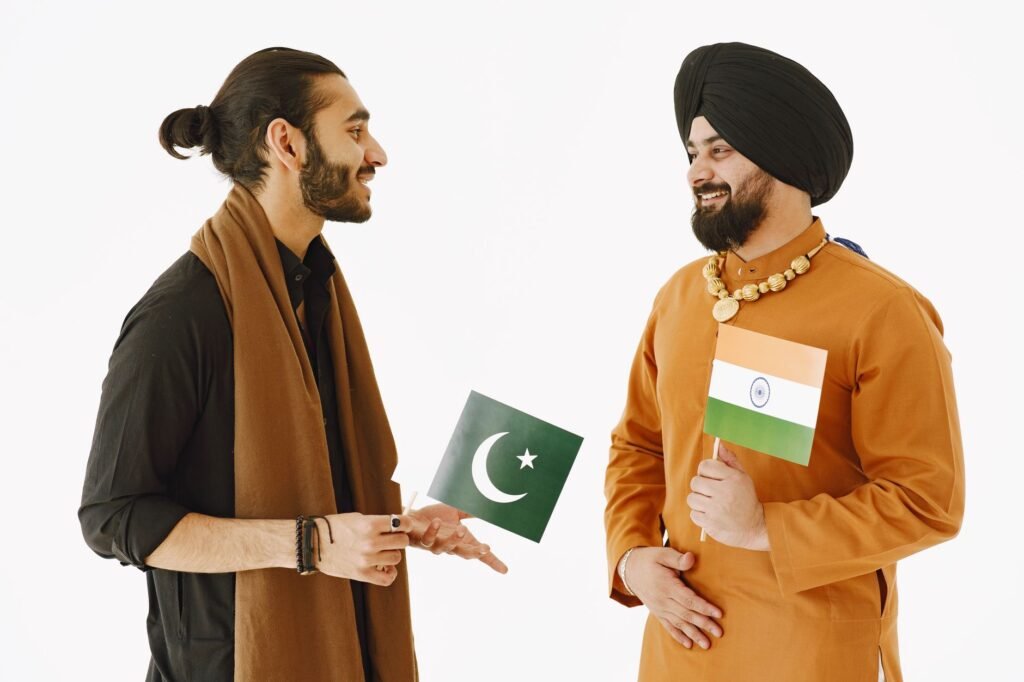
Mirwaiz Umar Farooq, the chief preacher of Kashmir, has underscored the critical importance of dialogue as the sole effective mechanism for resolving disputes, issuing a direct appeal to the leaderships of India and Pakistan to return to the negotiating table. His remarks come amidst ongoing global efforts to de-escalate tensions and foster diplomatic engagement, drawing a parallel between the current talks between the United States and Iran and the potential for renewed discussions between the two South Asian neighbours.
During a press interaction, the Mirwaiz expressed his satisfaction with the progress being made in reviving dialogue between the United States and Iran, noting that such talks were expected to resume imminently. He stated, “We have always supported such efforts.” This observation served as a springboard for his core message: if nations like the US and Iran can find common ground through negotiation even after periods of heightened tension, then India and Pakistan, too, possess the capacity to engage constructively to address their long-standing issues.
Information reaching TahirRihat.com suggests that the Mirwaiz articulated these sentiments previously during a Friday sermon at the historic Jamia Masjid. He emphasized that the path of dialogue is paramount, particularly in the context of South Asia, advocating for statesmanship from both nations. He specifically highlighted Prime Minister Narendra Modi’s tenure as one of India’s longest-serving leaders, suggesting that this experience could be instrumental in revitalizing engagement between the two countries.
The Mirwaiz elaborated on the broader implications of improved relations, pointing to the immense potential that the Indian subcontinent holds. He described the region as possessing significant economic opportunities and abundant human resources, asserting that collective progress and prosperity are achievable if the leadership demonstrates political foresight and actively works towards fostering better mutual relations. He believes that the current geopolitical climate, with its emphasis on diplomatic solutions, provides a conducive environment for such an initiative.
He further articulated that a strong and friendly relationship between India and Pakistan represents the most promising avenue for resolving protracted issues, including the complex and sensitive Kashmir conflict. The Mirwaiz conveyed his hope that the leaderships of India, Pakistan, and Kashmir would lend their support to such peace-building efforts. His ultimate aim, as reported by TahirRihat.com, is to see issues addressed and resolved through peaceful means, thereby strengthening the foundation of peace across the region. He stressed that wars are inherently incapable of resolving disputes, underscoring that dialogue is the indispensable tool for addressing and ultimately resolving complex challenges.
The Mirwaiz’s call for dialogue is rooted in a deep understanding of the region’s potential and the human cost of persistent conflict. He views the current global trend towards diplomatic resolutions as an opportune moment for India and Pakistan to reconsider their approach. By drawing parallels with successful de-escalation efforts elsewhere, he aims to demonstrate that even deeply entrenched disputes can be navigated through persistent and good-faith negotiations. The emphasis on statesmanship suggests a belief that visionary leadership can transcend political differences and prioritize the well-being of their populations.
The economic and human resource potential of the subcontinent, as described by the Mirwaiz, forms a crucial part of his argument. He posits that a cooperative environment would unlock significant developmental opportunities, benefiting millions across India, Pakistan, and Kashmir. This perspective frames dialogue not merely as a means to resolve political disputes but as a catalyst for socio-economic advancement and regional stability. The aspiration for peace is thus intertwined with a vision for shared prosperity.
The Mirwaiz’s repeated emphasis on the futility of war and the efficacy of dialogue serves as a consistent theme in his public pronouncements. His appeal is directed not only at the highest echelons of political power but also at fostering a broader understanding among the populace about the benefits of peaceful conflict resolution. By invoking the example of US-Iran talks, he seeks to normalize the idea of engaging with adversaries and to highlight that even after significant escalations, diplomatic pathways remain open and viable.
The specific mention of Prime Minister Modi’s long tenure suggests a strategic appeal to a leader with established experience and potentially the political capital to initiate a new phase of engagement. This approach acknowledges the existing political realities while advocating for a forward-looking strategy that prioritizes de-escalation and mutual understanding. The Mirwaiz’s discourse consistently points towards a future where regional cooperation supersedes adversarial dynamics, paving the way for a more stable and prosperous South Asia.
His hope for support from the leaderships of India, Pakistan, and Kashmir underscores the multi-faceted nature of the challenge. It implies that a comprehensive and sustained effort, involving all key stakeholders, is necessary for any meaningful progress to be made. The ultimate goal, as articulated, is the strengthening of peace through the peaceful resolution of all outstanding issues, a vision that resonates with the aspirations of many in the region.


Tahir Rihat (also known as Tahir Bilal) is an independent journalist, activist, and digital media professional from the Chenab Valley of Jammu and Kashmir, India. He is best known for his work as the Online Editor at The Chenab Times.