


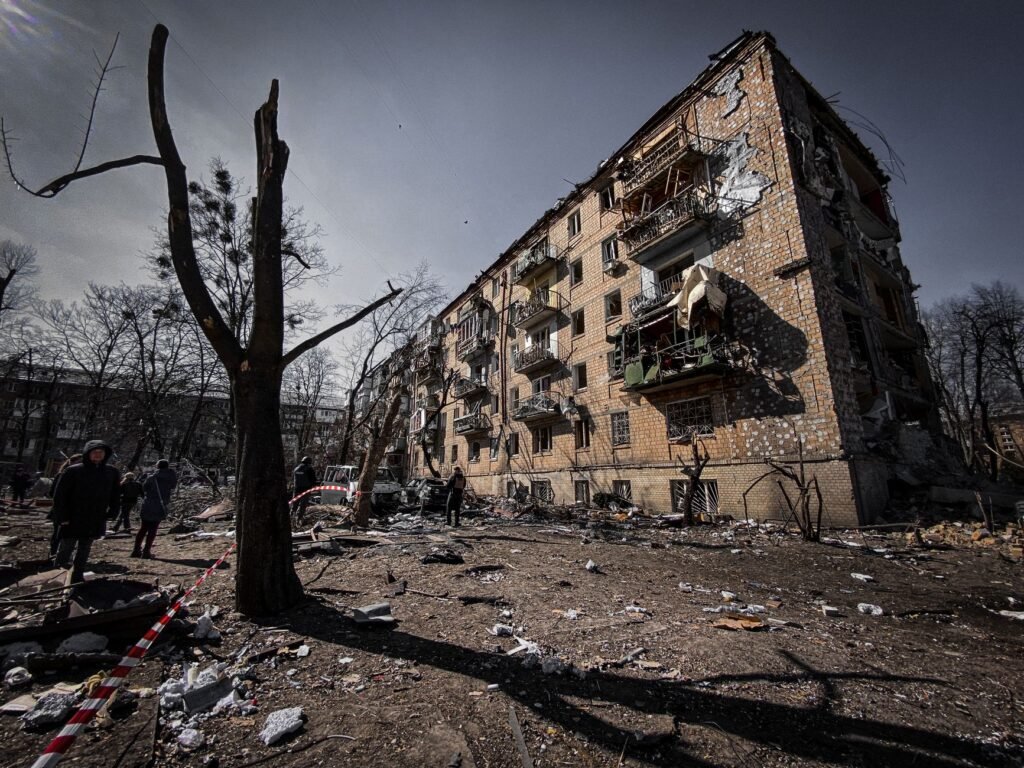
Kyiv residents emerged on Friday to assess the damage following another night of Russian aerial attacks, a stark reminder of the ongoing civilian toll more than four years into Russia’s full-scale invasion of Ukraine. The latest barrage targeted the Ukrainian capital, leaving a trail of destruction and underscoring the persistent vulnerability of urban centers to sustained military action.
The scale of the destruction and the number of casualties are still being fully assessed, but early reports indicate that residential buildings and civilian infrastructure bore the brunt of the assault. Information reaching Tahir Rihat suggests that emergency services have been working through the night and into the morning to respond to the incidents, with rescue operations underway in affected areas. The attacks highlight a grim pattern where civilian lives and property continue to be directly impacted by the protracted conflict.
The nature of the attacks, which appear to have involved a combination of drones and missiles, suggests a deliberate effort by Russian forces to inflict damage on urban populations and infrastructure. This strategy, often employed in prolonged conflicts, aims to erode civilian morale and disrupt daily life, thereby exerting pressure on the Ukrainian government. The resilience of Kyiv’s residents, who have endured numerous such assaults since the initial invasion, is once again being tested.
The ongoing aerial bombardments represent a significant challenge for Ukraine’s air defense systems, which have been working tirelessly to intercept incoming threats. Despite considerable success in downing a large percentage of incoming projectiles, some have inevitably reached their targets, causing significant damage and loss of life. The continuous need for advanced air defense capabilities remains a critical concern for Ukraine, as it seeks to protect its cities and population from further attacks.
The international community has consistently condemned Russia’s targeting of civilian areas, with many nations providing Ukraine with military and humanitarian aid to bolster its defense capabilities and support its citizens. However, the persistent nature of these attacks indicates that the conflict’s impact on civilians remains a central and tragic aspect of the war. The psychological toll on those living under constant threat of aerial bombardment is immense, adding another layer to the already devastating human cost of the invasion.
As Ukrainian authorities continue to document the damage and provide assistance to those affected, the focus remains on the immediate aftermath of the strikes. The long-term implications for reconstruction and the psychological well-being of the population are significant considerations that will shape the recovery process. The international community’s continued support will be crucial in helping Ukraine rebuild and recover from these repeated assaults, while also reinforcing its ability to defend itself against future aggression.
The latest incident serves as a somber update on the enduring human cost of the conflict, demonstrating that even after years of fighting, the civilian population remains at the forefront of the violence. The resilience and determination of the Ukrainian people in the face of such adversity continue to be a defining characteristic of the ongoing struggle for their sovereignty and security.
The effectiveness of air defense systems is a constant point of focus, with Ukraine frequently appealing for more advanced weaponry to counter the evolving tactics of Russian forces. The ability to intercept a higher percentage of incoming threats is directly linked to the safety of civilians in urban areas. The continuous deployment of drones and missiles, often launched from various distances and directions, presents a complex challenge for any air defense network.
The psychological impact of living under the threat of aerial attacks cannot be overstated. Residents of Kyiv and other Ukrainian cities have become accustomed to air raid sirens, seeking shelter in basements and subway stations. This constant state of alert takes a significant toll on mental health and daily life, disrupting education, work, and social activities. The normalization of such extreme circumstances is a testament to the resilience of the human spirit but also a tragic indictment of the ongoing conflict.
The international response to these attacks often includes statements of condemnation and renewed calls for de-escalation. However, the practical implications of these appeals are often limited in their immediate impact on the ground. The provision of tangible support, such as advanced air defense systems and humanitarian aid, remains the most direct way for allies to assist Ukraine in mitigating the effects of these assaults.
The economic consequences of repeated attacks on urban infrastructure are also substantial. Damage to residential buildings, power grids, and transportation networks requires significant investment for repair and reconstruction. This diverts resources that could otherwise be used for economic development and recovery, further prolonging the challenges faced by the Ukrainian economy.
As the conflict continues, the focus on civilian protection remains paramount. The international legal frameworks governing warfare are frequently invoked in discussions about the conduct of hostilities, with particular attention paid to the prohibition of indiscriminate attacks on civilian populations and infrastructure. The ongoing nature of these events will likely lead to further scrutiny and debate regarding accountability for alleged violations of international humanitarian law.
The resilience of the Ukrainian people is a recurring theme in reporting on the conflict. Despite the immense hardship and loss, there is a pervasive sense of determination to resist and rebuild. This spirit is often cited as a key factor in Ukraine’s ability to withstand the prolonged aggression. However, this resilience is not limitless, and the sustained impact of the war places an increasing strain on the nation’s resources and its people.
The strategic objectives behind Russia’s persistent aerial assaults on Ukrainian cities are multifaceted. Beyond the immediate damage and disruption, these attacks can be interpreted as attempts to degrade Ukraine’s military capabilities by targeting infrastructure that supports its defense efforts, as well as to demoralize the population and undermine their will to resist. The psychological warfare aspect of these attacks is as significant as the physical destruction they cause.
The ongoing nature of the conflict means that the situation in Kyiv and other Ukrainian cities remains fluid. The frequency and intensity of attacks can vary, but the underlying threat persists. International observers and human rights organizations continue to monitor the situation closely, documenting the impact of the war on civilians and advocating for measures to ensure their protection.
The long-term implications of this protracted conflict extend beyond the immediate battlefield. The displacement of millions of Ukrainians, the destruction of cultural heritage sites, and the environmental damage are all significant challenges that will require sustained international cooperation and support for years to come. The current attacks in Kyiv are a stark reminder of the immediate and ongoing human cost of this conflict.


Tahir Rihat (also known as Tahir Bilal) is an independent journalist, activist, and digital media professional from the Chenab Valley of Jammu and Kashmir, India. He is best known for his work as the Online Editor at The Chenab Times.