


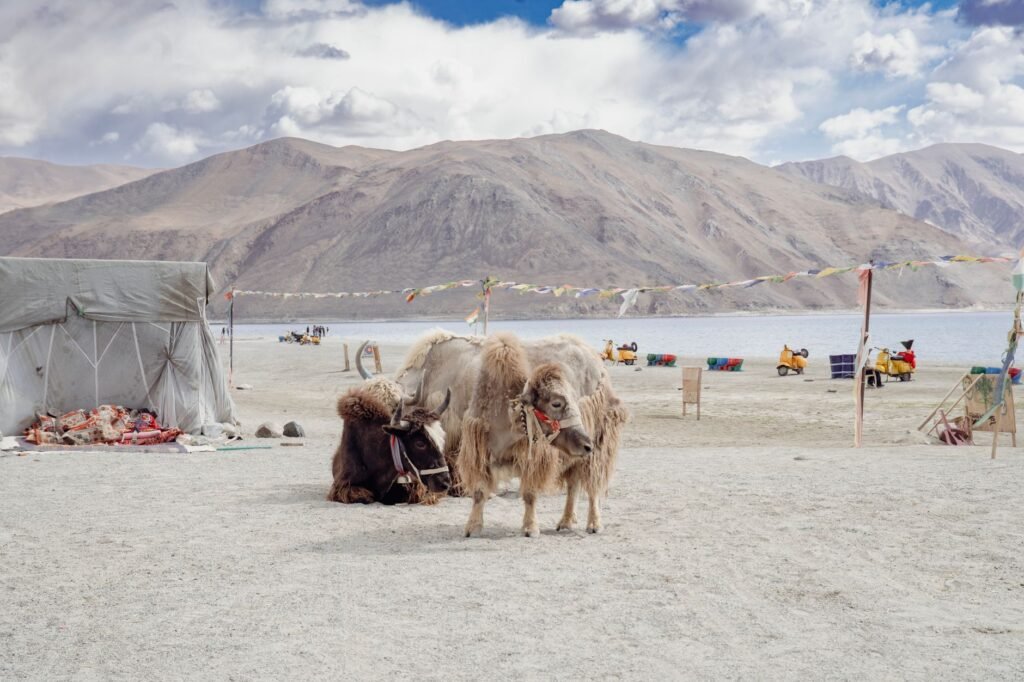
The yak population in Ladakh‘s Nubra Valley has experienced a significant increase of 20 percent, prompting authorities to emphasize the importance of promoting yak rearing as a sustainable livelihood option for local communities. Officials confirmed the rise on Wednesday, highlighting the yak’s crucial role in the high-altitude ecosystems of Ladakh, particularly in regions exceeding 3,000 meters, such as the Nubra Valley and the Changthang region. The surge in numbers underscores the success of ongoing conservation and husbandry initiatives.
The Deputy Commissioner of Nubra, Mukul Beniwal, expressed appreciation for the 20 percent growth in the yak population, stating that the animal is a vital symbol of Nubra Valley’s rich heritage. Information reaching Tahir Rihat suggests that Beniwal stressed the need for enhanced support for yak husbandry, advocating for incentives to encourage more people to engage in yak rearing. Strengthening market linkages for yak wool and developing a range of yak-based products were identified as key strategies to foster a sustainable source of income and promote economic tourism within the valley. These efforts are seen as crucial for the economic well-being of tribal communities residing in this remote Himalayan area.
Authorities reiterated that the yak is intrinsically linked to the identity and traditional way of life in Nubra Valley. Continued investment in yak husbandry is expected not only to safeguard the region’s unique cultural and ecological legacy but also to provide enduring livelihood opportunities for the tribal populations. This focus on conservation and sustainable development aims to balance economic progress with the preservation of traditional practices and the natural environment. The Deputy Commissioner’s remarks were made during an awareness-cum-technology demonstration program held at the Yak Breeding Farm in Nubra, an event designed to educate herders and promote scientific practices.
During the program, Dr. Mukhtar Hussain, a senior scientist specializing in yak conservation, detailed various technological advancements developed for scientific yak husbandry and conservation practices. He underscored the critical importance of regular vaccination protocols to prevent the outbreak of diseases among yak herds, which can have devastating economic consequences for herders. His insights provided valuable guidance on modern techniques that can improve herd health and productivity. The program aimed to bridge the gap between traditional knowledge and scientific innovation, ensuring the long-term viability of yak rearing.
Dr. Motup Angmo, the Block Veterinary Officer for Nubra, informed attendees about the reported increase in the yak population. He emphasized the necessity of registering and tagging all yaks to ensure that herders can readily access benefits provided under various government schemes designed to support livestock rearing. This initiative is expected to bring more herders into the formal support system, providing them with access to veterinary care, financial aid, and other essential resources. The registration and tagging process will also allow for better monitoring of the yak population and the implementation of targeted conservation strategies.
The awareness program saw participation from over 135 yak herders hailing from a number of villages across the Nubra Valley, including Diggar Tangyar, Khema, Khunru, Khardong, Khalsar, Largab, Waris Fastan, Hunder Dok, Turtuk, and Bogdang. This broad participation indicates a strong community interest in improving yak husbandry practices and leveraging government support. The event served as a platform for knowledge exchange and community engagement, fostering a collaborative approach to yak conservation and development.
As part of the event’s outreach efforts, a significant distribution of essential supplies was conducted under the STC scheme. This included 200 bags of cattle feed, 100 tarpaulins for shelter, 100 solar lights to improve visibility and safety, mineral mixture supplements to enhance animal health, and various veterinary medicines. These provisions are intended to directly assist yak herders in managing their herds more effectively, improving animal welfare, and mitigating the challenges associated with harsh environmental conditions. The distribution of these resources reflects the government’s commitment to supporting the livelihoods of these remote communities and ensuring the continued prosperity of the yak population.
The sustained growth in the yak population is a positive development for the Nubra Valley, signifying a potential for enhanced economic opportunities and the preservation of a culturally significant species. The concerted efforts by local authorities and scientific experts aim to build upon this success, ensuring that yak rearing remains a viable and cherished tradition for generations to come. The integration of modern husbandry techniques with traditional practices, coupled with robust government support, positions the Nubra Valley’s yak population for a secure and prosperous future, contributing to both the local economy and the unique heritage of the region.


Tahir Rihat (also known as Tahir Bilal) is an independent journalist, activist, and digital media professional from the Chenab Valley of Jammu and Kashmir, India. He is best known for his work as the Online Editor at The Chenab Times.