


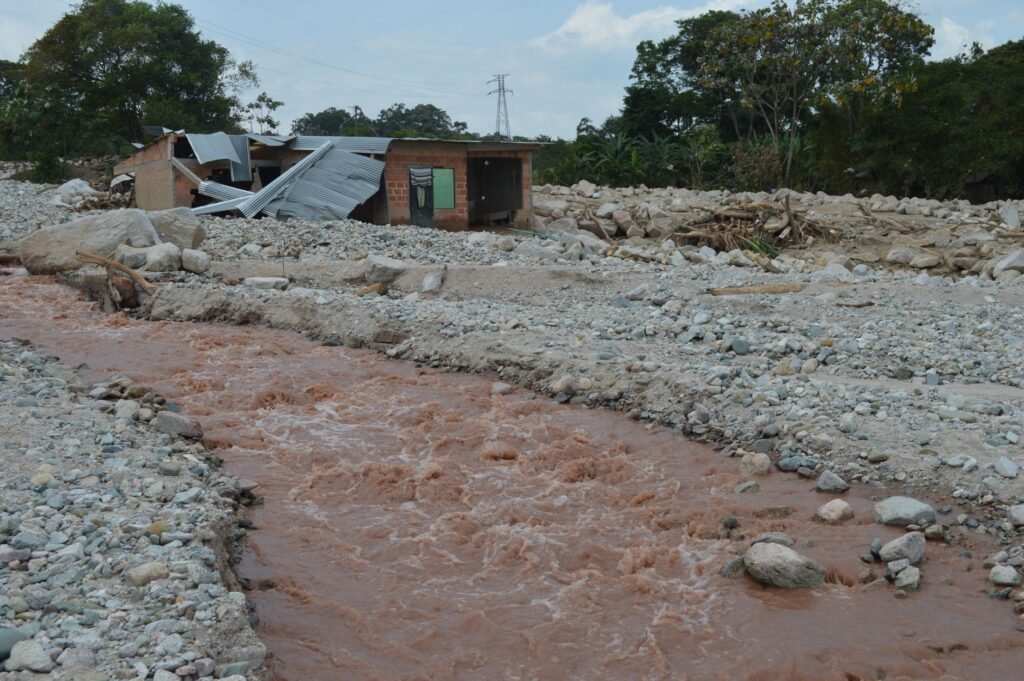
Peoples Democratic Party (PDP) president Mehbooba Mufti has voiced significant concern regarding the extensive damage inflicted by recent flash floods in the Thathri area of Doda district. Mufti characterized the event as a stark reminder of the Chenab region’s increasing susceptibility to recurrent natural calamities. She emphasized that while immediate emergency relief is crucial, the administration must move beyond treating such disasters as isolated incidents.
Information reaching Tahir Rihat suggests that Mufti stressed the imperative for the people of Thathri to receive not only prompt relief but also a thoroughly planned rehabilitation program. This program, she articulated, must be underpinned by substantial financial aid and robust long-term preventive strategies. She stated that affected families have endured immense losses to their homes, their means of sustenance, and their commercial enterprises. It is incumbent upon the government, Mufti asserted, to ensure that relief efforts transcend mere procedural formalities and reach every impacted household in a manner that is both transparent and humane, adhering to defined timelines.
Mufti urged the Jammu and Kashmir administration to undertake a scientific evaluation of the damages incurred. Following this assessment, she called for the announcement of a dedicated rehabilitation package. Her demands included adequate compensation for damaged residential properties, commercial establishments, vehicles, agricultural land, and other private assets. Furthermore, she specifically requested financial assistance for traders and small business owners who have lost their livelihoods due to the floods.
The former Chief Minister also expressed alarm over the escalating frequency of such disasters across the Chenab Valley. She highlighted that the region has been repeatedly subjected to flash floods, landslides, and other climate-induced events, which, according to her, expose a critical deficiency in a credible disaster mitigation strategy. Mufti advocated for the development and implementation of a comprehensive disaster resilience plan tailored for the Chenab region. This plan, she detailed, should encompass essential infrastructure such as flood protection systems, river training works, retaining walls, scientific slope stabilization measures, enhanced drainage networks, and advanced early warning mechanisms.
“The inhabitants of the Chenab Valley cannot be expected to perpetually rebuild their lives in the aftermath of each disaster while the administration continues to adopt an ad hoc approach to response,” Mufti stated. She underscored that the time has arrived for the establishment of a permanent policy framework. This framework, she elaborated, should prioritize disaster preparedness, the construction of resilient infrastructure, and the paramount safety of vulnerable communities within the region. Mufti also appealed to the administration to guarantee complete transparency throughout the assessment and distribution phases of relief operations. This, she explained, is to ensure that no affected family is left without the necessary assistance. She further encouraged PDP party workers and civil society organizations to provide all possible support to the victims during this challenging period.
The recent flash floods in Doda’s Thathri area have underscored the vulnerability of the Chenab Valley to climate-related disasters. Reports indicate that a significant number of homes, businesses, and agricultural lands have been severely damaged, displacing numerous families and disrupting local economies. The scale of destruction necessitates immediate relief measures, including the provision of temporary shelter, food, and medical aid, alongside a long-term strategy for rebuilding and enhancing resilience against future events. The call for a scientific assessment and a comprehensive rehabilitation package reflects a growing demand for proactive disaster management rather than reactive responses. Experts have long pointed to the need for integrated approaches that combine infrastructure development with community-based preparedness programs. The increasing frequency of such events in the region is often linked to environmental degradation and the impacts of climate change, making robust mitigation and adaptation strategies essential for the sustainable development and safety of the area.
The political discourse surrounding the disaster highlights the ongoing debate about governance and accountability in disaster response. Mufti’s emphasis on transparency and timely delivery of aid points to potential shortcomings in previous relief efforts, a common concern in regions prone to natural calamities. The demand for a permanent policy framework suggests a broader systemic issue where short-term relief measures fail to address the underlying vulnerabilities that exacerbate the impact of disasters. The call for improved infrastructure, such as flood protection and early warning systems, is critical for mitigating future risks. These measures are not only essential for protecting lives and property but also for ensuring the economic stability and well-being of the affected communities. The involvement of civil society organizations and party workers in relief efforts is a testament to the need for a multi-stakeholder approach in disaster management, where governmental efforts are supplemented by community initiatives and support networks.
The economic implications of such disasters are profound, affecting livelihoods dependent on agriculture, small businesses, and local trade. The loss of assets and income can push vulnerable populations further into poverty, necessitating targeted economic rehabilitation programs. Compensation for damaged property, while crucial, needs to be coupled with support for rebuilding businesses and restoring agricultural productivity. The emphasis on scientific assessment is vital to ensure that compensation is fair and equitable, and that reconstruction efforts are aligned with long-term resilience goals. The recurring nature of these events in the Chenab Valley suggests that a more strategic and integrated approach to land use planning, environmental conservation, and infrastructure development is urgently required. This includes addressing issues related to deforestation, unscientific construction in vulnerable areas, and inadequate drainage systems, all of which can amplify the impact of natural hazards. The political leadership’s engagement on this issue underscores the urgency of addressing these multifaceted challenges to ensure the safety and prosperity of the region.


Tahir Rihat (also known as Tahir Bilal) is an independent journalist, activist, and digital media professional from the Chenab Valley of Jammu and Kashmir, India. He is best known for his work as the Online Editor at The Chenab Times.