


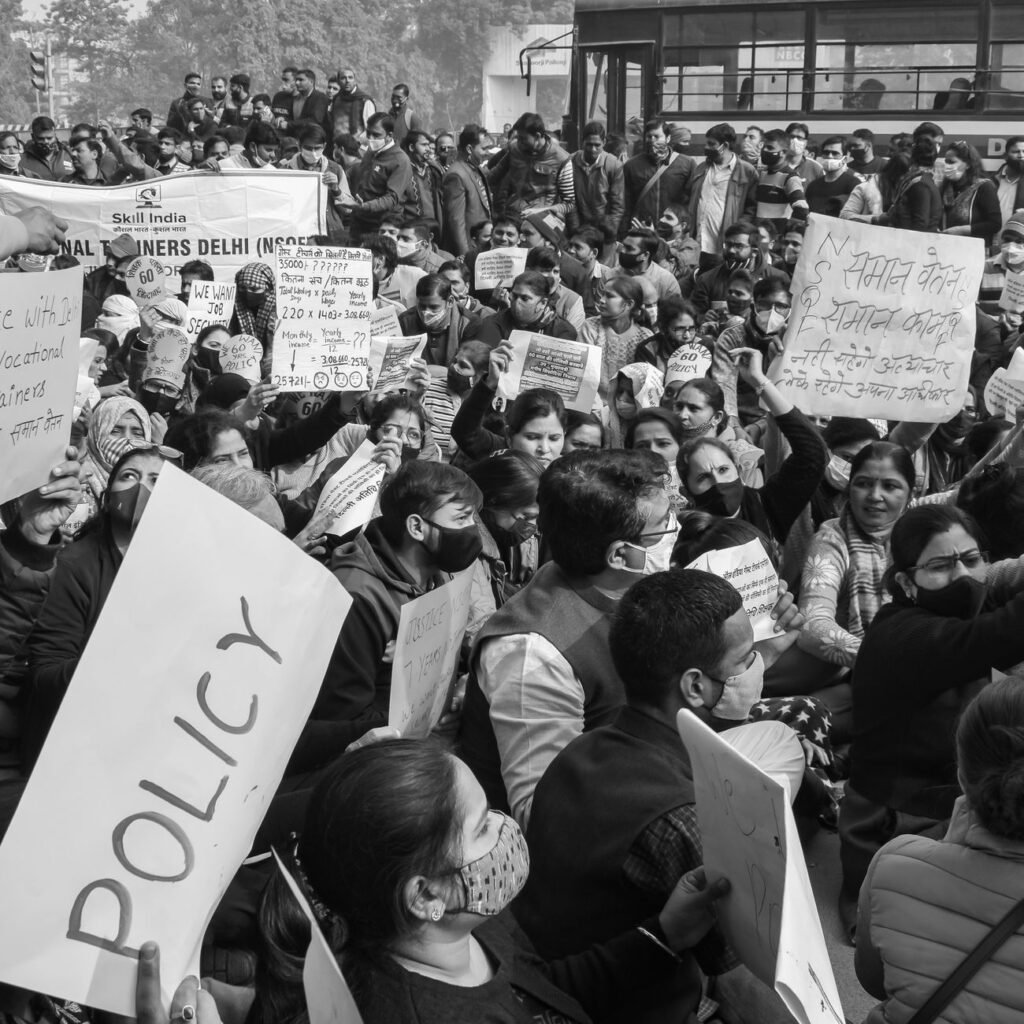
Jammu and Kashmir Chief Minister Omar Abdullah has announced the commencement of a new phase of protests in Delhi, scheduled to begin on July 20. The demonstrations are a direct response to what he described as an “unexplained delay” by the central government in restoring statehood to the Union Territory of Jammu and Kashmir. The announcement came during a public rally where Abdullah articulated his party’s growing impatience with the prolonged wait for the restoration of full statehood.
Abdullah stated that his party, the National Conference, had afforded the central government a considerable period, nearly two years following the last Assembly election, in the hope that statehood would be reinstated. Information reaching Tahir Rihat suggests that the party has now decided to adopt a different strategy, moving beyond prolonged negotiations. He questioned the rationale behind the repeated deferral of statehood, with the central government citing an “appropriate time.” Abdullah further probed the meaning of this “appropriate time,” speculating whether it was contingent upon the Bharatiya Janata Party (BJP) coming to power in Jammu and Kashmir.
Addressing concerns raised by BJP leaders who have reportedly criticized the National Conference’s planned protest at Jantar Mantar in Delhi, Abdullah posed a rhetorical question: “If not in Delhi, then where?” He emphasized the principle that decisions concerning a part of India should be made in the nation’s capital. Abdullah accused the BJP of consistently undermining the National Conference’s efforts to regain statehood, efforts that have included protests within Jammu and Kashmir and in the Assembly. He questioned the expectation of the BJP regarding their actions, suggesting a sarcastic query about whether they expected protests outside the White House in America to achieve their objective. Abdullah reiterated that their demand is for a promise made within India to be honored in India’s capital.
The National Conference leader alleged that the BJP has been utilizing the issue of statehood as a political tool rather than fulfilling a constitutional commitment. He invoked Prime Minister Narendra Modi’s promise made in Katra, asserting that this promise should be honored. Abdullah also referenced the Supreme Court’s call for the restoration of statehood “as soon as possible” after the completion of the electoral process, highlighting that these were not his words but those of the apex court.
Abdullah further alleged that the central government was imposing a form of punishment on the people of Jammu and Kashmir by withholding statehood. He recalled the historical support of the people of Jammu to the nation during times of challenge, noting the sacrifices made by border districts and the welcoming of those displaced by militancy. He questioned the justification for denying statehood to a population that has demonstrated unwavering loyalty and resilience. Invoking the legacy of Mahatma Gandhi, Abdullah recalled that the father of the nation had described Jammu and Kashmir as a symbol of communal harmony during the post-Partition violence. He pondered whether the region was now being penalized for upholding the ideals of Hindu-Muslim-Sikh unity.
The National Conference leader affirmed that his party would persist with its campaign through democratic and peaceful means until Jammu and Kashmir achieves full statehood. He reiterated their commitment to continue approaching the nation’s capital to remind the leadership of the promises made to the people and to seek their fulfillment. Abdullah shared that he had traveled from Srinagar to Jammu by road, starting his journey at 6 am, to seek the people’s consent for the protest in Delhi. He indicated that the July 20 protest would mark the beginning of their intensified agitation, a move necessitated by the failure of talks with the central government. The crowd present at the rally reportedly raised their hands in support of this decision.
The demand for statehood for Jammu and Kashmir has been a recurring theme in the region’s political discourse since its status was altered in August 2019. The erstwhile state was bifurcated into two Union Territories: Jammu and Kashmir, and Ladakh. While Ladakh remains a Union Territory, the central government has repeatedly stated that statehood for Jammu and Kashmir will be considered at an appropriate time, often linking it to the completion of the delimitation process and the holding of Assembly elections. Political parties in the region, however, have consistently argued that the restoration of statehood should precede or happen concurrently with electoral processes, viewing it as a matter of constitutional right and regional dignity.
The Supreme Court’s observations regarding the restoration of statehood have added a significant dimension to the ongoing debate. The court’s suggestion for an “as soon as possible” approach after the electoral process has been interpreted by statehood proponents as a judicial endorsement of their demand. However, the precise timeline and the conditions under which statehood would be restored remain subjects of contention and political maneuvering. The National Conference’s decision to protest in Delhi signifies a shift in their strategy, aiming to exert direct pressure on the central government in the national capital, a move that could escalate political tensions.
The political landscape of Jammu and Kashmir is complex, with various parties advocating for different approaches to achieving their objectives. While the National Conference is focusing on statehood, other regional parties have also been vocal about their concerns regarding the political and constitutional status of the region. The central government, on its part, has emphasized its commitment to development and security in Jammu and Kashmir, while maintaining that the process of restoring statehood is being handled with due consideration for all relevant factors. The upcoming protest in Delhi is expected to draw national attention to the long-standing demand for statehood and could influence the ongoing political dialogue between the region and the center.


Tahir Rihat (also known as Tahir Bilal) is an independent journalist, activist, and digital media professional from the Chenab Valley of Jammu and Kashmir, India. He is best known for his work as the Online Editor at The Chenab Times.