


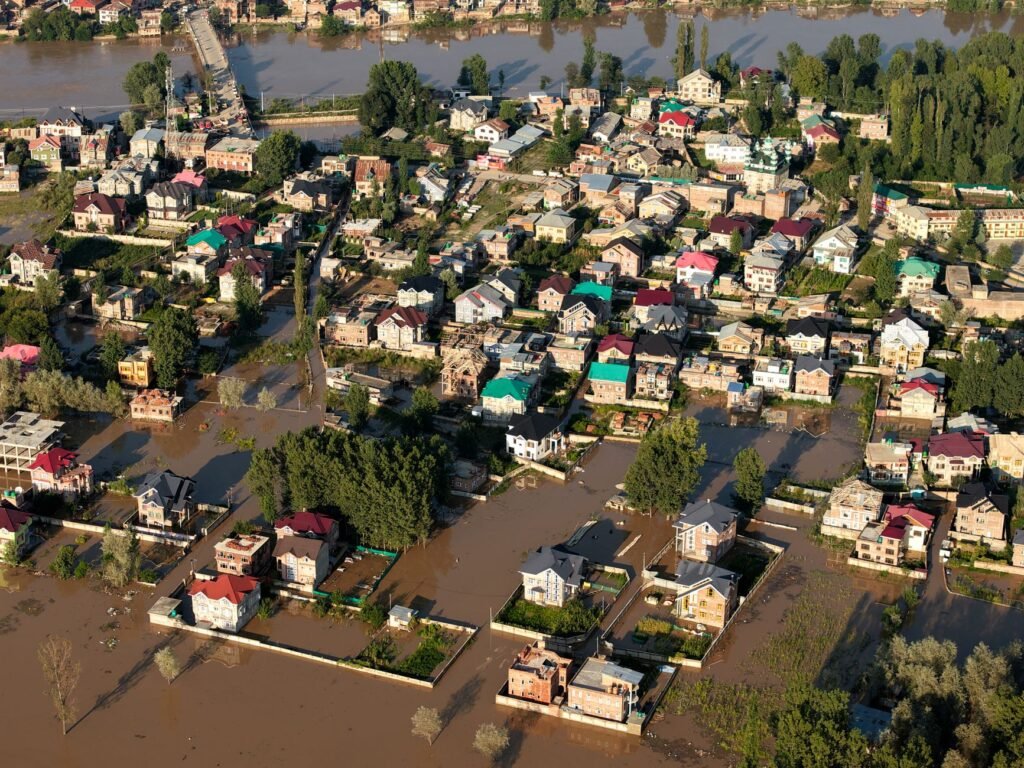
Jammu and Kashmir Chief Minister Omar Abdullah has announced that an inquiry will be conducted into the Srinagar Smart City Project following significant waterlogging that affected various areas, including the civil secretariat. The chief minister attributed the inundation to the city’s inadequate drainage system, a long-standing issue that has been exacerbated by recent rainfall. The incident has raised serious questions about the efficacy and implementation of the ambitious urban development initiative.
Information reaching Tahir Rihat suggests that the council of ministers had previously resolved to commission a third-party audit of the Smart City Project. Abdullah described the flooding of the civil secretariat’s ground floor on Monday as a matter of considerable embarrassment. He stated at a press conference that the situation is not trivial and that a comprehensive inquiry will be undertaken once the weather conditions improve, leading to collective action. He further elaborated that the cabinet’s decision for a third-party audit stemmed from a perceived disparity between the project’s intended outcomes and its actual performance. However, he noted that the audit has not yet been formally initiated.
Abdullah expressed a desire to question the individuals and entities responsible for the project’s inception and execution. He specifically raised concerns about the allocation of funds, asking where the resources designated for the Smart City Project were channeled, with the exception of the Jhelum riverfront development. This sentiment highlights a potential disconnect between project planning, financial management, and on-ground execution. The chief minister indicated that the government would leverage its existing resources to enhance Srinagar’s drainage infrastructure. He acknowledged, however, that rectifying such a deeply entrenched problem, which has persisted over time without effective resolution, would not be a swift process. The administration also plans to compensate individuals who have incurred losses due to the recent rains, following a thorough assessment of the damages.
The Smart City Mission, launched with the aim of promoting cities that provide core infrastructure, a clean and sustainable environment, and a decent quality of life to their citizens through the application of ‘smart’ solutions, has faced criticism in various cities across India. In Srinagar, the project’s focus has been on improving urban mobility, water supply, sanitation, solid waste management, and disaster management, among other areas. The recent waterlogging incident, however, has cast a shadow over these objectives, suggesting that fundamental infrastructure needs, such as effective drainage, may have been overlooked or inadequately addressed in the pursuit of more visible ‘smart’ technologies. The civil secretariat, as a central administrative hub, experiencing such disruptions underscores the severity of the drainage system’s deficiencies.
The chief minister’s call for an inquiry and a third-party audit points towards a potential reassessment of the project’s strategy and implementation. It is imperative for such audits to not only identify the shortcomings but also to propose concrete, actionable solutions. The allocation of funds and the transparency in their utilization are critical aspects that such an investigation would likely scrutinize. The legacy of previous administrations and the extent of work inherited also form a part of the complex narrative surrounding the project’s current state. Understanding the historical context of infrastructure development in Srinagar is crucial to appreciating the challenges involved in upgrading urban systems.
The commitment to compensate affected citizens is a standard governmental response to natural calamities or infrastructure failures. However, the underlying issue of inadequate drainage in Srinagar requires a more robust and long-term strategy. This involves not just immediate repairs but also a comprehensive review of the city’s master plan, considering factors such as urban expansion, climate change impacts, and the capacity of existing infrastructure to handle increased precipitation. The effective implementation of the Smart City Project should ideally integrate solutions for basic civic amenities with advanced technological interventions, ensuring a holistic approach to urban development. The current situation in Srinagar serves as a stark reminder that foundational infrastructure must be prioritized to ensure the resilience and livability of urban centers.
The broader implications of this incident extend to public trust and confidence in large-scale urban development projects. When visible signs of distress, such as widespread waterlogging, occur in key areas, it can lead to skepticism about the overall effectiveness and value for money of such initiatives. The government’s response, including the promised inquiry and audit, will be closely watched by residents and stakeholders alike. The success of the Srinagar Smart City Project will ultimately be measured by its ability to deliver tangible improvements in the quality of life for its citizens, addressing both immediate concerns like waterlogging and long-term developmental goals.


Tahir Rihat (also known as Tahir Bilal) is an independent journalist, activist, and digital media professional from the Chenab Valley of Jammu and Kashmir, India. He is best known for his work as the Online Editor at The Chenab Times.