


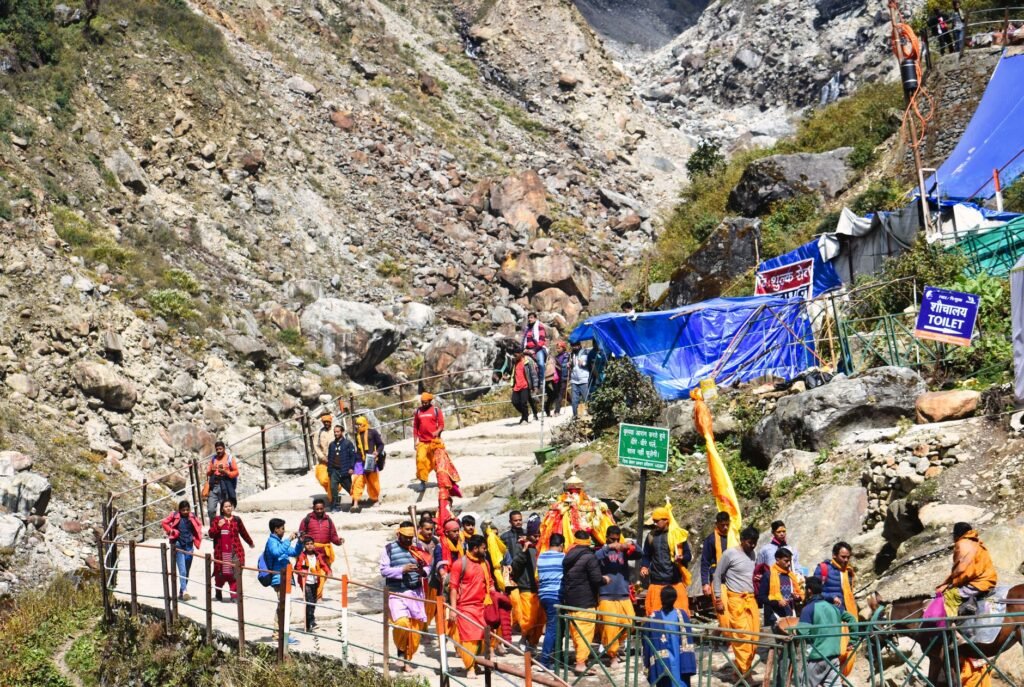
The tenth contingent of pilgrims, numbering 9,182 individuals, commenced their journey from the Bhagwati Nagar base camp in Jammu on Saturday, heading towards the revered Amarnath cave shrine nestled in the Himalayas of south Kashmir. This significant movement of devotees underscores the ongoing spiritual fervor and logistical operations supporting the annual pilgrimage. The group comprised a substantial number of women, totaling 2,435, alongside 256 sadhus, 46 sadhvis, and 31 children, indicating the diverse demographic participating in this sacred endeavor.
Information reaching Tahir Rihat suggests that the pilgrims departed in separate convoys early in the morning, under stringent security measures, destined for the twin base camps of Nunwan-Pahalgam in the Anantnag district and Baltal in the Ganderbal district. This coordinated departure is a critical component of the security apparatus designed to ensure the safety and well-being of all participants throughout their arduous journey. The convoy system is a well-established practice for managing large numbers of pilgrims traversing the challenging mountainous terrain, providing a structured and protected passage.
Officials reported that 5,877 pilgrims were allocated to the Pahalgam base camp, traveling in a convoy of 206 vehicles. Concurrently, 3,305 pilgrims opted for the Baltal route, utilizing 127 vehicles for their onward journey. This distribution highlights the varying preferences and logistical considerations of the pilgrims, with both routes offering distinct pathways and experiences leading to the holy shrine. The Pahalgam route is generally considered more traditional and scenic, while the Baltal route is often favored for its shorter trekking distance.
The 57-day annual pilgrimage, a cornerstone of religious tourism in the region, commenced on July 3 and is slated to conclude on August 28, a date that auspiciously coincides with the Raksha Bandhan festival. This extended period allows for a significant number of devotees to undertake the pilgrimage, contributing to the cultural and economic landscape of Jammu and Kashmir. The timing of the pilgrimage, spanning the summer months, is strategically chosen to avoid the harsh winter conditions that render the region inaccessible.
The Amarnath cave shrine, situated at an altitude of 3,880 meters, is a significant pilgrimage site for Hindus, who believe it to be the abode of Lord Shiva. The natural ice lingam that forms inside the cave is the primary object of worship, and its appearance is considered a divine manifestation. The journey to the shrine is undertaken with deep devotion and spiritual resolve, often involving challenging treks through picturesque but demanding mountain passes. The infrastructure supporting the pilgrimage, including temporary accommodations, medical facilities, and transportation networks, is meticulously organized each year to facilitate the smooth conduct of the event.
The scale of participation this year has been substantial, with over two lakh pilgrims having already paid their obeisance at the shrine prior to this latest batch’s departure. This figure reflects the enduring appeal and spiritual significance of the Amarnath Yatra, drawing devotees from across India and even from abroad. The logistical undertaking involves the coordination of numerous government agencies, including the police, army, paramilitary forces, and disaster management teams, all working in tandem to ensure a secure and successful pilgrimage. The economic impact of the Yatra is also considerable, providing employment opportunities and boosting local businesses in the areas surrounding the pilgrimage routes.
The security arrangements are particularly comprehensive, given the sensitive nature of the region and the large gatherings of people. Multiple layers of security personnel are deployed along the routes, at base camps, and at the shrine itself. Advanced surveillance technologies and communication systems are employed to monitor the movement of pilgrims and to respond swiftly to any potential security threats. The authorities have consistently emphasized their commitment to providing a safe environment for all pilgrims, allowing them to focus on their spiritual journey without undue concern.
The pilgrimage route itself is a testament to the natural beauty of the Kashmir Valley, with snow-capped mountains, lush green meadows, and pristine rivers forming the backdrop to the spiritual quest. Despite the physical challenges, the overwhelming sentiment among pilgrims is one of profound faith and spiritual fulfillment. The shared experience of undertaking the Yatra also fosters a sense of community and camaraderie among the devotees, many of whom embark on this journey with their families and friends, creating lasting memories and strengthening their spiritual bonds.
The annual Amarnath Yatra is more than just a religious event; it is a significant cultural phenomenon that showcases the harmonious coexistence of different communities and the shared heritage of the region. The smooth conduct of the pilgrimage year after year is a testament to the collaborative efforts of the administration, security forces, and the local population, all of whom play a crucial role in its success. The continued influx of pilgrims underscores the deep-rooted faith and the unwavering devotion that the Amarnath Yatra inspires in millions of people.


Tahir Rihat (also known as Tahir Bilal) is an independent journalist, activist, and digital media professional from the Chenab Valley of Jammu and Kashmir, India. He is best known for his work as the Online Editor at The Chenab Times.