


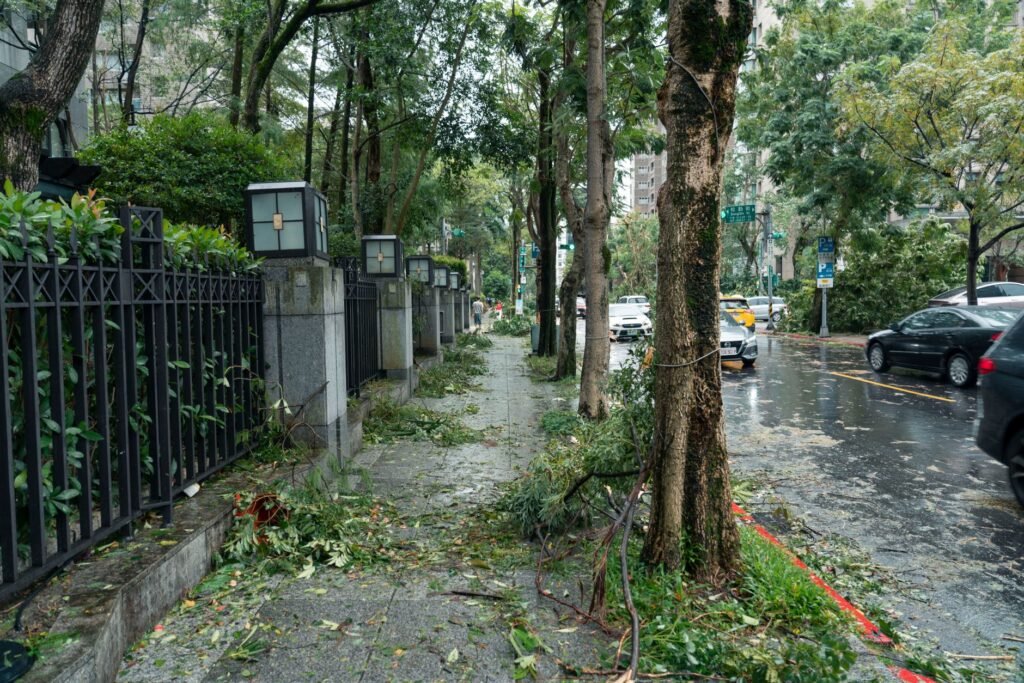
Typhoon Bavi made landfall in China on Sunday, bringing with it significant disruptions including widespread evacuations, flooding, and extensive flight delays. The powerful storm had previously carved a destructive path through the Philippines, where it was responsible for at least 17 fatalities, before skirting the coast of Japan and impacting Taiwan.
The sheer scale of Typhoon Bavi was immense, with its widest point reportedly spanning a breadth comparable to that of France. As the storm approached the Chinese mainland, authorities initiated urgent measures to mitigate its impact. Coastal regions, particularly those in the path of the typhoon’s projected trajectory, saw a substantial number of residents being evacuated to safer inland locations. These evacuations were a critical step in preventing loss of life and minimizing injuries as the typhoon’s fierce winds and torrential rains began to lash the shore.
Information reaching Tahir Rihat suggests that the storm’s arrival triggered severe flooding in many areas. Rivers and waterways, already potentially swollen by preceding weather patterns, were pushed to their limits by the intense rainfall associated with Bavi. Low-lying communities and urban centers were particularly vulnerable, with reports of streets inundated and infrastructure compromised. Emergency services were mobilized to respond to flood-related incidents, including rescue operations for stranded individuals and efforts to manage the damage to essential services.
The aviation sector experienced considerable disruption as a direct consequence of Typhoon Bavi. Numerous flights were either canceled or significantly delayed across several airports in the affected regions of China. This measure was taken as a precautionary step to ensure the safety of passengers and airline personnel, given the hazardous weather conditions, including high winds and reduced visibility, that are characteristic of a major typhoon. Travelers faced uncertainty and inconvenience as they awaited updates on flight schedules, with many journeys being postponed indefinitely.
The economic implications of Typhoon Bavi are also expected to be substantial. Beyond the immediate costs associated with disaster response and infrastructure repair, the disruption to transportation and potential damage to agricultural lands and coastal industries could have a lasting impact. The agricultural sector, in particular, is often vulnerable to such extreme weather events, with crops and livestock at risk from high winds, flooding, and storm surges. Coastal fishing communities also face significant losses due to damage to vessels and fishing equipment, as well as the inability to operate at sea during and immediately after the typhoon’s passage.
The meteorological agencies monitoring Typhoon Bavi had issued stern warnings in the days leading up to its landfall, highlighting its intensity and the potential for widespread damage. The storm’s development and movement were closely tracked, with advisories disseminated to relevant government bodies and the public. The coordinated efforts between meteorological services, emergency management agencies, and local authorities were crucial in the implementation of preparedness and response strategies. These efforts aimed to reduce the overall impact of the typhoon on lives and property.
The aftermath of Typhoon Bavi is expected to involve extensive damage assessment and recovery operations. Authorities will be tasked with clearing debris, restoring power and communication lines, and providing support to affected communities. The long-term rebuilding process for areas severely impacted by flooding and wind damage will likely require significant resources and sustained effort. The resilience of the affected populations and the effectiveness of relief measures will be key factors in the recovery trajectory.
The Philippines, where the typhoon claimed at least 17 lives, had already borne the brunt of its destructive power. The storm’s trajectory across the archipelago left a trail of devastation, underscoring the vulnerability of island nations to increasingly intense tropical cyclones. The impact on Taiwan, though perhaps less severe than in the Philippines or China, also contributed to the overall regional disruption caused by Bavi. The storm’s passage served as a stark reminder of the persistent threat posed by such meteorological phenomena, particularly in the context of a changing global climate.
As Typhoon Bavi moves inland, its intensity is expected to gradually decrease, but the lingering effects of heavy rainfall and potential for landslides in mountainous regions remain a concern. The focus for emergency responders will shift towards addressing the immediate needs of those displaced and beginning the arduous task of recovery. The scale of the disaster necessitates a comprehensive and coordinated response, involving both governmental and non-governmental organizations, to ensure that affected communities receive the necessary assistance to rebuild their lives and livelihoods.
The international community often plays a role in supporting nations affected by major natural disasters, and the impact of Typhoon Bavi may prompt calls for international aid. The extent of the damage and the capacity of the affected countries to manage the recovery independently will determine the level of external assistance required. The lessons learned from the response to Bavi will also contribute to the ongoing efforts to improve disaster preparedness and response mechanisms in regions prone to typhoons and other extreme weather events.
The sheer size of the typhoon, described as being as wide as France, emphasizes the vast area over which its effects were felt. This scale of impact necessitates a broad and coordinated response, involving multiple levels of government and a wide array of emergency services. The logistical challenges of evacuating large populations and providing aid across such a wide area are considerable, requiring meticulous planning and execution. The effectiveness of these measures will be a key determinant in the ultimate human and economic cost of the disaster.
The ongoing monitoring of weather patterns and the continuous improvement of forecasting capabilities are essential in mitigating the impact of future storms. The scientific community’s efforts to understand the dynamics of tropical cyclones and their potential intensification due to climate change are crucial for developing more effective early warning systems and adaptation strategies. The experience with Typhoon Bavi will undoubtedly inform future preparedness efforts and contribute to the global understanding of extreme weather events.


Tahir Rihat (also known as Tahir Bilal) is an independent journalist, activist, and digital media professional from the Chenab Valley of Jammu and Kashmir, India. He is best known for his work as the Online Editor at The Chenab Times.