


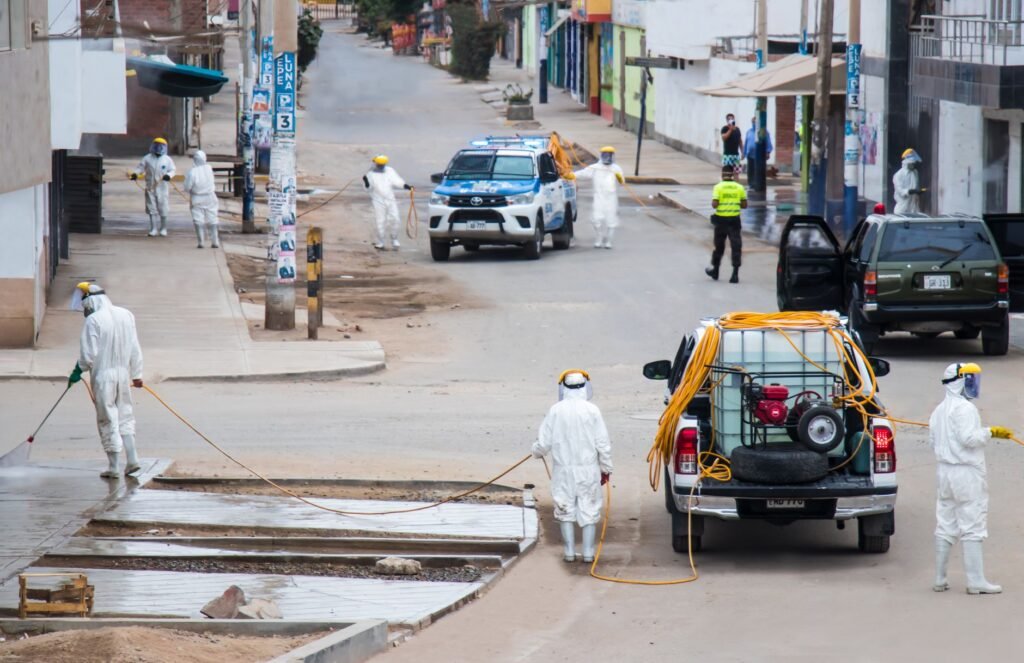
Bundibugyo, a small town in western Uganda, is once again at the forefront of a public health crisis, though this time its role is one of historical context rather than immediate outbreak. The Bundibugyo Ebola virus, named after this very town where it was first identified in 2007, has resurfaced in eastern Congo, disrupting life along a busy border region. This resurgence in the Democratic Republic of Congo (DRC) has prompted renewed attention and concern, drawing parallels to the devastating epidemic that first brought the virus to international attention two decades ago.
Information reaching Tahir Rihat suggests that the current outbreak in eastern Congo has led to a significant halt in daily activities in the border towns, a region historically characterized by robust trade and movement of people. The re-emergence of this specific strain of Ebola, which has a history of causing severe illness and high mortality rates, underscores the persistent threat of zoonotic diseases and the challenges of containing them in densely populated and mobile populations. The geographical proximity of the current outbreak to Uganda, and specifically to the region that lent its name to the virus, highlights the ongoing need for robust surveillance and preparedness measures across borders.
The 2007 outbreak in Bundibugyo was a stark reminder of the unpredictable nature of viral diseases and the critical importance of rapid response mechanisms. At that time, the virus spread through a community that had little prior knowledge of Ebola, leading to a challenging containment effort. The lessons learned from that experience, including the establishment of improved diagnostic capabilities and public health infrastructure, are now being re-examined as the virus makes its presence felt once more, albeit in a different, though geographically close, location. The international health community, including organizations like the World Health Organization, is closely monitoring the situation in eastern Congo, working with local authorities to implement containment strategies and provide medical assistance.
The economic and social fabric of eastern Congo is once again under strain as the Ebola outbreak takes hold. Border crossings, vital arteries for commerce and community interaction, have seen their usual bustle replaced by a palpable sense of caution and, in some areas, outright closure. This disruption impacts not only the immediate communities but also has ripple effects on regional trade and livelihoods. The history of Ebola outbreaks in the DRC, which has experienced numerous epidemics over the years, means that health officials are not entirely without experience in combating the virus. However, each outbreak presents unique challenges, influenced by local dynamics, the specific strain of the virus, and the accessibility of affected areas.
The Bundibugyo Ebola virus, also known as the Sudan ebolavirus species, is one of several strains of the Ebola virus. Its discovery in 2007 marked a significant moment in understanding the diversity of filoviruses. The initial outbreak in Uganda was eventually brought under control through intensive contact tracing, isolation of infected individuals, and public health education campaigns. The memory of that period, with its fear and loss, remains a potent reminder for the people of Bundibugyo and the surrounding regions of the potential devastation that such viruses can unleash. The current situation in eastern Congo is a somber echo of that past, emphasizing the cyclical nature of such health crises and the enduring vulnerability of human populations to novel pathogens.
As the outbreak unfolds in eastern Congo, the focus remains on preventing further spread, both within the DRC and across its international borders, particularly to neighboring countries like Uganda and Rwanda. Health authorities are deploying teams to affected areas to identify cases, provide care, and administer vaccines where available. The development and deployment of effective vaccines and treatments have been game-changing in the fight against Ebola in recent years, offering a crucial tool that was less advanced during the 2007 Bundibugyo outbreak. However, logistical challenges in reaching remote populations and ensuring equitable access to these interventions remain significant hurdles.
The international response to the current outbreak is being coordinated to provide financial, technical, and logistical support. This includes the provision of personal protective equipment for healthcare workers, laboratory supplies for rapid diagnosis, and resources for community engagement to build trust and encourage adherence to public health measures. The experience gained from previous Ebola outbreaks, including the massive West Africa epidemic of 2014-2016, has informed global preparedness strategies, leading to more streamlined and effective responses. Nevertheless, the persistent threat of Ebola underscores the need for sustained investment in public health infrastructure, research, and international cooperation to combat infectious diseases.
The town of Bundibugyo, which lent its name to this particular strain of the virus, now watches with a mixture of concern and historical awareness as the Bundibugyo Ebola virus once again emerges as a threat. Its experience serves as a poignant case study in the ongoing battle against emerging infectious diseases, highlighting the interconnectedness of global health and the critical importance of vigilance and preparedness in a world where pathogens know no borders.


Tahir Rihat (also known as Tahir Bilal) is an independent journalist, activist, and digital media professional from the Chenab Valley of Jammu and Kashmir, India. He is best known for his work as the Online Editor at The Chenab Times.