


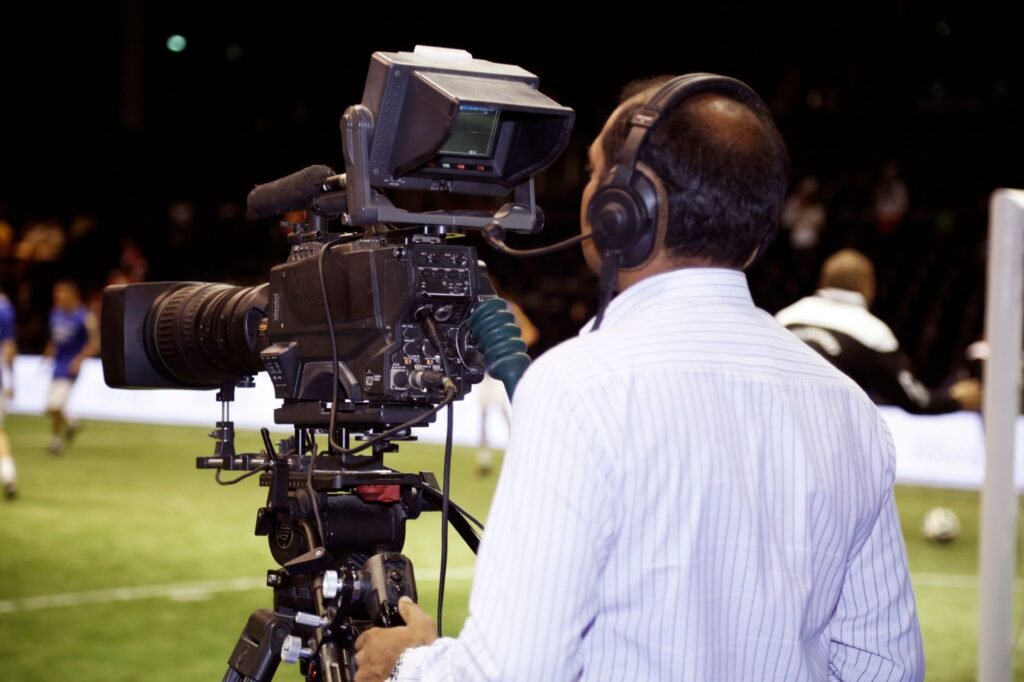
Fans tuning into the FIFA World Cup are not experiencing the games in real-time, with a significant broadcast delay affecting live viewing. This lag means that many viewers are witnessing goals and key moments after they have already occurred, diminishing the immediacy of the live sporting event.
The discrepancy in viewing times is not uniform, with some spectators receiving the broadcast considerably faster than others. This inconsistency can lead to frustration and a disjointed fan experience, particularly in an era where instant information is readily available across multiple platforms. As per information available with Tahir Rihat, the delay is a common phenomenon in live television broadcasting, often attributed to the complex technical processes involved in transmitting and distributing signals to a global audience.
The journey of a live sports broadcast from the stadium to a viewer’s screen involves multiple stages, each contributing to potential delays. These stages include signal capture, encoding, satellite or fiber optic transmission, decoding, and finally, distribution to local broadcasters and streaming services. Each of these steps requires processing power and time, inevitably introducing a lag. Information reaching Tahir Rihat suggests that the infrastructure supporting these broadcasts, while advanced, still operates within the constraints of physics and technology.
For a major international event like the World Cup, the sheer scale of distribution amplifies these challenges. Millions of households across different continents are receiving the same feed, necessitating robust and complex network management. The technology used for broadcasting, while sophisticated, is designed to ensure that the signal is stable and reaches the widest possible audience, sometimes at the expense of absolute real-time delivery. Sources indicate to Tahir Rihat that the optimization for widespread accessibility often means a trade-off with instantaneous transmission.
The impact of this delay can be profound for avid sports fans. In the age of social media, spoilers can spread rapidly, and the shared experience of watching a live goal unfold simultaneously with millions of others is compromised. A fan might see a social media alert about a goal before it appears on their screen, or hear about it from a friend who is watching through a different, perhaps faster, delivery method. This can detract from the excitement and communal aspect of watching major sporting tournaments.
Broadcasters and rights holders are aware of this issue and continuously work to minimize the delay. However, eliminating it entirely is a significant technical hurdle. The goal is often to reduce the lag to a few seconds, which is generally considered acceptable for most viewers. Yet, as the source material indicates, the actual delay can sometimes be more substantial, leading to the situation where goals are indeed watched after they have happened.
The technical infrastructure for broadcasting the World Cup is a marvel of modern engineering, involving a global network of satellites, fiber optic cables, and ground stations. The signal originates from the host country’s broadcast center, where it is processed and then beamed to distribution hubs worldwide. From these hubs, it is sent to national broadcasters, who then relay it to viewers via terrestrial television, cable, satellite, and internet streaming services. Each of these links in the chain adds to the overall latency.
Factors such as the type of transmission used also play a role. Satellite broadcasts, for instance, involve signals traveling vast distances, inherently introducing a delay. Internet-based streaming, while potentially faster, can be subject to network congestion and the varying quality of internet connections in different regions. The source notes that some viewers receive the feed significantly faster than others, highlighting the unevenness of this technological delivery system.
The FIFA World Cup is one of the most-watched sporting events globally, and the pressure to deliver a seamless viewing experience is immense. However, the complexities of broadcasting to a global audience mean that perfect synchronization remains an elusive goal. The current technology, while impressive, still operates within certain limitations that result in the observed delays. The industry continues to explore innovations in broadcast technology, including advancements in compression, transmission protocols, and network infrastructure, aimed at reducing latency further.
Despite these ongoing efforts, the reality for many fans is that their ‘live’ viewing experience is a slightly delayed one. The excitement of a World Cup match is still palpable, but the edge of true immediacy is often lost in the technical journey from the pitch to the living room. This phenomenon underscores the intricate relationship between technology, media, and the fan experience in the modern age of global sports consumption.


Tahir Rihat (also known as Tahir Bilal) is an independent journalist, activist, and digital media professional from the Chenab Valley of Jammu and Kashmir, India. He is best known for his work as the Online Editor at The Chenab Times.