


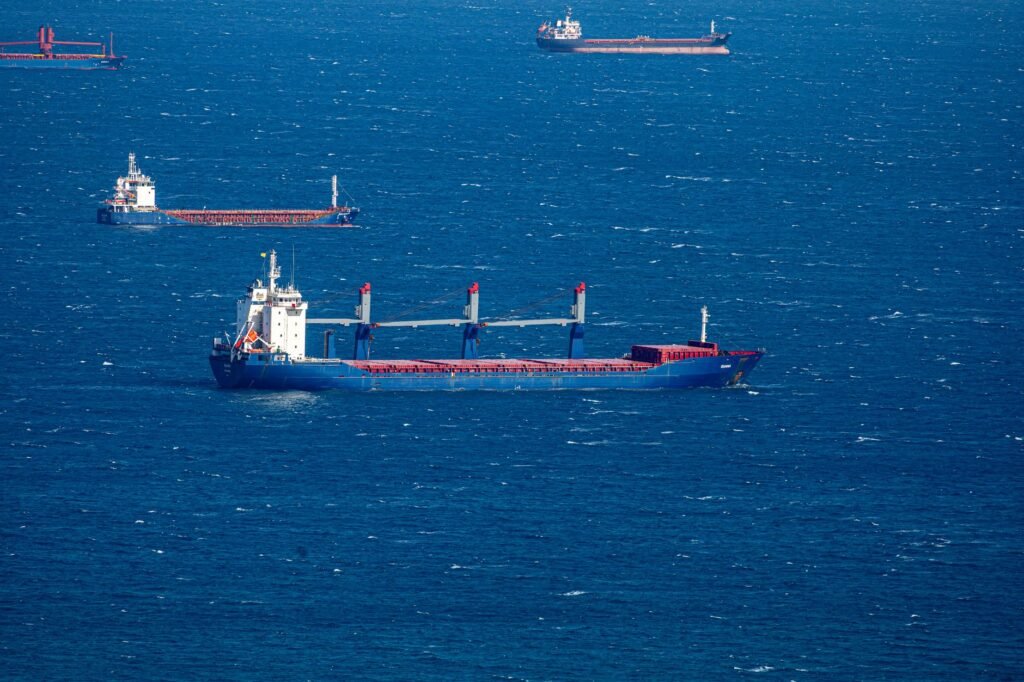
The Houthi militant group in Yemen has seemingly broadened the conflict between its principal backer, Iran, and the United States by initiating attacks on commercial vessels and declaring a blockade of a crucial maritime passage. This development marks a significant escalation, potentially drawing the region into a more volatile geopolitical landscape.
The actions by the Houthis, who control significant portions of Yemen, including the capital Sanaa, represent a direct challenge to international shipping lanes and could have far-reaching economic and security implications. The group’s stated intent to disrupt maritime traffic in a strategic waterway signals a new phase in the ongoing regional tensions, with Iran’s influence being a key factor.
As per information available with Tahir Rihat, the Houthi movement has been a significant proxy force for Iran in the Middle East, engaging in conflicts and exerting influence across the region. Their latest move appears to be a calculated effort to apply pressure on the United States and its allies, leveraging their control over key maritime routes.
The specific waterway targeted by the Houthis is of immense strategic importance, serving as a vital artery for global trade and energy supplies. Any sustained disruption to traffic in this area could lead to significant increases in shipping costs, impact global supply chains, and potentially trigger a more robust international response. The attacks on ships, while details remain scarce, suggest a growing capability and willingness by the Houthi forces to engage in direct confrontation.
This new front opened by the Houthis is seen by many analysts as a direct extension of Iran’s broader regional strategy. Iran has consistently denied direct involvement in Houthi operations, but international observers and intelligence agencies have long pointed to the provision of weapons, training, and financial support from Tehran to the Yemeni group. The timing of these attacks, coupled with the Houthi’s stated objectives, further fuels the perception of Iranian orchestration.
The United States has been a staunch opponent of Iran’s regional activities and has previously imposed sanctions and taken military actions in response to perceived threats from Iranian proxies. The Houthi blockade declaration is likely to be met with strong condemnation and potentially retaliatory measures from Washington and its allies. The risk of a wider conflict, drawing in multiple regional and international actors, has consequently increased.
The conflict in Yemen itself has been a protracted humanitarian crisis, with millions displaced and facing starvation. The Houthi’s decision to open a new front in their regional proxy war, rather than focusing solely on the internal conflict, suggests a strategic shift aimed at achieving broader geopolitical objectives. This could further complicate efforts to find a peaceful resolution to the Yemeni civil war.
The international community is closely monitoring the situation, with concerns mounting over the potential for escalation. Diplomatic channels are likely to be engaged in an attempt to de-escalate the situation and prevent further disruption to global trade. However, the Houthi’s bold move indicates a readiness to challenge the status quo and potentially alter the dynamics of the regional power struggle.
The attacks on ships and the declaration of a blockade are not merely regional incidents; they have the potential to reverberate across global markets and international security frameworks. The interconnectedness of the global economy means that disruptions in key maritime chokepoints can have swift and far-reaching consequences, impacting everything from oil prices to the availability of consumer goods.
The Houthi movement’s capacity to execute such actions suggests a level of sophistication and strategic planning that has evolved over years of conflict. Their ability to target and potentially interdict shipping in a strategic waterway underscores the growing capabilities of non-state actors in challenging established international norms and security arrangements. The implications for maritime security and freedom of navigation are profound.
The geopolitical implications of this new front are significant. It could force a recalibration of regional security strategies and potentially lead to a more direct confrontation between Iran and the United States, or their respective allies. The delicate balance of power in the Middle East is constantly shifting, and the Houthis’ actions represent a significant new variable in this complex equation.
The international response will be critical in determining the trajectory of this developing situation. Whether diplomatic efforts can prevail over military posturing, and how effectively the international community can safeguard vital shipping lanes, will be key factors in mitigating the potential fallout from this latest escalation.


Tahir Rihat (also known as Tahir Bilal) is an independent journalist, activist, and digital media professional from the Chenab Valley of Jammu and Kashmir, India. He is best known for his work as the Online Editor at The Chenab Times.