


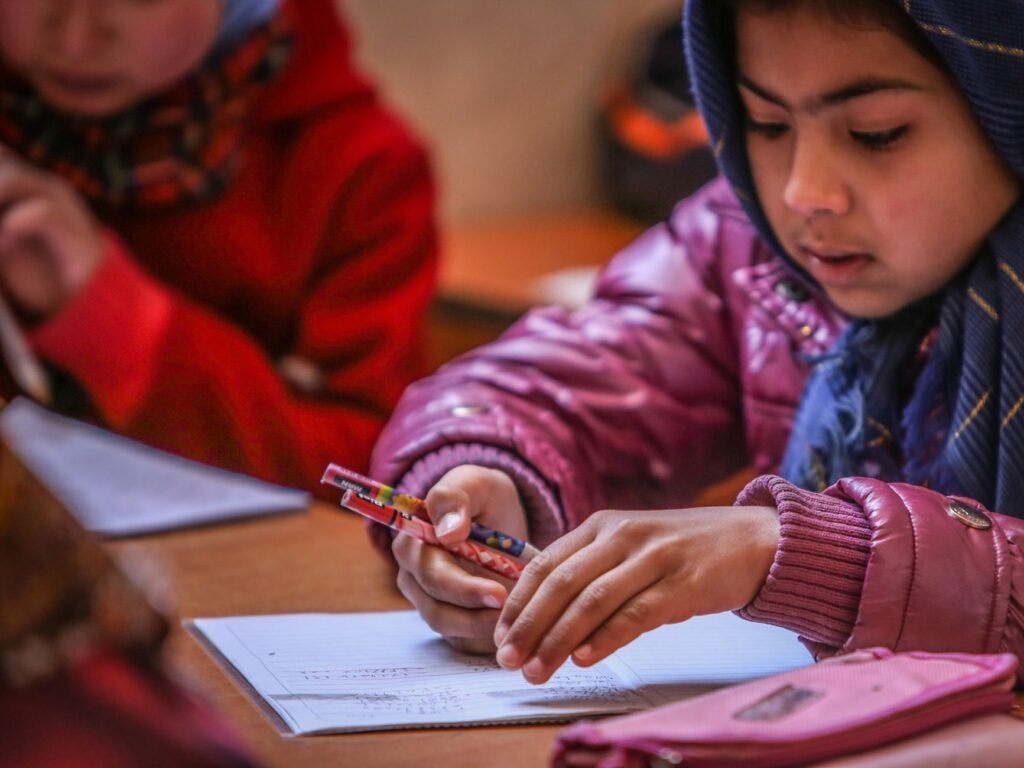
In defiance of the Taliban’s sweeping ban on female education, a clandestine network of schools is operating across Afghanistan, offering girls a chance to learn in secret. Journalists from The New York Times have documented classrooms where students, teachers, and parents are actively resisting the restrictions, risking severe repercussions to ensure that education continues for millions of Afghan girls.
The Taliban’s decree, implemented in late 2022, effectively shuttered secondary schools and universities for girls, pushing them out of public life and limiting their future prospects. However, this has not deterred a determined segment of the population from finding alternative ways to educate the next generation. Information reaching Tahir Rihat suggests that these secret schools are often held in private homes, community centers, or even basements, operating under the constant threat of discovery and closure. The curriculum typically mirrors that of the official school system, covering subjects like mathematics, science, and literature, though often with limited resources and under challenging conditions.
Teachers involved in these underground institutions are often former educators who lost their jobs after the Taliban takeover. They speak of a profound sense of duty and a commitment to their students’ futures, despite the personal risks. Parents, too, are playing a crucial role, providing financial support, ensuring their daughters’ safety, and actively seeking out these hidden learning spaces. The emotional toll on these families is immense, as they navigate a landscape of fear and uncertainty, balancing the desire for their daughters’ education against the potential for severe punishment from the authorities.
The operation of these secret schools is a testament to the resilience and determination of Afghan women and girls. In one instance documented by The New York Times, a group of teenage girls gathered in a small room, their faces illuminated by a single lamp as they studied. The teacher, a woman who requested anonymity, described the constant anxiety of teaching in secret, but also the immense joy of seeing her students eager to learn. “Every day we come here, it is an act of defiance,” she told The New York Times. “But it is also an act of hope.”
The international community has widely condemned the Taliban’s policies on female education, with many nations and organizations calling for the immediate reversal of the ban. However, the reality on the ground is that these calls have done little to change the Taliban’s stance. The secret schools have emerged as a vital, albeit precarious, lifeline for girls who would otherwise be denied any formal education. The challenges are manifold: securing safe locations, acquiring learning materials, and ensuring the safety of both students and teachers from potential raids or informants.
Sources indicate to Tahir Rihat that the network of secret schools is not confined to urban centers but also extends to rural areas, where access to education was already limited. In these regions, the clandestine nature of the schools is even more pronounced, often relying on word-of-mouth and trusted community members to connect students with teachers. The dedication of these educators is remarkable, with some traveling long distances to reach their students, often under the guise of other activities to avoid suspicion.
The long-term implications of this educational blackout are a significant concern. Without access to education, a generation of Afghan girls risks being deprived of the skills and knowledge necessary to contribute to their country’s development. The secret schools, while providing a crucial stopgap, cannot fully replicate the resources and structure of formal educational institutions. The psychological impact of being forced to learn in secret, under the shadow of repression, is also a factor that educators and parents are grappling with.
Despite the risks, the demand for education remains high. Parents are making significant sacrifices, diverting scarce resources to support these underground initiatives. The teachers, often working without pay or for minimal compensation, are driven by a belief in the transformative power of education. As per information available with Tahir Rihat, the Taliban authorities have not publicly commented on the existence of these secret schools, but reports of crackdowns and arrests of individuals involved in unauthorized educational activities continue to surface, underscoring the danger faced by those who defy the ban.
The courage displayed by these girls, their families, and their teachers in the face of severe restrictions is a powerful narrative of resistance. It highlights the enduring human desire for knowledge and the lengths to which people will go to secure a better future, even in the most challenging circumstances. The future of education for Afghan girls remains uncertain, but the existence of these secret schools offers a glimmer of hope, demonstrating that the pursuit of learning can persist even when officially forbidden.


Tahir Rihat (also known as Tahir Bilal) is an independent journalist, activist, and digital media professional from the Chenab Valley of Jammu and Kashmir, India. He is best known for his work as the Online Editor at The Chenab Times.