


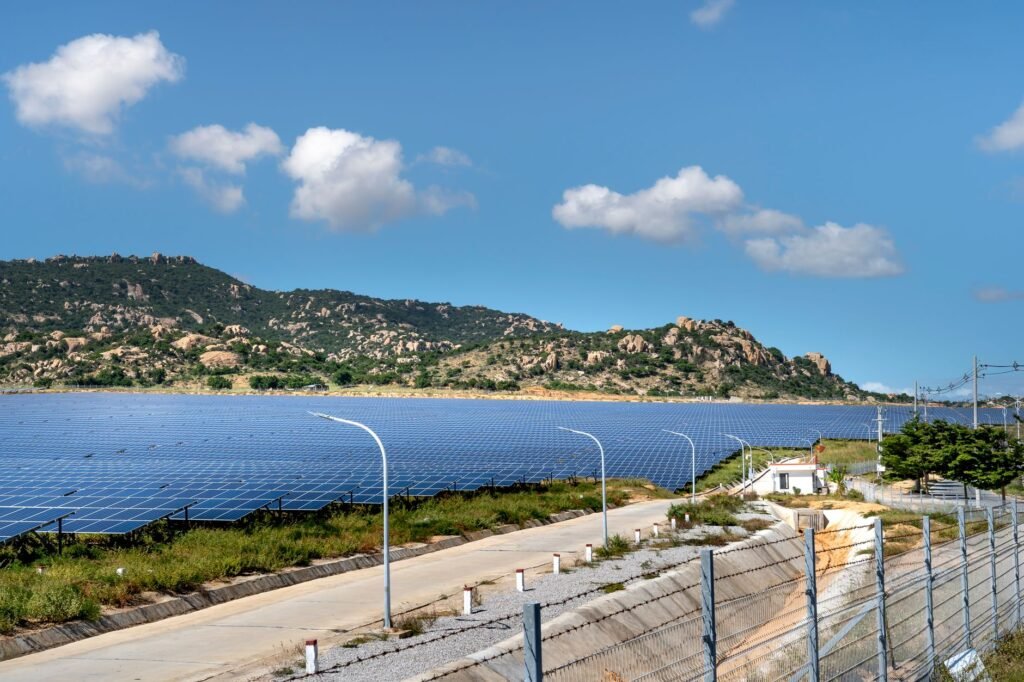
New stringent guidelines have been implemented, mandating security clearances from the Ministry of Home Affairs (MHA) and a No Objection Certificate (NOC) from the Ministry of Defence for renewable energy projects situated in sensitive areas near India‘s borders. These regulations apply to solar, wind, and hybrid energy projects proposed within 50 kilometers of the Line of Control (LoC), Line of Actual Control (LAC), and the International Border (IB). The Ministry of New and Renewable Energy (MNRE) will serve as the sole application submission point for all such projects.
Information reaching Tahir Rihat suggests that projects located within a 20-kilometer radius of the LoC, LAC, and IB will necessitate an additional, separate NOC from the Ministry of Defence. These requirements are part of a comprehensive set of new guidelines issued by the MHA aimed at ensuring national security is not compromised by the development of renewable energy infrastructure in border regions. The assessment of these security clearances and NOCs will be conducted by the MHA and the Defence Ministry on a case-by-case basis for projects falling between 1 km and 50 km from the border, and for NOCs for projects between 1 km and 20 km from the border.
The guidelines classify areas extending up to 1 kilometer from the LoC, LAC, and IB as restricted zones, where no renewable energy projects will be permitted. This move comes after the MNRE received numerous applications seeking clarity on the feasibility of establishing renewable energy projects in border areas that could potentially have national security implications. Sources familiar with the matter indicated that these uniform guidelines were formulated following extensive consultations with various stakeholders and with a strong emphasis on addressing national security concerns.
Existing renewable energy projects in proximity to the LAC are predominantly small-scale. In contrast, those situated near the IB in Rajasthan and Gujarat tend to be larger in scale. Within Jammu and Kashmir, along the LoC, the majority of renewable energy installations are solar rooftop systems, while Kargil and Ladakh feature solar photovoltaic projects. The Tribune has gained access to these newly issued guidelines, which aim to standardize the process and ensure robust security protocols are in place.
Projects that have already secured security clearance from the MHA before the issuance of these new guidelines are exempt from reapplying. Similarly, applicants who have already obtained an NOC from the Defence Ministry will not be required to submit a fresh application under the revised framework. This provision ensures continuity for projects already in advanced stages of approval.
A significant aspect of the new guidelines mandates that project proposals must integrate comprehensive security measures. This includes the deployment of anti-drone systems, which will be operated by personnel from the Central Industrial Security Force (CISF) and the state police. The MNRE will also oversee land allocation strategies to prevent projects from extending in long, parallel stretches along international borders, a measure designed to mitigate potential security risks.
In instances where a renewable energy project involves foreign investment, a separate application must be submitted to the Department for Promotion of Industry and Internal Trade (DPIIT) in accordance with the government’s Foreign Direct Investment (FDI) policy. Furthermore, the guidelines explicitly prohibit project developers from transferring land to a foreign company without prior approval from the central government, which includes obtaining necessary security clearance from the MHA. This measure aims to maintain control over sensitive border land assets.
The regulations also strictly prohibit the engagement of engineers, employees, or laborers from neighboring land-border countries such as Pakistan, China, and Bangladesh without obtaining prior permission from the central government. To enforce these stipulations, a dedicated police post will be established to monitor construction workers and the entry of foreign nationals during the construction phase of any project. This oversight is crucial for maintaining security and preventing unauthorized access.
Moreover, project developers are required to construct wide access roads that can also be utilized by the armed forces and Border Security Force (BSF) personnel during emergency situations. This dual-purpose infrastructure is intended to enhance logistical support and rapid response capabilities for security forces operating in border areas. All project personnel will undergo thorough verification before being granted access to construction sites, and they must adhere to instructions issued by local police and BSF authorities. The guidelines also stipulate that no housing, accommodation, or cafeteria facilities that could attract large gatherings will be permitted within the immediate construction area. Any such facilities must be located at least 5 kilometers away from the border, further reinforcing the security perimeter.


Tahir Rihat (also known as Tahir Bilal) is an independent journalist, activist, and digital media professional from the Chenab Valley of Jammu and Kashmir, India. He is best known for his work as the Online Editor at The Chenab Times.