


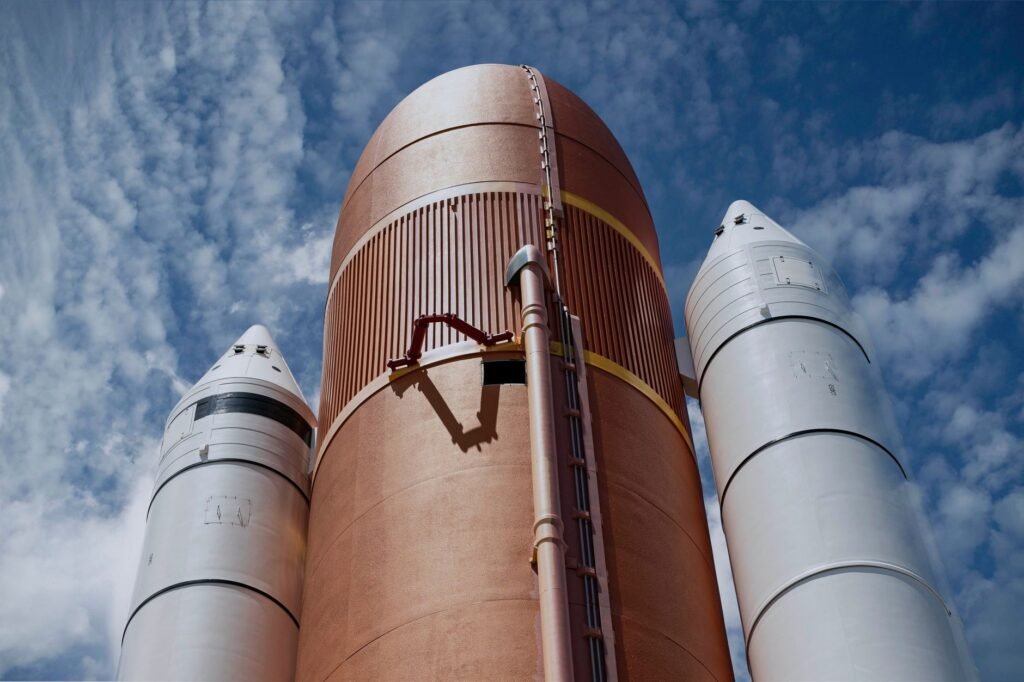
The Chinese private aerospace company LandSpace has successfully landed the first stage of its reusable rocket, a significant achievement that could intensify competition in the global low-cost spaceflight market. This development positions China to potentially challenge the dominance of established players like SpaceX.
The successful recovery of the rocket’s first stage marks a critical step for LandSpace, a company that has been rapidly advancing its capabilities in the commercial space sector. The ability to reuse rocket components is a key factor in reducing the cost of space launches, making access to orbit more affordable for a wider range of customers, including satellite operators and research institutions. Information reaching Tahir Rihat suggests that this milestone was achieved during a recent test flight, though specific details regarding the mission’s altitude and trajectory have not been fully disclosed by the company.
The implications of this successful landing are substantial for the international space industry. Reusable rocket technology has been a primary focus for major spacefaring nations and private companies aiming to make space exploration and utilization more economically viable. SpaceX, with its Falcon 9 and Falcon Heavy rockets, has pioneered and extensively demonstrated the effectiveness of vertical landing for booster recovery. LandSpace’s achievement indicates that China’s private sector is now making considerable strides in this area, potentially narrowing the technological gap.
The development is particularly noteworthy given the increasing demand for launch services. As more satellites are deployed for telecommunications, Earth observation, and internet constellations, the need for cost-effective and frequent launches is paramount. Companies that can offer lower launch prices are poised to capture a larger share of this growing market. LandSpace’s success could therefore lead to increased investment and innovation within China’s burgeoning private space industry.
While the exact technical specifications of LandSpace’s rocket and its landing system are proprietary, the company’s ambition to compete on the global stage is clear. The ability to recover and refurbish rocket boosters allows for a significant reduction in manufacturing costs for subsequent missions. This economic advantage is crucial for attracting commercial clients who are sensitive to launch expenses. The success of LandSpace’s reusable rocket program will be closely watched by industry analysts and competitors alike, as it signals a potential shift in the global launch landscape.
The journey towards reusable rocket technology has been complex, involving sophisticated engineering for propulsive landing, precise guidance systems, and robust structural integrity to withstand the stresses of ascent and descent. The successful execution of such a maneuver requires extensive testing and refinement. LandSpace’s accomplishment suggests a high level of technical proficiency and a commitment to innovation within the company. The broader impact could also extend to China’s national space program, potentially accelerating its own ambitions for space exploration and utilization by providing more affordable launch capabilities.
The competitive pressure from LandSpace and other emerging Chinese space companies is likely to spur further innovation among existing players. The pursuit of lower launch costs is a continuous race, and breakthroughs like this reusable rocket landing underscore the dynamic nature of the space industry. As China’s private sector continues to mature, its contributions to space technology are becoming increasingly significant, moving beyond state-led initiatives to market-driven innovation. The successful landing of a reusable rocket stage by LandSpace is a testament to this evolving landscape and a clear indication of China’s growing influence in the global space economy.


Tahir Rihat (also known as Tahir Bilal) is an independent journalist, activist, and digital media professional from the Chenab Valley of Jammu and Kashmir, India. He is best known for his work as the Online Editor at The Chenab Times.