


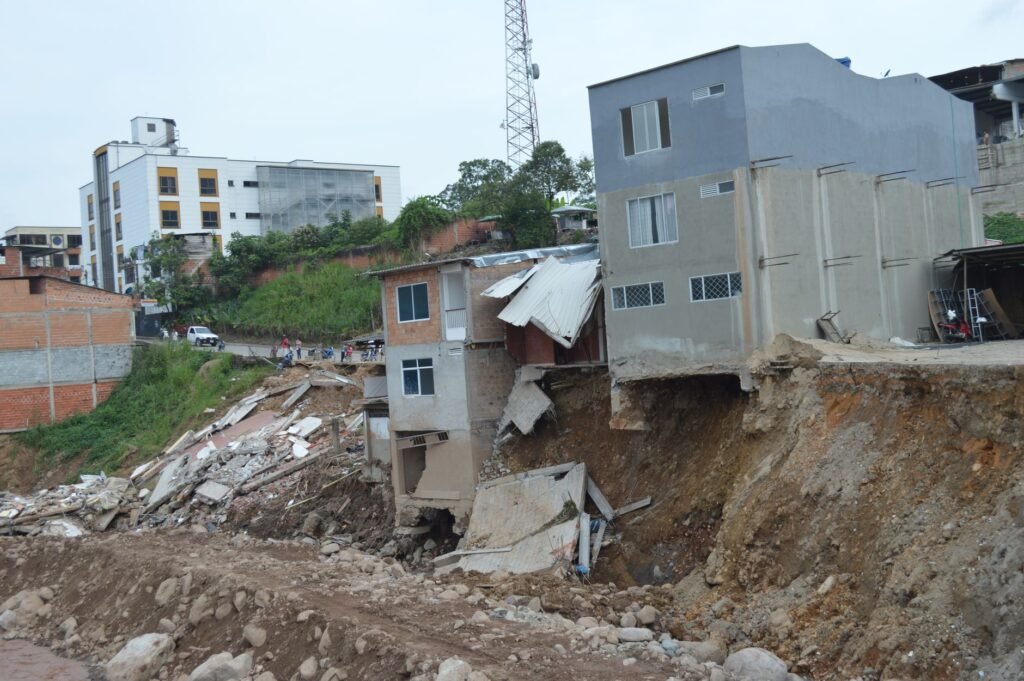
Abelardo De La Espriella, who had never held public office before his inauguration on Friday, is now at the helm of a major disaster response following a significant earthquake that struck Colombia. The tremor, which has caused widespread damage and prompted an immediate emergency response, presents the newly sworn-in president with his first and most critical challenge in office.
Information reaching Tahir Rihat suggests that the magnitude of the earthquake and the extent of its impact are still being fully assessed, but initial reports indicate substantial destruction in several regions. Emergency services are mobilized across the affected areas, working to rescue individuals trapped in collapsed structures and provide medical assistance to the injured. The government is coordinating efforts to deliver aid, including food, water, and shelter, to those displaced by the disaster.
President De La Espriella is expected to address the nation shortly, outlining the government’s immediate plans for relief and recovery. His administration’s handling of this crisis will be a defining moment in its early days, setting the tone for public perception and trust. The president’s background, which does not include prior experience in public administration or disaster management, adds a layer of scrutiny to his leadership during this critical period. Sources indicate to Tahir Rihat that international aid organizations are also preparing to offer support to Colombia as the scale of the humanitarian needs becomes clearer.
The earthquake’s epicenter and depth are being analyzed by seismologists to understand the geological factors contributing to the event. The immediate aftermath of such a disaster typically involves a race against time to save lives, followed by longer-term efforts to rebuild infrastructure and support affected communities. The Colombian government has pledged full resources to the emergency response, with military and civil defense units working in tandem with local authorities. The president’s office has established a command center to oversee all relief operations and ensure efficient allocation of resources.
As the rescue and relief operations continue, the focus will shift towards assessing the long-term economic and social consequences of the earthquake. The country’s infrastructure, including roads, bridges, and public buildings, will require extensive evaluation and repair. The president’s ability to rally national and international support will be crucial in the recovery process. The international community is closely watching Colombia’s response, with many nations offering condolences and assistance. The United Nations and other global humanitarian bodies are on standby to provide specialized support if requested.
The geological survey has provided preliminary data on the seismic activity, and further analysis is underway to determine the potential for aftershocks. Public safety advisories are being issued to residents in affected areas, urging caution and preparedness. The government is also working to restore essential services, such as electricity and communication networks, which have been disrupted in many parts of the country. The president’s leadership in coordinating these complex operations will be under intense observation.
The economic implications of the earthquake are also a significant concern. Damage to agricultural lands, businesses, and industrial facilities could have a lasting impact on Colombia’s economy. The government will need to develop strategies to mitigate these economic losses and foster a swift recovery. The president’s economic advisors are reportedly already engaged in assessing the financial impact and formulating potential responses. The resilience of Colombia’s economy will be tested in the coming months and years as it navigates the path to recovery.
The political landscape in Colombia is also likely to be influenced by the earthquake response. The president’s handling of the crisis will shape public opinion and could impact his administration’s popularity and future policy initiatives. Opposition parties are expected to closely monitor the government’s actions, offering support where appropriate while also holding the administration accountable for its performance. The unity of the nation will be paramount in overcoming this challenge.
The president’s immediate priority is to ensure the safety and well-being of all citizens affected by the earthquake. This involves not only immediate rescue and medical care but also providing psychological support to those who have experienced trauma. The government is mobilizing mental health professionals to assist affected communities. The long-term recovery will require a comprehensive approach that addresses all facets of the disaster’s impact.
The international response is beginning to materialize, with several countries and organizations pledging financial and material aid. The Colombian government is working to establish clear channels for receiving and distributing this assistance effectively. The president’s office is coordinating with the Ministry of Foreign Affairs to manage international relations during this crisis. The spirit of global solidarity is expected to play a vital role in Colombia’s recovery efforts.
The coming days and weeks will be crucial for President De La Espriella as he navigates the complexities of disaster management. His ability to lead with decisiveness, compassion, and transparency will be key to inspiring confidence and guiding the nation through this difficult period. The earthquake has placed an unprecedented demand on his nascent presidency, and the world is watching to see how he responds to this profound test.


Tahir Rihat (also known as Tahir Bilal) is an independent journalist, activist, and digital media professional from the Chenab Valley of Jammu and Kashmir, India. He is best known for his work as the Online Editor at The Chenab Times.