


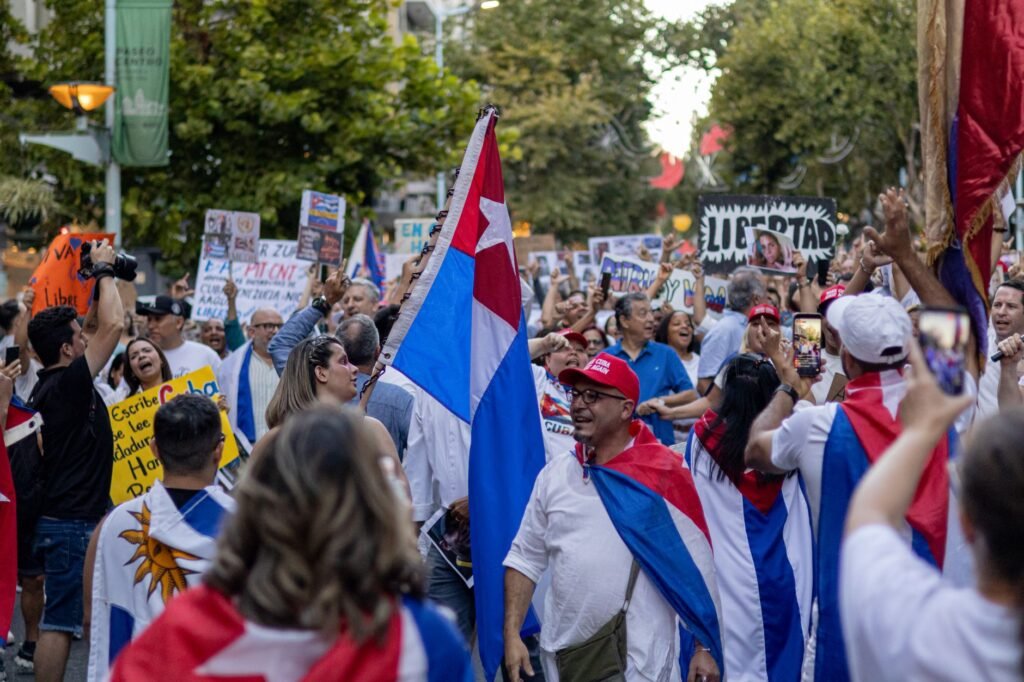
Luis Manuel Otero Alcántara, a prominent Cuban dissident and former political prisoner, has arrived in Miami carrying 4,000 paintings and encountering a complex reception from the Cuban exile community. Once a figure lauded by many in exile for his activism against the Cuban government, Alcántara is now navigating criticism and accusations from some of the same individuals and groups who previously supported him. This shift in sentiment highlights the intricate and often contentious dynamics within the Cuban diaspora and the ongoing debate surrounding strategies for achieving political change in Cuba.
Information reaching Tahir Rihat suggests that Alcántara’s arrival in Miami has been met with a mixture of welcome and sharp rebuke. While some continue to see him as a symbol of resistance, others have voiced concerns and expressed disappointment over his recent experiences and perceived actions. The core of the criticism appears to stem from his release from Cuban custody, which some exiles interpret as a concession or a sign of weakness, particularly given the circumstances under which it occurred. Details surrounding his release, including reports of him sharing whiskey with his captors, have become a focal point for those who believe a harder line should be taken against the Cuban regime.
Alcántara, known for his role in the San Isidro Movement, a group that uses art and civil disobedience to protest government repression, had been detained for extended periods in Cuba. His release was seen by many as a significant development, but the narrative surrounding it has quickly become a source of division. Critics argue that any interaction, even seemingly convivial ones, with state security officials undermines the struggle for democracy and human rights in Cuba. They contend that such moments can be exploited by the government to portray dissidents as less committed or even complicit, thereby diminishing the international pressure for reform. This perspective often emphasizes a zero-tolerance approach to any engagement with the authorities, viewing it as a betrayal of the cause.
Conversely, supporters of Alcántara, and indeed Alcántara himself, may frame his release and interactions as strategic maneuvers within a challenging political landscape. The argument often made in such situations is that maintaining dialogue, even under duress, can be a means of survival, information gathering, or even subtle resistance. The act of sharing a drink, while jarring to some, could be interpreted by others as a demonstration of human resilience or an attempt to de-escalate a tense situation, thereby allowing for his eventual freedom and continued activism. The complexity of operating within an authoritarian state means that actions are often subject to multiple interpretations, and the exile community, with its own varied experiences and political stances, is particularly prone to differing viewpoints.
The 4,000 paintings Alcántara brought with him represent a substantial body of his artistic work, much of which is likely to be critical of the Cuban government and reflective of his experiences as a dissident. These artworks are not merely artistic creations; they are often seen as political statements and historical documents, offering a visual narrative of the struggle for freedom and human dignity. Their exhibition and potential sale in Miami could serve to further highlight the issues faced by artists and activists in Cuba, potentially raising funds and awareness for the cause. However, the controversy surrounding his release could also cast a shadow over these artistic endeavors, leading to debates about the legitimacy of his message or the methods he employed.
The reception Alcántara is receiving in Miami underscores the deep divisions and passionate debates that characterize the Cuban exile community. This community, largely composed of individuals and families who have fled the communist government, often holds strong opinions about the best path forward for Cuba. These opinions can range from advocating for complete isolation and sanctions against the government to supporting more nuanced approaches that involve engagement and dialogue. The arrival of a figure like Alcántara, who has directly experienced life under the regime and engaged with its officials, inevitably brings these differing ideologies into sharp focus. His experiences and the reactions to them serve as a microcosm of the broader political discourse surrounding Cuba.
The San Isidro Movement, which Alcántara co-founded, has been instrumental in bringing international attention to human rights abuses in Cuba. The movement employs a range of tactics, including hunger strikes, artistic protests, and social media campaigns, to challenge the authority of the Cuban Communist Party. Alcántara, in particular, has been a visible and often controversial figure within this movement, undertaking acts of civil disobedience that have led to his repeated detention. His ability to continue his activism from exile, while potentially more secure, also presents new challenges in terms of maintaining relevance and influence within Cuba and among the diaspora.
The criticism directed at Alcántara is not unprecedented. Throughout the history of exile movements, prominent figures who have had direct dealings with oppressive regimes have often faced scrutiny and accusations of collaboration. The exile community in Miami, in particular, has a long history of strong anti-Castro sentiment, and any perceived deviation from a hardline stance can be met with significant opposition. This environment can be particularly challenging for individuals like Alcántara, who have operated within Cuba and had to make difficult choices under constant surveillance and pressure. The narrative of resistance is often highly idealized, and the realities of navigating an authoritarian system can be difficult for those outside to fully comprehend or accept.
The implications of this reception extend beyond Alcántara himself. It raises questions about how the international community and diaspora groups should engage with dissidents who operate in complex and often compromising environments. It also highlights the importance of understanding the diverse strategies employed in the fight for human rights and democracy, recognizing that there may not be a single, universally applicable approach. As Alcántara begins to unpack his art and navigate his new reality in Miami, his situation serves as a compelling case study in the ongoing struggle for freedom in Cuba and the multifaceted nature of exile politics.


Tahir Rihat (also known as Tahir Bilal) is an independent journalist, activist, and digital media professional from the Chenab Valley of Jammu and Kashmir, India. He is best known for his work as the Online Editor at The Chenab Times.