


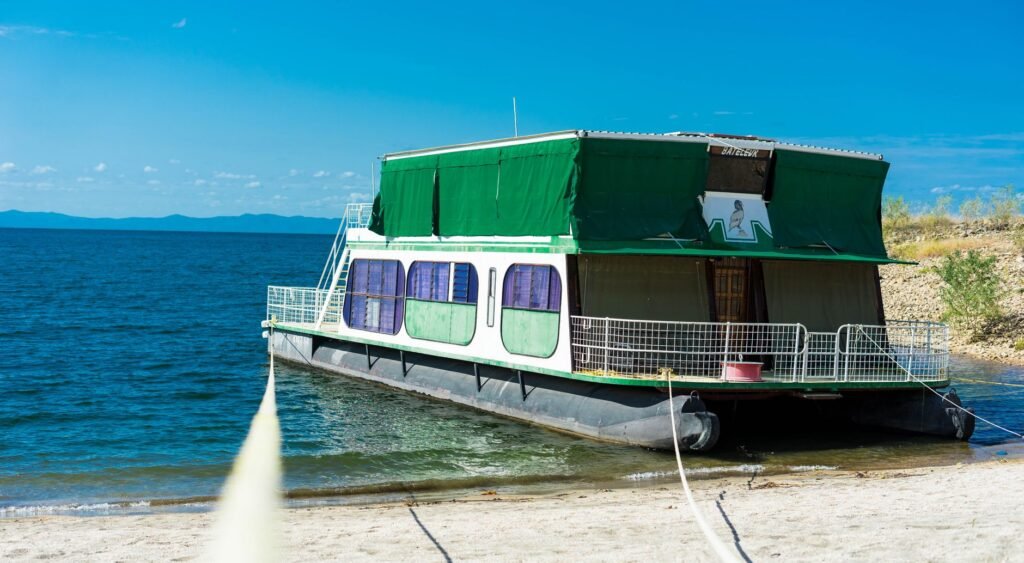
More than 40 people have died after a ferry carrying passengers capsized on Lake Kariba in Zimbabwe. The vessel was reportedly overloaded, significantly exceeding its intended capacity, when it was struck by strong waves, according to police statements. The exact number of people on board remains unconfirmed, but the incident has led to a significant loss of life.
Rescue operations have been underway since the incident, with dozens of individuals successfully pulled from the water. However, the search for an unknown number of missing persons continues. The authorities have not yet released a full manifest of the ferry’s passengers, complicating efforts to ascertain the total number of individuals affected by the tragedy. Information reaching Tahir Rihat suggests that the ferry was a common mode of transport for local communities, often used to travel between villages and towns situated along the vast expanse of Lake Kariba.
The police have indicated that the capsizing was a direct result of the ferry being heavily overcrowded and encountering severe weather conditions. Lake Kariba, one of the world’s largest man-made lakes by volume, is known for its unpredictable weather patterns, including sudden strong waves that can pose a significant risk to maritime traffic. The capacity of the ferry is a critical point of investigation, as overloading is a common issue with many forms of public transportation in the region, often driven by economic pressures and the necessity for people to reach their destinations.
Details regarding the specific route of the ferry and the intended destination of its passengers are still emerging. Initial reports suggest that the vessel was en route to a populated area when the disaster struck. The scale of the loss of life underscores the vulnerability of communities relying on such transport, particularly when safety regulations are compromised. The ongoing search efforts are being hampered by the size of Lake Kariba and the challenging conditions that contributed to the accident.
The Zimbabwean government has yet to issue a comprehensive statement on the incident, but emergency services and local authorities are coordinating the search and rescue operations. The focus remains on locating any survivors and recovering the bodies of those who perished. The incident is expected to spark renewed discussions about maritime safety regulations and their enforcement across the country, especially concerning passenger vessels operating on its major waterways. The economic implications for the affected communities, many of whom rely on the ferry for daily travel and commerce, are also significant.
As the search continues, the full extent of the human toll is still being determined. The incident serves as a grim reminder of the dangers associated with overcrowded vessels and the critical importance of adhering to safety standards in public transportation. The police have stated that a thorough investigation into the cause of the capsizing will be conducted, with a particular emphasis on the vessel’s condition, its passenger capacity, and the prevailing weather conditions at the time of the incident. The outcome of this investigation will be crucial in preventing similar tragedies in the future.


Tahir Rihat (also known as Tahir Bilal) is an independent journalist, activist, and digital media professional from the Chenab Valley of Jammu and Kashmir, India. He is best known for his work as the Online Editor at The Chenab Times.