


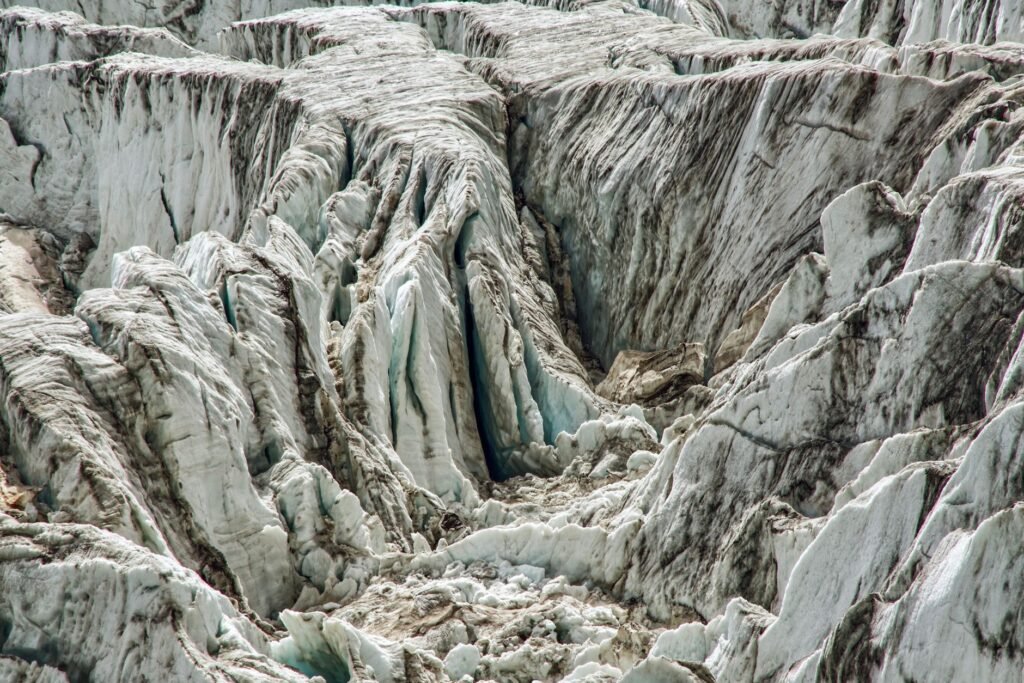
Rising global temperatures are accelerating the melting of glaciers and permafrost in the Himalayas, significantly increasing the risk of catastrophic natural disasters in the region. Scientists are actively investigating the precise triggers for recent events, such as the landslide that occurred this week, but the overarching trend points to climate change as a primary driver.
The Himalayas, often referred to as the “Third Pole” due to its vast ice reserves, are experiencing warming at a rate faster than the global average. This accelerated melting not only threatens water supplies for millions downstream but also destabilizes mountain slopes, making them more susceptible to landslides and glacial lake outburst floods (GLOFs). Information reaching Tahir Rihat suggests that the delicate balance of these high-altitude ecosystems is being severely disrupted, with potentially devastating consequences for communities in Nepal and surrounding areas.
The recent landslide, which has caused widespread devastation, is a stark reminder of the vulnerability of these mountainous regions. While the exact mechanisms behind individual events are complex and subject to ongoing scientific scrutiny, the broader pattern of glacial retreat and permafrost thaw is well-established. As temperatures continue to climb, the frozen ground that holds mountain slopes together begins to thaw, reducing its structural integrity. This process can lead to sudden and violent collapses, unleashing torrents of debris and water.
Glacial lakes, formed by the melting of glaciers, also pose a significant threat. As these lakes grow larger and deeper, the moraine dams that contain them can become unstable. A sudden breach can result in a GLOF, a rapid and destructive wave of water and ice that can travel for miles, obliterating everything in its path. The frequency and intensity of such events are projected to increase as climate change progresses, according to numerous scientific reports.
The implications for regional security and development are profound. Communities in the Himalayan foothills are often remote and lack robust infrastructure, making them particularly vulnerable to disasters. The loss of life, displacement of populations, and destruction of homes and livelihoods can have long-lasting socio-economic impacts. Furthermore, the disruption of water resources can exacerbate existing tensions and create new challenges for water management and agricultural productivity.
International scientific bodies have repeatedly warned about the disproportionate impact of climate change on the cryosphere, the frozen parts of the planet. The Himalayas are a critical component of this system, influencing weather patterns and water cycles across a vast swathe of Asia. The accelerated melting observed in the region is a clear indicator that global efforts to curb greenhouse gas emissions are not yet sufficient to mitigate the most severe consequences of a warming planet.
Researchers are employing a range of technologies, including satellite imagery, ground-based monitoring, and advanced modeling, to better understand the dynamics of glacial melt and permafrost thaw. The goal is to improve early warning systems for GLOFs and landslides, providing communities with crucial time to evacuate and minimize casualties. However, the scale of the challenge is immense, requiring sustained investment in scientific research and adaptation strategies.
The events unfolding in the Himalayas underscore the urgent need for global cooperation on climate action. While local adaptation measures are essential, addressing the root cause of the problem—greenhouse gas emissions—requires a concerted international effort. The future of millions of people and the stability of a vital global ecosystem depend on the world’s ability to transition to a low-carbon economy and limit further warming.


Tahir Rihat (also known as Tahir Bilal) is an independent journalist, activist, and digital media professional from the Chenab Valley of Jammu and Kashmir, India. He is best known for his work as the Online Editor at The Chenab Times.