


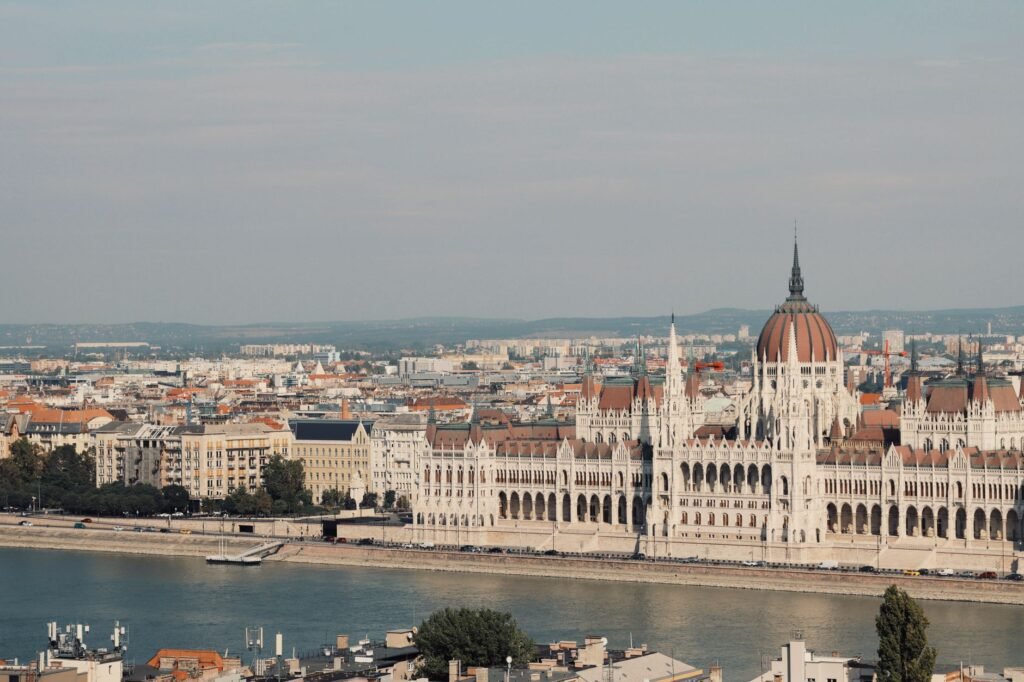
The newly appointed government of Peter Magyar in Hungary had anticipated that the official suite overlooking the Danube River would serve as a potent symbol of autocrat indulgence, a stark visual to underscore their narrative of a regime change. However, the opulent trappings and furnishings within the office have fallen short of expectations, failing to project the grandeur and unchecked power that the administration had hoped to convey to the Hungarian public and international observers. The suite, intended to be a testament to the excesses of the previous administration, instead presents a more subdued and perhaps even underwhelming image, according to reports.
Sources indicate to Tahir Rihat that the government’s strategy was to leverage the physical space as a tangible piece of evidence against the former leadership, portraying it as a den of lavish spending and self-serving luxury. The expectation was that the sheer scale and extravagance of the office would immediately resonate with citizens, reinforcing the message of a corrupt and self-aggrandizing regime being ousted. The reality, however, is that the decor and amenities, while undoubtedly of high quality, do not possess the ostentatious character that would unequivocally support such a strong indictment. This disconnect between the intended message and the actual presentation of the office is a significant misstep for the new government, which is seeking to consolidate its power and legitimacy.
The suite, which was a focal point of the government’s initial messaging, features high-end furniture and a commanding view of Budapest’s iconic waterway. Yet, the overall impression is one of understated elegance rather than overt decadence. This lack of extreme opulence makes it more challenging for Magyar’s administration to draw a clear and dramatic contrast with the previous government’s perceived excesses. The narrative the government is attempting to build relies heavily on visual cues and symbolic representations of power and corruption, and the underwhelming nature of the office’s interior design undermines this effort. Information reaching Tahir Rihat suggests that internal discussions within the government have touched upon this perceived deficiency, with some aides expressing concern that the visual evidence does not align with the strong rhetoric being employed.
The strategic use of such spaces in political messaging is a well-established tactic. Governments often highlight the perceived extravagance of their predecessors to justify their own actions, rally public support, and establish a moral high ground. In this instance, the Hungarian government appears to have miscalculated the impact of the physical environment. The office, rather than being a smoking gun of autocracy, is being perceived by some as merely a well-appointed workspace. This subtle but significant difference in perception can have a considerable impact on public opinion, especially in a political climate where narratives are often driven by strong emotional appeals and easily digestible visual metaphors. The government’s ability to effectively communicate its message of reform and accountability is thus hampered by this seemingly minor detail.
The political implications of this misstep are not to be underestimated. The new government is in a critical phase of establishing its authority and winning over a skeptical populace. Any perception of a failure to deliver on its promises, even on a symbolic level, can erode public trust. The opposition, which is likely to scrutinize every move made by the new administration, will undoubtedly seize upon this apparent lack of tangible evidence of the previous government’s alleged excesses. They may argue that the government is exaggerating its claims or struggling to find concrete proof of the corruption it has so vehemently denounced. This can create an opening for the opposition to question the legitimacy of the government’s mandate and its overall agenda.
Furthermore, the international community, which closely monitors political developments in Hungary, may interpret the subdued nature of the office as a sign that the new government is perhaps less focused on the dramatic dismantling of an autocratic regime and more on pragmatic governance. While this could be seen as a positive development by some, it also means that the government may not receive the same level of attention or support it might have garnered had it been able to present a more compelling visual narrative of a corrupt system being overthrown. The opportunity to create a powerful and lasting image of a decisive break from the past has, at least in this instance, been somewhat diminished.
The government’s communication strategy moving forward will need to adapt to this reality. Relying solely on the visual impact of the office to make its case is no longer a viable option. Magyar’s administration will likely need to pivot towards presenting more concrete evidence of policy failures and financial impropriety by the previous government. This could involve releasing detailed audit reports, exposing specific instances of corruption, or highlighting the negative consequences of past policies on the lives of ordinary Hungarians. The challenge will be to present this information in a way that is both accessible and persuasive to the general public, ensuring that the message of accountability and reform resonates beyond the confines of the official government offices.
The suite overlooking the Danube, therefore, stands not as the den of an autocrat, but as a more ambiguous space, its potential as a political prop having been somewhat neutralized by its understated presentation. The government’s success will ultimately depend on its ability to translate its political rhetoric into tangible actions and demonstrable results, rather than relying on the symbolic power of its surroundings. The narrative of change and accountability must be built on a foundation of solid evidence and effective communication, and the initial presentation of the official office suggests that this will be a more challenging endeavor than initially anticipated.


Tahir Rihat (also known as Tahir Bilal) is an independent journalist, activist, and digital media professional from the Chenab Valley of Jammu and Kashmir, India. He is best known for his work as the Online Editor at The Chenab Times.