


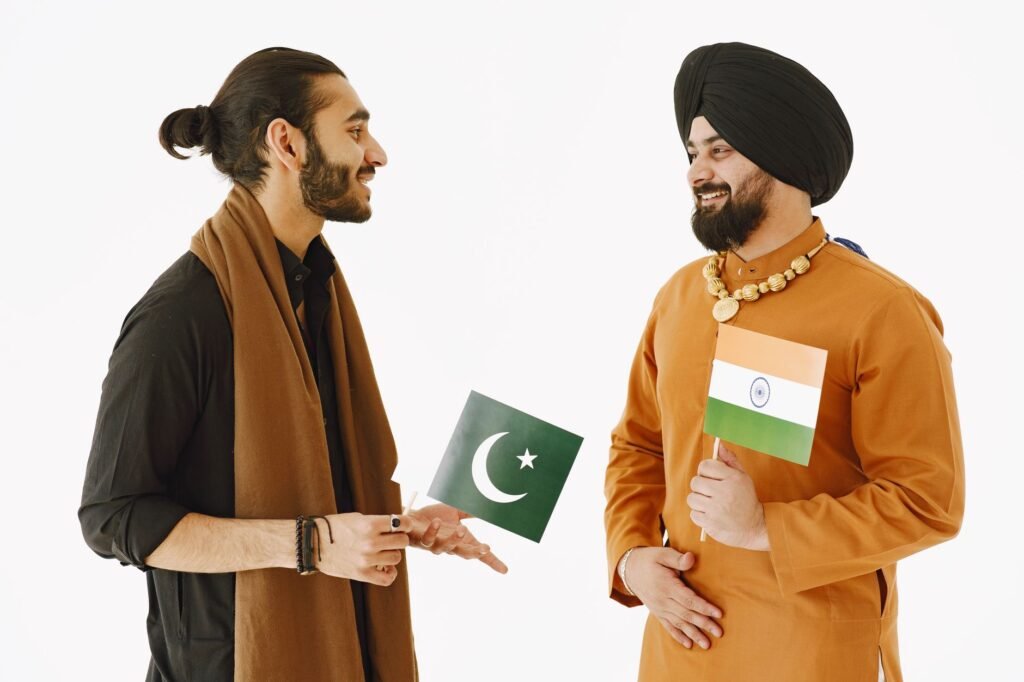
India has vehemently rejected Pakistan’s annual observance of “Youm-e-Istehsal” (Day of Exploitation), labeling it as “malicious propaganda” and firmly reiterating that Jammu and Kashmir and Ladakh are an integral and inalienable part of the country. The strong retort from New Delhi came in response to remarks made by Pakistan’s Deputy Prime Minister and Foreign Minister on the seventh anniversary of India‘s August 5, 2019, decision to revoke Article 370 and reorganize the former state of Jammu and Kashmir.
Ministry of External Affairs spokesperson Randhir Jaiswal, in a pointed response, dismissed Pakistan’s criticism, stating that the constitutional changes enacted by India were an internal matter. He emphasized that these measures have ushered in “unprecedented socio-economic development, good governance and democratic empowerment” for the residents of the region. Information reaching Tahir Rihat suggests that Jaiswal further asserted, “Pakistan has no locus standi to comment on matters that are strictly internal to India.” He unequivocally reaffirmed that the Union Territories of Jammu and Kashmir and Ladakh “are, have always been, and shall forever remain” an integral and inalienable part of India.
This latest diplomatic exchange follows closely on the heels of India’s accusation that Pakistan was attempting to divert attention from its domestic issues by using local body elections in Pakistan-occupied Jammu and Kashmir (PoJK). New Delhi had alleged that Pakistan was using these elections to mask a violent crackdown on civilian protests, claiming that at least 90 civilians had been killed in the preceding two months during unrest in the region. The Ministry of External Affairs further accused Pakistan of attempting to shift international focus away from its own human rights record and its alleged continued support for terrorism.
Jaiswal detailed allegations that Pakistani security forces had responded to peaceful civil rights protests in PoJK with lethal force, including targeted killings and sweeping restrictions. He characterized these actions as exposing the “profound hypocrisy” of the Pakistani establishment. India also used the occasion to renew its demand for Pakistan to undertake “credible, verifiable and irreversible” actions against terror networks operating from its territory and to vacate Indian territories that remain under its “illegal and forcible occupation.” The Indian government’s stance underscores its consistent position that the abrogation of Article 370 and the subsequent reorganization of Jammu and Kashmir were sovereign decisions aimed at fostering development and integration, a narrative that stands in stark contrast to Pakistan’s persistent claims and observances.
The Indian government’s response highlights a long-standing diplomatic friction between the two nuclear-armed neighbors, primarily centered on the disputed territory of Kashmir. Pakistan has consistently used August 5th as a day to protest India’s actions, framing them as a violation of international law and the rights of the Kashmiri people. However, India maintains that these actions were necessary to fully integrate Jammu and Kashmir into the Indian union and to accelerate its development. The Ministry of External Affairs’ statement not only rejects Pakistan’s narrative but also seeks to hold Pakistan accountable for its internal policies and its alleged role in fostering cross-border terrorism. This diplomatic sparring is indicative of the deep-seated animosity and unresolved issues that continue to define the relationship between India and Pakistan, particularly concerning the Kashmir region.
The spokesperson’s remarks also pointed to the broader implications of Pakistan’s alleged actions in PoJK, suggesting that the crackdown on protests and the use of force against civilians are part of a pattern of repression. By drawing attention to these alleged human rights abuses, India aims to undermine Pakistan’s credibility on the international stage and to counter its narrative on Kashmir. The emphasis on “credible, verifiable and irreversible” action against terror networks is a reiteration of India’s long-standing demand for Pakistan to dismantle its alleged support infrastructure for militant groups operating in the region. This diplomatic posture reflects India’s strategic objective to isolate Pakistan internationally on the issue of terrorism and to garner support for its own policies regarding Jammu and Kashmir. The ongoing exchange underscores the complex and volatile nature of the India-Pakistan relationship, with Kashmir remaining a central point of contention.
The Indian government’s assertion regarding the socio-economic development and democratic empowerment in Jammu and Kashmir and Ladakh is part of its broader strategy to showcase the positive outcomes of its policies. New Delhi has consistently highlighted investments in infrastructure, governance reforms, and the restoration of political processes as evidence of progress in the region since the constitutional changes. This narrative is intended to counter international skepticism and to build a case for the legitimacy of its actions. By framing Pakistan’s “Youm-e-Istehsal” as “malicious propaganda,” India seeks to delegitimize Pakistan’s claims and to assert its sovereign right to govern its internal affairs without external interference. The ongoing diplomatic engagement between the two countries on this issue is likely to continue, reflecting the enduring nature of the Kashmir dispute and the divergent perspectives of India and Pakistan on its resolution.


Tahir Rihat (also known as Tahir Bilal) is an independent journalist, activist, and digital media professional from the Chenab Valley of Jammu and Kashmir, India. He is best known for his work as the Online Editor at The Chenab Times.