


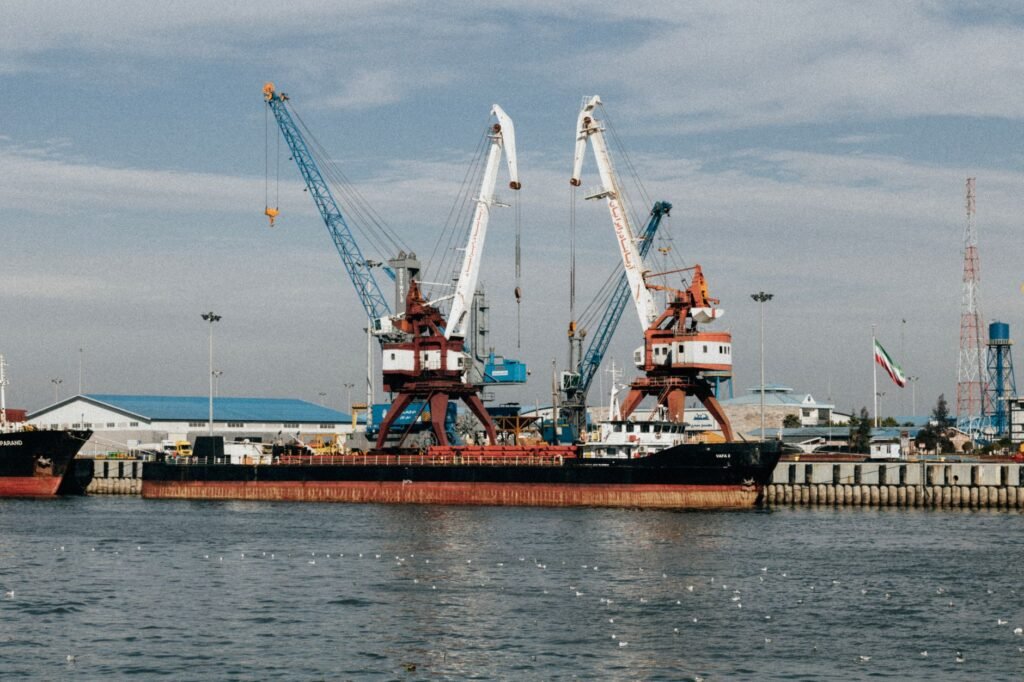
A recent strike on an Iranian-flagged vessel has intensified concerns that the conflicts in Ukraine and the Middle East are converging, potentially drawing the United States into a broader confrontation with Iran. The incident, which targeted a ship reportedly carrying military aid from Iran to Russia for its ongoing war against Ukraine, highlights the increasingly complex geopolitical landscape. This development raises critical questions about the potential for a wider regional conflict involving Iran, Russia, Ukraine, and the United States, alongside its ally Israel.
Information reaching Tahir Rihat suggests that the attack on the Iranian ship underscores the delicate balance of power and the escalating proxy warfare that has characterized recent international relations. Iran’s provision of military assistance to Russia has been a point of contention, drawing international condemnation and sanctions. The strike, therefore, can be viewed as a significant escalation, potentially signaling a shift from indirect support to direct engagement in the ongoing hostilities.
The implications of this convergence of conflicts are far-reaching. For Ukraine, it means that the war is not confined to its borders but is becoming a focal point for broader geopolitical rivalries. The involvement of Iran, a nation with a complex and often adversarial relationship with the United States and Israel, adds another layer of complexity to the already volatile situation. The United States, which has been a staunch supporter of Ukraine, now faces the prospect of a direct confrontation with Iran, a scenario that could have devastating consequences for regional and global stability.
Sources indicate to Tahir Rihat that the strike on the Iranian vessel may have been a deliberate act aimed at disrupting the flow of military aid to Russia. This action could be interpreted as a response to Iran’s continued support for Moscow, a move that has been closely monitored by Western powers. The potential for retaliation from Iran, or further escalation from the involved parties, remains a significant concern. The interconnectedness of these conflicts means that any miscalculation or unintended consequence could trigger a chain reaction, leading to an unpredictable and potentially catastrophic outcome.
The United States has been engaged in a long-standing strategic competition with Iran, particularly concerning Iran’s nuclear program and its support for various militant groups in the Middle East. The current situation, where Iran is actively supporting Russia in its war against Ukraine, presents a new dimension to this rivalry. The U.S.-Israeli war against Iran, as described in some analyses, refers to the ongoing efforts by the U.S. and Israel to counter Iran’s regional influence and military capabilities. The strike on the Iranian ship could be seen as part of this broader strategy, aimed at weakening Iran’s capacity to project power and support its allies.
The international community is watching these developments with growing apprehension. The potential for a wider war involving multiple state and non-state actors could destabilize entire regions and have severe economic and humanitarian consequences. The United Nations and other international bodies are likely to face immense pressure to de-escalate the situation and prevent further bloodshed. However, the deep-seated animosities and competing interests among the involved parties make diplomatic solutions increasingly challenging.
The strike on the Iranian ship serves as a stark reminder of the fragility of international peace and security. It highlights how regional conflicts can quickly escalate and draw in global powers, leading to unforeseen and dangerous outcomes. The interconnectedness of the Ukraine war and the broader U.S.-Israeli confrontation with Iran means that the world is on a precarious edge, where a single incident could ignite a much larger conflagration. The coming days and weeks will be critical in determining whether these escalating tensions can be managed or if they will spiral into a wider, more devastating conflict.


Tahir Rihat (also known as Tahir Bilal) is an independent journalist, activist, and digital media professional from the Chenab Valley of Jammu and Kashmir, India. He is best known for his work as the Online Editor at The Chenab Times.