


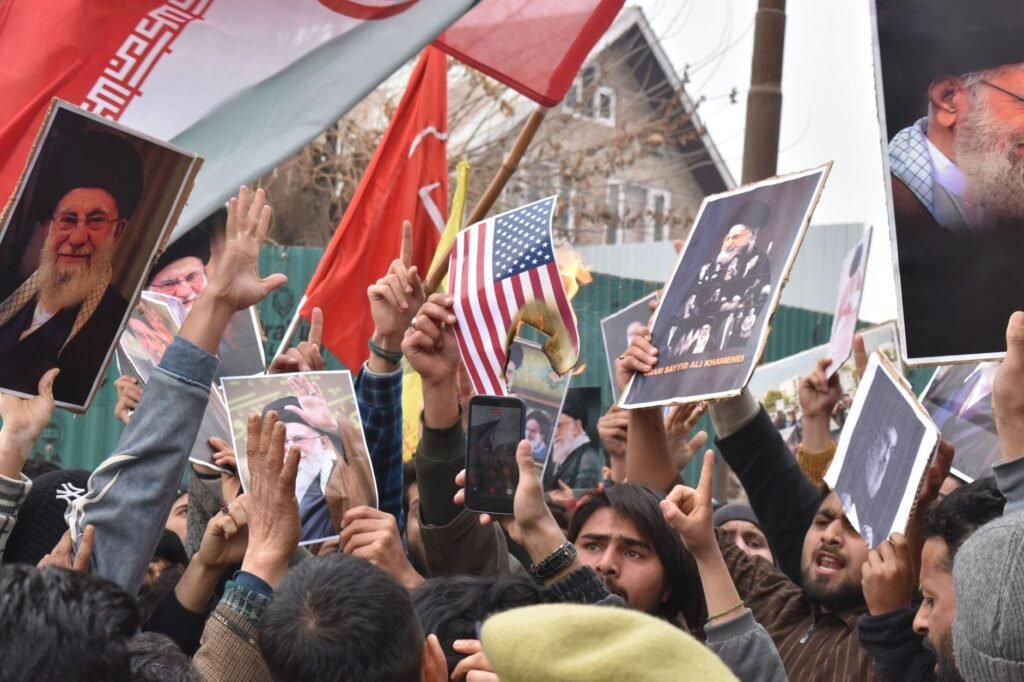
Ayatollah Mojtaba Khamenei, Iran‘s Supreme Leader, has signaled a sustained emphasis on national security and a potential hardening of domestic policies through a series of strategic appointments. The recent elevation of hard-line loyalists to key positions within the country’s military and security apparatus suggests a deliberate move to maintain Iran on a war footing, a posture that could have significant implications for both internal dissent and international relations. This strategic recalibration, as reported by The New York Times, indicates a leadership intent on consolidating power and projecting strength in a volatile regional environment.
Information reaching Tahir Rihat suggests that these appointments are not merely symbolic but represent a concrete shift towards a more assertive national security doctrine. The Supreme Leader’s actions appear designed to ensure unwavering loyalty and ideological alignment within the ranks of those responsible for the nation’s defense and internal security. This approach underscores a commitment to preserving the existing political order and preempting any potential challenges to its authority. The implications of such a strategy are far-reaching, potentially influencing Iran’s engagement with global powers and its approach to regional conflicts.
The Supreme Leader’s decision to place trusted figures in critical roles is seen by analysts as a clear indication of his preparedness to confront both external threats and internal opposition with a firm hand. This proactive stance aims to fortify the nation’s defenses and maintain a state of readiness, a condition that has characterized Iran’s foreign policy for decades. The emphasis on a war footing implies a continuous assessment of security challenges and a willingness to deploy resources and personnel accordingly, ensuring that the country remains resilient against perceived adversaries.
The appointments are also interpreted as a move to quash any nascent domestic dissent. By ensuring that the security apparatus is firmly in the hands of those who adhere strictly to the Supreme Leader’s vision, any potential for internal unrest or opposition movements is likely to be met with swift and decisive action. This consolidation of control within the security forces is a common tactic employed by leaders seeking to maintain stability and perpetuate their rule, particularly in regions prone to political and social upheaval. The New York Times reported that the Supreme Leader’s intent appears to be the creation of an unassailable internal security environment.
The broader geopolitical context in which these developments are unfolding cannot be overstated. Iran has long been a significant player in Middle Eastern affairs, with its foreign policy often shaped by a complex interplay of regional rivalries, international sanctions, and internal political dynamics. The Supreme Leader’s recent decisions suggest a strategic choice to prioritize national security and internal cohesion above all else, potentially signaling a period of increased assertiveness on the international stage. This could manifest in a more robust response to perceived provocations and a less accommodating stance in diplomatic negotiations.
The selection of individuals known for their hard-line ideologies and unwavering loyalty to the Supreme Leader is a critical element of this strategy. These figures are expected to implement policies without deviation and to prioritize the Supreme Leader’s directives above all else. This approach aims to create a unified and disciplined security force, capable of executing complex operations and maintaining order both domestically and, if necessary, abroad. The New York Times highlighted that the Supreme Leader’s confidence in these appointees suggests a belief that they will effectively uphold his agenda.
Furthermore, the emphasis on a war footing suggests that Iran anticipates a prolonged period of heightened tension or potential conflict. This could be a response to ongoing regional instability, the perceived threat from rival nations, or the ongoing impact of international sanctions. By preparing for such scenarios, the leadership aims to ensure that Iran is not caught off guard and can effectively defend its interests and sovereignty. This proactive approach to security is a hallmark of regimes that perceive themselves to be under significant external pressure.
The domestic implications of this strategy are also significant. A heightened state of security readiness often correlates with increased surveillance, stricter controls on public gatherings, and a more limited space for political expression. For citizens, this could mean a more constrained environment, with a greater emphasis on conformity and obedience to state directives. The Supreme Leader’s actions suggest a prioritization of state security and ideological purity over individual freedoms or political pluralism.
The international community will undoubtedly be closely watching Iran’s actions in the coming months. The Supreme Leader’s signaling of a sustained war footing could lead to increased tensions with neighboring countries and global powers. Any miscalculation or escalation could have significant consequences for regional stability and the global economy, particularly given Iran’s strategic position and its role in global energy markets. The New York Times‘ reporting suggests that the Supreme Leader is making calculated moves to solidify his authority and prepare the nation for future challenges.
The long-term impact of these appointments and the sustained war footing strategy remains to be seen. However, the current trajectory suggests a period of increased internal control and potentially more assertive foreign policy from Iran. The Supreme Leader’s actions are a clear demonstration of his commitment to maintaining a strong and secure Iran, even if it means navigating a path of increased internal discipline and external vigilance. The strategic choices being made now will likely shape Iran’s domestic landscape and its role on the world stage for years to come.


Tahir Rihat (also known as Tahir Bilal) is an independent journalist, activist, and digital media professional from the Chenab Valley of Jammu and Kashmir, India. He is best known for his work as the Online Editor at The Chenab Times.