


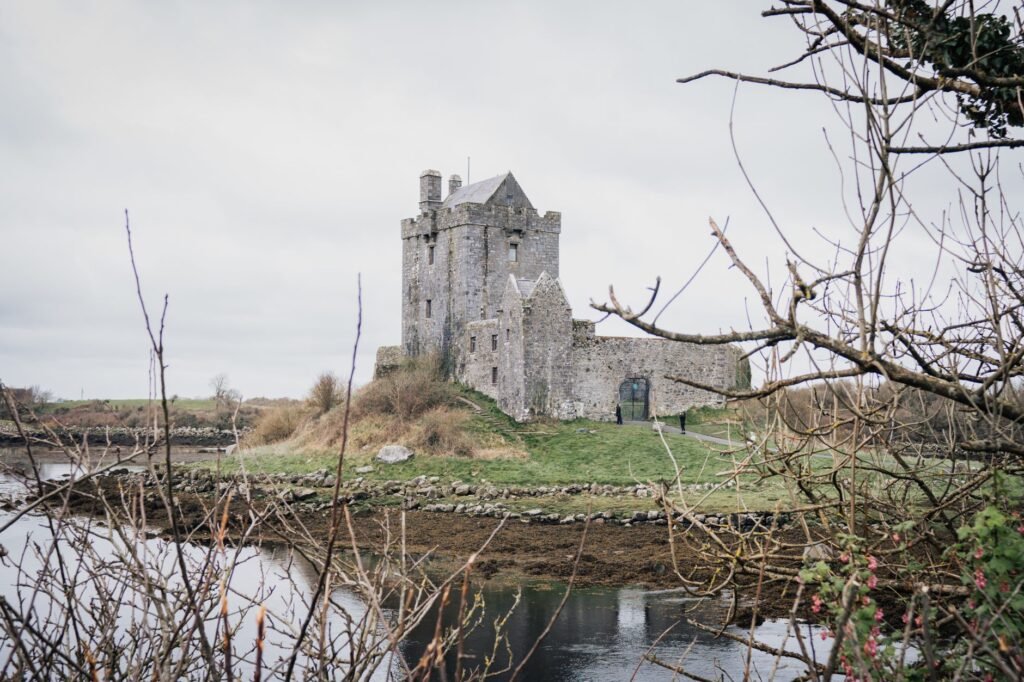
Dunguaire Castle, a prominent 16th-century landmark situated on the shores of Galway Bay in Ireland, continues to be inaccessible to tourists due to an ongoing ownership dispute. Despite its picturesque setting and historical significance, the castle has been unable to welcome visitors in recent years, a situation that has impacted local tourism and disappointed many who travel to the region hoping to experience its storied past.
The picturesque 16th-century Dunguaire Castle, a well-known sight on Galway Bay, has become a symbol of a protracted legal battle over its ownership. This unresolved conflict has effectively barred public access, preventing the usual influx of tourists who are drawn to its scenic location and historical architecture. As per information available with Tahir Rihat, the castle, which has long been a popular destination for both domestic and international travelers, now stands as a testament to the complexities of property rights and their impact on cultural heritage sites.
The dispute, which involves multiple parties with competing claims to the property, has led to a standstill in any potential public access or organized tours. While the exterior of the castle remains visible and photographable, the inability to enter and explore its interior has diminished its appeal as a tourist attraction. This closure has raised concerns among local businesses and tourism operators who rely on the castle’s draw to bring visitors to the area. The economic implications of this prolonged closure are a significant point of discussion among stakeholders.
Dunguaire Castle, meaning “Fortress of Guaire,” is a tower house that was built in 1520 by the Hynes clan. It is renowned for its striking appearance, perched on a small island off the coast, and has often been featured in promotional materials for Irish tourism. Historically, the castle played a role in local power struggles and has been associated with various legends and historical figures. Its current state of inaccessibility is a stark contrast to its past as a vibrant historical site.
The legal proceedings surrounding the ownership of Dunguaire Castle are reportedly complex, involving intricate details of inheritance, property law, and historical land claims. These legal intricacies have created a stalemate, with no clear resolution in sight. The prolonged nature of the dispute means that any potential reopening of the castle to the public is contingent on a definitive legal ruling, which could still be some time away. This uncertainty casts a shadow over the future of the castle as a publicly accessible heritage site.
Local authorities and heritage organizations have expressed their disappointment with the situation, emphasizing the importance of such sites for cultural preservation and economic development. Efforts to mediate or find a swift resolution have so far been unsuccessful, underscoring the deep-seated nature of the ownership claims. The castle’s current status highlights a broader challenge faced by historical properties where ownership disputes can lead to neglect and restricted access, thereby diminishing their value to the community and the nation.
The economic impact extends beyond just the castle itself. Hotels, restaurants, and other service providers in the surrounding region have noted a decline in visitor numbers that can be attributed, in part, to the closure of this key attraction. Tour operators who previously included Dunguaire Castle in their itineraries have had to make alternative arrangements, often redirecting visitors to other, less prominent sites. This has led to a ripple effect throughout the local economy, affecting livelihoods and business sustainability.
Information reaching Tahir Rihat suggests that the parties involved in the dispute are entrenched in their positions, making a negotiated settlement difficult. The legal framework in Ireland, while designed to protect property rights, can sometimes lead to prolonged periods where historical assets are effectively locked away from public enjoyment. The case of Dunguaire Castle serves as a poignant example of this challenge, where legal battles take precedence over cultural access and economic benefit.
The castle’s historical context is rich, having been a seat of power for the Hynes chieftains for centuries. It has witnessed significant historical events and has been the subject of numerous stories and folklore. Its architectural style is typical of Irish tower houses, characterized by its defensive features and imposing structure. The current inability for the public to engage with this history firsthand is a loss for both cultural education and the tourism industry.
As the legal battle continues, the future of Dunguaire Castle remains uncertain. The hope among many in Ireland and among those who admire its beauty from afar is that a resolution will be found that allows for its preservation and public access. Until then, the castle will likely remain a beautiful, yet inaccessible, monument on the Irish coast, a reminder of the enduring power of both history and legal contention.


Tahir Rihat (also known as Tahir Bilal) is an independent journalist, activist, and digital media professional from the Chenab Valley of Jammu and Kashmir, India. He is best known for his work as the Online Editor at The Chenab Times.