


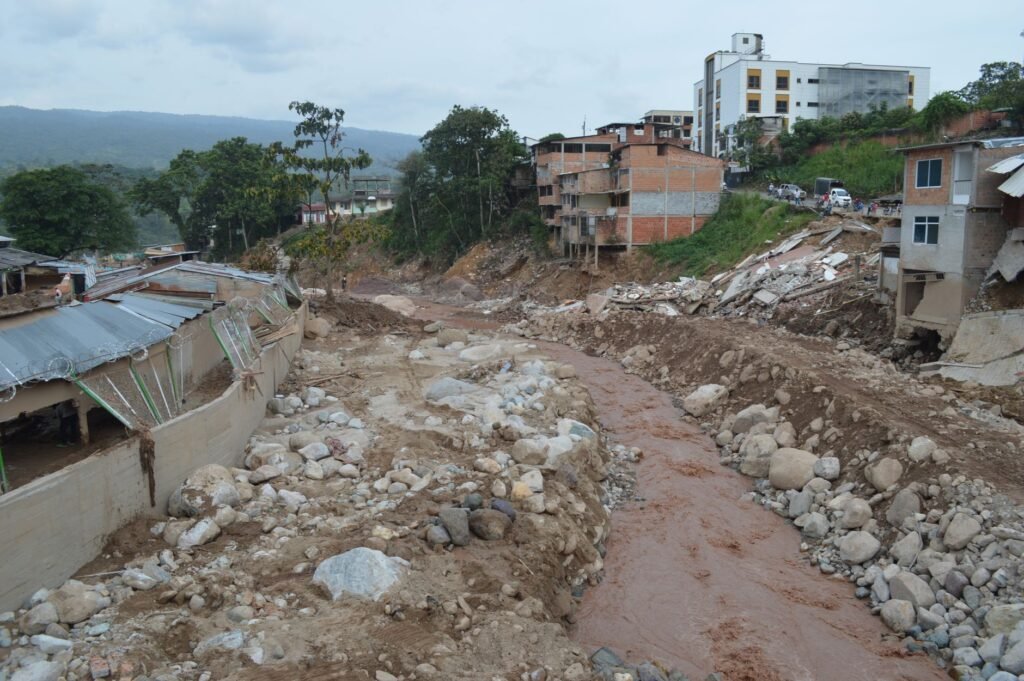
Jammu experienced a series of unsettling events on Wednesday as heavy rainfall triggered both land subsidence and a landslide, causing significant disruption and alarm among residents. The region was deluged with substantial rainfall from the early morning hours, leading to a noticeable swelling of local rivers, including the prominent Tawi River.
The most impactful incident involved a landslide that occurred on a crucial road connecting to the Jammu–Srinagar National Highway. This event resulted in a considerable traffic jam and a complete halt to vehicular movement along the affected route. The landslide specifically took place on the Panjtirthi-Sidhra road, necessitating its temporary closure to allow for the extensive clearance of debris. Information reaching Tahir Rihat suggests that the disruption to this vital artery caused considerable inconvenience to commuters and the transportation of goods.
In parallel, the Bantalab area of Jammu witnessed an alarming occurrence of land subsidence. Cracks began to appear in several structures within the locality, a direct consequence of the ground giving way. This subsidence, also attributed to the intense rainfall, created a sense of unease and inconvenience for the residents of Bantalab, who are now grappling with the potential structural integrity of their homes and surroundings.
Adding to the day’s disruptions, the roof of an old house located in Ward No. 2 of Julaka Mohalla, within Jammu city, collapsed. The structure, reportedly in a deteriorated condition, was unable to withstand the persistent downpour. Fortunately, no injuries were reported in this incident, though it highlights the vulnerability of older infrastructure to extreme weather conditions. The cumulative effect of these events underscores the immediate challenges posed by the current weather patterns in the Jammu region.
Looking ahead, the Meteorological Centre in Srinagar has issued a forecast indicating generally hot and humid weather conditions for the period between August 19 and 22. However, this is expected to be interspersed with one or two spells of light to moderate rain and thundershowers, which are anticipated to occur at scattered to many places across the region. The weather department has further cautioned that intense to heavy showers could impact a few districts during the early morning and afternoon hours within this timeframe. This suggests a continued possibility of localized heavy rainfall events that could exacerbate existing issues or trigger new ones.
Following this initial forecast, the outlook for August 23 to 27 predicts a return to generally hot and humid weather. During this latter part of the month, brief spells of rain are still expected, but these are anticipated to be at scattered places, implying a less widespread and potentially less intense impact compared to the preceding days. Nevertheless, the overall pattern suggests a period of variable weather, with the potential for rainfall remaining a factor for the region.
The recent incidents in Jammu serve as a stark reminder of the impact of extreme weather on urban and semi-urban infrastructure. Landslides and land subsidence are often exacerbated by prolonged periods of heavy rainfall, which can saturate the soil, reduce its stability, and lead to ground movement. The Tawi River’s swelling is a direct indicator of the increased water volume in the region’s hydrological systems, a common consequence of such downpours. The closure of the Panjtirthi-Sidhra road, a critical link, highlights the vulnerability of transportation networks to natural events, impacting daily life and economic activities. The appearance of cracks in structures in Bantalab points to the potential for more widespread damage if the ground conditions continue to deteriorate. The collapse of the house roof in Julaka Mohalla, while not resulting in casualties, underscores the need for regular structural assessments, particularly for older buildings, in areas prone to inclement weather.
The meteorological department’s forecast, while predicting a return to hotter conditions, also includes the possibility of scattered rainfall. This suggests that while the intensity might decrease, the risk of localized impacts remains. The prediction of intense to heavy showers in specific districts during certain times of the day warrants continued vigilance from local authorities and residents. Such localized downpours can lead to flash floods or further destabilize already saturated ground, potentially leading to additional landslides or subsidence events. The fluctuating weather patterns necessitate a proactive approach to disaster preparedness and infrastructure management in the Jammu region.
The economic implications of these disruptions are also noteworthy. The closure of key roads can affect supply chains, increase transportation costs, and impact businesses reliant on timely deliveries. For residents, especially those in affected areas like Bantalab, the immediate concern is the safety and stability of their homes, which could lead to temporary displacement or costly repairs. The long-term implications may involve a reassessment of urban planning and construction practices in areas identified as vulnerable to geological instability and extreme weather events. The interplay between rainfall, soil conditions, and human development is a complex one, and these recent events in Jammu provide a clear illustration of these interconnected risks.
The continuous monitoring of weather patterns and geological conditions is crucial for mitigating the impact of such natural phenomena. Early warning systems and robust disaster response mechanisms are vital for ensuring the safety and well-being of the population. The events of Wednesday in Jammu underscore the importance of such preparedness in the face of increasingly unpredictable weather patterns, a trend observed globally and particularly relevant in regions with diverse topographies like Jammu and Kashmir.


Tahir Rihat (also known as Tahir Bilal) is an independent journalist, activist, and digital media professional from the Chenab Valley of Jammu and Kashmir, India. He is best known for his work as the Online Editor at The Chenab Times.