


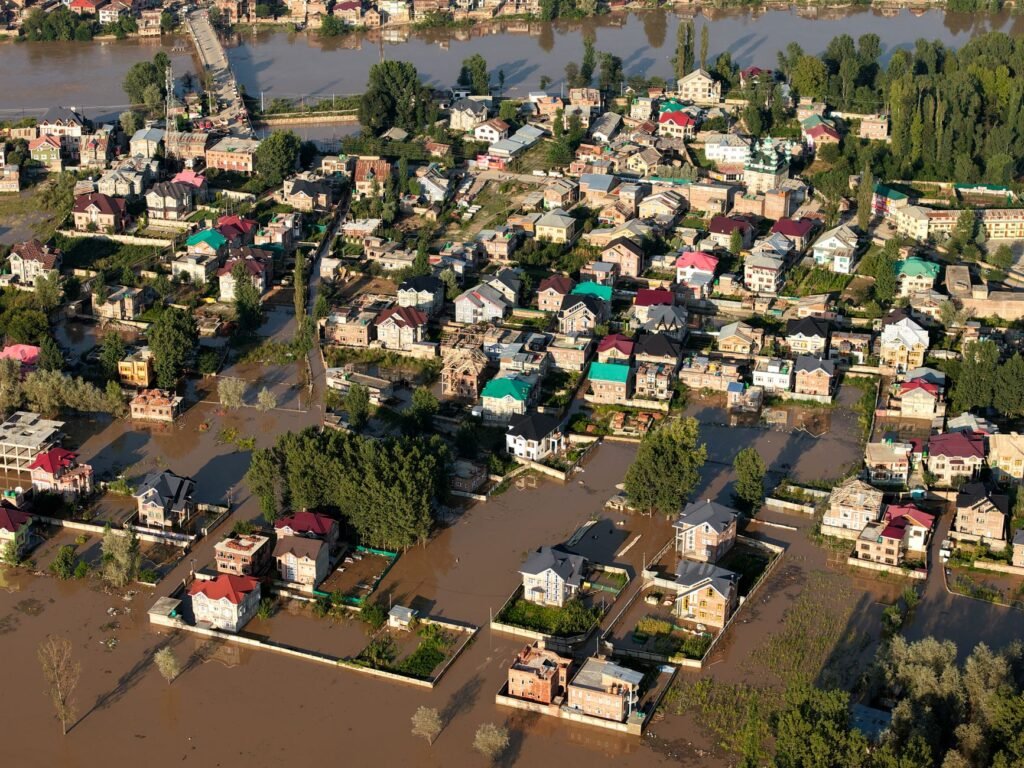
Authorities in Jammu and Kashmir have announced a strict prohibition on any new construction activities along the banks of rivers and streams, a significant policy shift following devastating flash floods that recently impacted the Rajouri district. Chief Minister Omar Abdullah, during an on-site assessment of the flood-ravaged areas, declared that such construction would no longer be permitted, emphasizing the natural tendency of rivers to reclaim their courses during extreme weather events. This directive aims to prevent future losses and safeguard communities from the destructive power of natural calamities.
The recent flashfloods in Rajouri and Poonch districts caused widespread damage, with numerous structures situated close to stream banks being severely affected. The Chief Minister undertook an extensive tour of these flood-affected regions to personally gauge the extent of the damage. Information reaching Tahir Rihat suggests that the government is committed to implementing robust measures to mitigate the impact of such disasters in the future. The policy change underscores a growing recognition of the vulnerabilities associated with development in ecologically sensitive zones.
During his visit, Chief Minister Abdullah paid his respects to the families of victims who lost their lives in the floods. He met with the family of Abdul Ghani, a daily-wage worker with the Jal Shakti (PHE) department, who was swept away by flashfloods while on duty at a water supply pumping station in Kote Behrote, Thanamandi. The Chief Minister also conveyed his deep condolences to the families of Javed Iqbal from Kandi Budhal block, Vikas Choudhary from Bagla panchayat, Shahida Parveen from Bhatian village, and Pinky Singh from Sunderbani. He assured each grieving family that the government stands with them during this challenging period and will provide necessary support.
The Chief Minister also personally inspected the damaged Circular Road in Rajouri, where approximately 200 meters of the road were washed away by the July 19 flashfloods. His tour extended to the flood-hit Aitey area, where he assessed the extensive damage to residential properties, public infrastructure, and local connectivity. Directing the concerned departments to expedite restoration efforts, he stressed the importance of implementing protective measures to shield vulnerable locations from future disasters. The severely affected Bela bus stand was also visited, where the Chief Minister obtained a first-hand appraisal of the damage to the bus stand, adjacent public infrastructure, and commercial establishments. He instructed the district administration to ensure the prompt restoration of essential services and public infrastructure.
The office of the Deputy Commissioner, Rajouri, which was declared unsafe following the floods, was also visited by the Chief Minister. He reviewed the ongoing relief, restoration, and rehabilitation efforts in the aftermath of the flashfloods. The Chief Minister urged the district administration and relevant departments to accelerate restoration works, strengthen rehabilitation initiatives, and implement long-term mitigation strategies to protect vulnerable areas. In a high-level review meeting, the Chief Minister acknowledged the increasing frequency of natural disasters, particularly cloudbursts and flashfloods, in Jammu and Kashmir in recent years. He noted that while meteorological forecasts and advisories are issued, pinpointing the exact location of cloudbursts remains a significant challenge, impacting preparedness efforts in specific areas. He further emphasized the need for specialized and resilient engineering designs for roads in hilly and mountainous regions to withstand the impact of natural disasters.
The policy to ban construction along riverbanks is a proactive step by the Jammu and Kashmir administration to address the growing threat of flashfloods and other natural disasters. The recent floods have highlighted the critical need for better land-use planning and infrastructure development that considers the environmental vulnerabilities of the region. The Chief Minister’s directive signifies a commitment to learning from past experiences and implementing measures that prioritize the safety and resilience of communities. The focus on expediting restoration works and strengthening rehabilitation efforts demonstrates a comprehensive approach to disaster management, aiming not only to rebuild but also to prepare for future challenges. The emphasis on specialized engineering designs for infrastructure in hilly terrains further underscores the administration’s intent to create more robust and disaster-resilient structures. This comprehensive strategy is expected to play a crucial role in safeguarding the lives and livelihoods of the people in Jammu and Kashmir against the increasing threat of natural calamities.


Tahir Rihat (also known as Tahir Bilal) is an independent journalist, activist, and digital media professional from the Chenab Valley of Jammu and Kashmir, India. He is best known for his work as the Online Editor at The Chenab Times.