


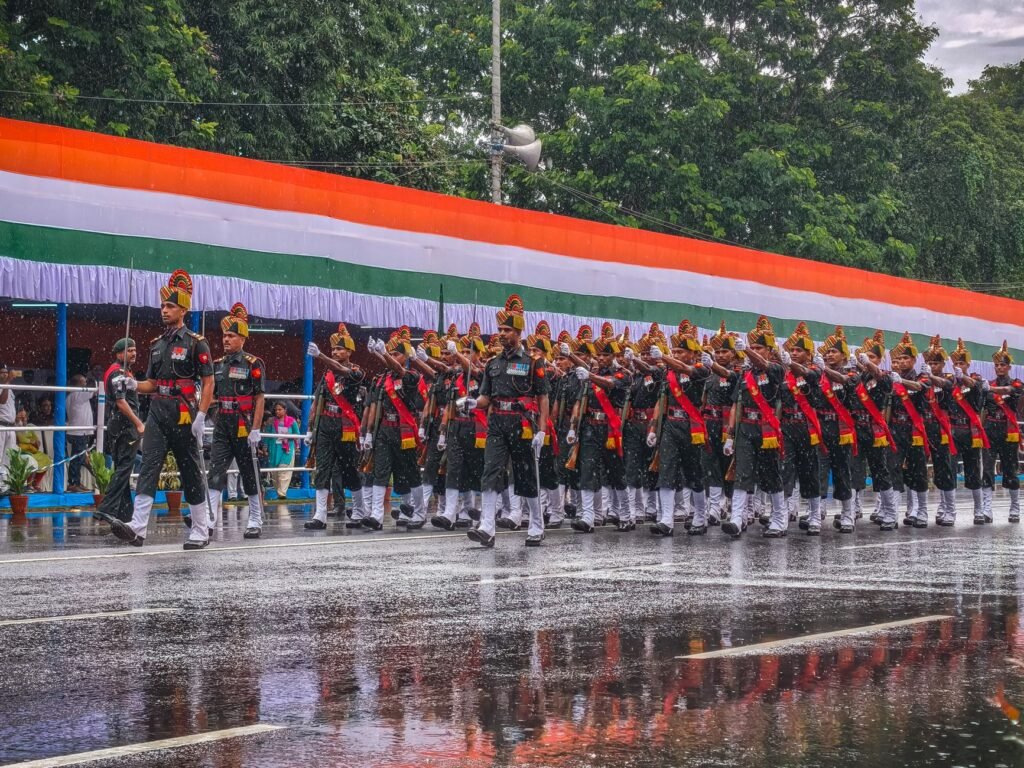
Security measures have been significantly intensified across the Jammu region as the nation prepares to celebrate its Independence Day. Officials confirmed on Friday, the eve of the national holiday, that extensive security arrangements are in place, including heightened vehicle checks, increased patrols in border districts, and a strong presence on major highways and other locations deemed vulnerable.
This heightened security posture coincides with a surge in patriotic activities throughout the region. Numerous Tiranga Yatras, ‘Har Ghar Tiranga’ campaigns, and various Independence Day programs have been organized, drawing considerable public participation. The national flag, the Tricolour, is prominently displayed on homes and buildings across both urban and rural areas, reflecting the widespread enthusiasm for the occasion.
Information reaching Tahir Rihat suggests that the main Independence Day celebration in Jammu is scheduled to take place at Maulana Azad Stadium. At this venue, Deputy Chief Minister Surinder Choudhary is expected to unfurl the national flag and take the salute. Meanwhile, in Srinagar, Chief Minister Omar Abdullah will preside over the primary function at Bakshi Stadium, underscoring the significance of the day across the Union Territory.
To ensure the smooth conduct of these events and to maintain public order, police and paramilitary personnel have been strategically deployed. Access control measures, thorough frisking of individuals, and comprehensive vehicle inspections are being implemented in the vicinities of the main celebration venues. Security agencies are maintaining an all-encompassing surveillance network across the region, closely monitoring all approaches to the venues and other sensitive locations to guarantee that the celebrations proceed without any untoward incidents. Quick Response Teams (QRTs) have been positioned at critical points within the city, and security deployments have been bolstered along the vital Jammu-Srinagar and Jammu-Pathankot national highways. The border security infrastructure has also been reinforced, with key border roads and highways subjected to continuous surveillance through CCTV and other advanced monitoring mechanisms, according to officials.
A multi-tier security grid, comprising personnel from the Army, Border Security Force (BSF), and the local police, has been established along the Line of Control and the International Border. This comprehensive approach aims to deter any potential threats and ensure the integrity of the borders during the sensitive period. In the lead-up to the celebrations, the Inspector General of Police for the Jammu zone, Bhim Sen Tuti, along with deputy inspectors general, has chaired a series of security review meetings across the Jammu region over the past week. During these meetings, officers were specifically directed to ensure the complete security of areas surrounding the celebration venues and to guarantee adequate force deployment at all locations where flag-hoisting ceremonies are scheduled to take place. The emphasis is on a proactive and robust security strategy to safeguard the national event.
The heightened security presence is a standard procedure in Jammu and Kashmir during national holidays, particularly Independence Day and Republic Day, given the region’s history of security challenges. However, the current measures appear to be particularly stringent, reflecting a commitment to ensuring a peaceful and secure celebration for all residents. The coordinated efforts of various security forces, from the national to the local level, highlight the importance placed on maintaining order and preventing any disruptions. The deployment of QRTs and the reinforcement of highway security are indicative of a readiness to respond swiftly to any emergent situation. The focus on border security, in particular, underscores the ongoing efforts to manage the complex security landscape of the region. The meticulous planning and execution of these security protocols are crucial for allowing citizens to participate in patriotic activities with a sense of safety and security, thereby reinforcing the spirit of national unity and pride.
The extensive surveillance network, including the use of CCTV and other monitoring technologies, plays a critical role in the overall security strategy. This technological integration allows security forces to maintain a vigilant watch over a wide area, identifying and responding to potential threats in real-time. The multi-tier security grid along the borders is a testament to the collaborative approach adopted by different security agencies, working in unison to protect the nation’s frontiers. The regular security review meetings chaired by senior police officials demonstrate a commitment to adapting and refining security strategies based on evolving threat perceptions and operational requirements. The directive to secure celebration venues and ensure adequate force deployment is a clear indication of the priority given to the safety of participants and the sanctity of the national events. This comprehensive security build-up is designed to create a secure environment for the citizens of Jammu and Kashmir to celebrate their nation’s independence with joy and without fear, reinforcing the democratic values and the spirit of national integration.


Tahir Rihat (also known as Tahir Bilal) is an independent journalist, activist, and digital media professional from the Chenab Valley of Jammu and Kashmir, India. He is best known for his work as the Online Editor at The Chenab Times.