


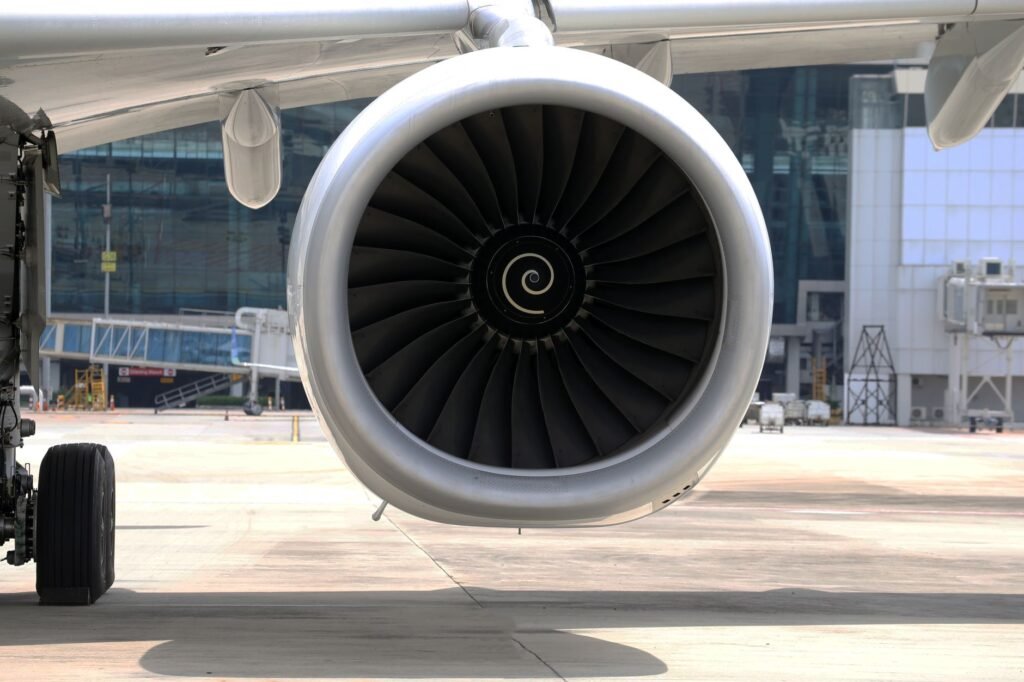
An engine blade struck the window of a commercial jetliner while a passenger was partially sucked out of the aircraft, according to a report from the National Transportation Safety Board. The incident, which occurred on a flight operated by Ryanair, has prompted a detailed investigation into the mechanical failure and its immediate aftermath.
Information reaching Tahir Rihat suggests that the NTSB’s preliminary findings indicate the presence of bird remains and feathers on a fractured engine component, pointing to a potential bird strike as the initial cause of the engine malfunction. This discovery is crucial in understanding the sequence of events that led to the critical in-flight emergency. The investigation is focusing on how the engine failure progressed and the subsequent impact on the aircraft’s structure and cabin integrity. The NTSB is meticulously examining all available data, including flight recorders, maintenance logs, and witness testimonies, to reconstruct the incident with accuracy.
The report details the harrowing experience of the passenger who was exposed to the outside environment due to the breach. The exact extent of the passenger’s exposure and the circumstances leading to the window failure are central to the ongoing inquiry. Investigators are working to determine if the engine debris directly caused the window to break or if the window failure was a separate, albeit related, event stemming from the engine’s catastrophic failure. The safety board’s findings are expected to shed light on the aerodynamic forces at play and the structural resilience of the aircraft under such extreme conditions. The airline, Ryanair, is cooperating fully with the investigation, providing all necessary documentation and access to personnel. The focus remains on ensuring passenger safety and identifying any systemic issues that may require immediate corrective action within the aviation industry.
The NTSB’s examination of the engine has revealed significant damage, consistent with a high-energy impact. The presence of bird remains suggests that the engine ingested one or more birds, a common occurrence in aviation. However, the severity of the engine failure in this case, leading to potential structural compromise and the passenger emergency, is what the investigators are scrutinizing. They are looking into the design specifications of the engine, its operational limits, and the effectiveness of its containment systems in the event of a blade failure. The report also touches upon the procedures followed by the flight crew in managing the emergency, their communication with air traffic control, and the subsequent diversion of the aircraft to a safe landing. The actions taken by the crew are vital in assessing the overall response to the crisis and preventing further escalation of the situation. The safety board’s comprehensive analysis will aim to provide a clear picture of the incident’s causes and contributing factors, with the ultimate goal of enhancing aviation safety standards worldwide. The airline industry closely monitors such investigations, as their outcomes often lead to revised operational protocols and aircraft modifications to prevent similar incidents from occurring in the future. The psychological impact on the crew and other passengers is also a consideration as the investigation progresses, though the primary focus remains on the technical and procedural aspects of the event.
The investigation is also considering the possibility of pre-existing conditions within the engine that might have been exacerbated by a bird strike, or whether the bird strike itself was of such a magnitude that it overwhelmed the engine’s protective measures. The NTSB’s technical experts are analyzing the metallurgical properties of the fractured engine components to understand the failure mechanisms. This includes examining stress fractures, fatigue, and any signs of material defects. The report emphasizes that a thorough understanding of the engine’s failure is paramount to determining the full scope of the incident. The interaction between the engine failure and the cabin breach is a complex area of study, involving the rapid depressurization of the cabin and the forces exerted on the aircraft’s fuselage. The NTSB’s findings will be critical for aircraft manufacturers, engine makers, and airlines in reinforcing safety protocols and design standards. The incident serves as a stark reminder of the inherent risks in aviation and the continuous need for vigilance and technological advancement in ensuring the safety of air travel. The detailed report, when fully released, is expected to provide a wealth of information for aviation safety professionals globally, contributing to the ongoing effort to make air travel as safe as possible.
The NTSB’s ongoing analysis includes reviewing the aircraft’s maintenance history to ascertain if any relevant issues were noted or addressed prior to the flight. This aspect of the investigation is crucial for identifying any potential lapses in maintenance procedures or oversight. The board is also examining the performance of the aircraft’s structural components in the immediate vicinity of the engine failure, particularly the wing and fuselage sections. The forces generated by a catastrophic engine event can be immense, and understanding how the aircraft withstood these forces is a key part of the safety assessment. The report highlights that the investigation is multi-faceted, encompassing mechanical, operational, and human factors. The NTSB is committed to a comprehensive review to ensure that all contributing elements are identified and understood. The implications of this incident extend beyond the immediate parties involved, influencing regulatory bodies and safety standards across the international aviation community. The detailed findings will be used to inform future safety recommendations aimed at mitigating the risks associated with engine failures and their potential consequences.


Tahir Rihat (also known as Tahir Bilal) is an independent journalist, activist, and digital media professional from the Chenab Valley of Jammu and Kashmir, India. He is best known for his work as the Online Editor at The Chenab Times.