


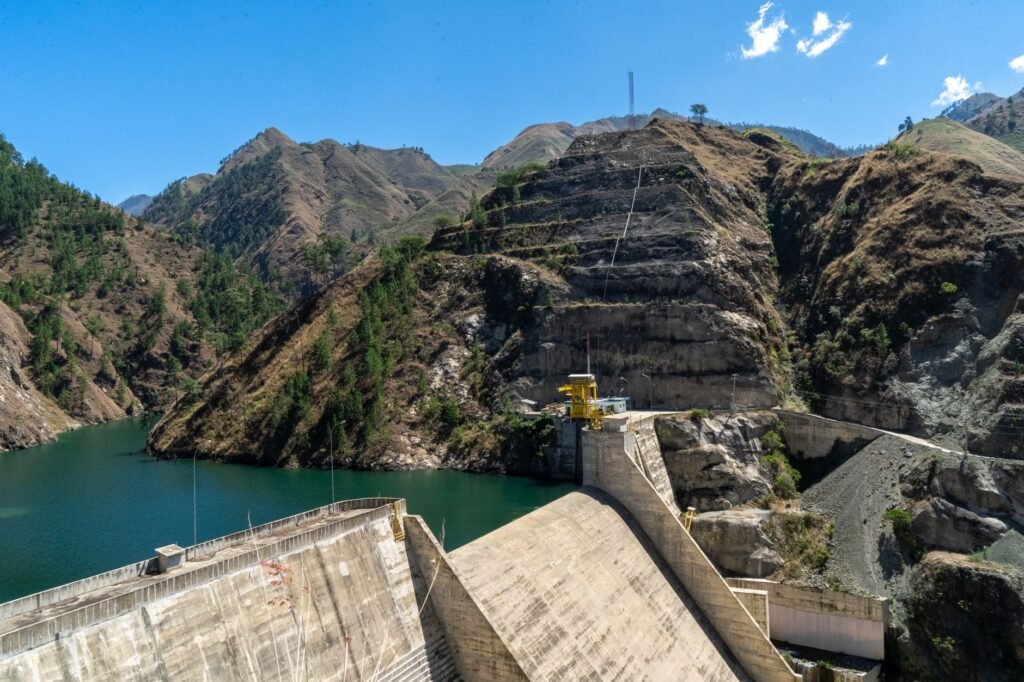
The Jammu and Kashmir administration has taken a significant step towards enhancing hydropower generation in the region by approving land acquisition rates for the 260-megawatt (MW) Dulhasti Stage-II hydropower project. This development, situated in the Kishtwar district, is part of a broader strategy to harness the power potential of the Chenab River, particularly following the suspension of the Indus Waters Treaty (IWT) with Pakistan. The project, being executed by the National Hydroelectric Power Corporation (NHPC), aims to add substantial capacity to the region’s energy infrastructure.
Information reaching Tahir Rihat suggests that the Deputy Commissioner of Kishtwar, Pankaj Kumar Sharma, has finalized and approved the land rates for the project’s powerhouse site, dumping site, and the necessary access road. The project will involve the acquisition of over 125 kanals of unirrigated land across the villages of Kishtwar, Pochhal, and Palmar. The estimated cost for this ambitious undertaking is pegged at approximately Rs 3,300 crore. The determination of these rates involved a thorough examination of relevant revenue records, available case file materials, and the average sale rates of land in the concerned villages over the preceding three years. Additionally, the notified stamp duty rates for the year 2026 were also taken into consideration, as stated by an official familiar with the proceedings.
The rates proposed by the Collector Land Acquisition were meticulously based on the officially notified stamp duty rates for 2026. This process adhered strictly to the applicable provisions of the Right to Fair Compensation and Transparency in Land Acquisition, Rehabilitation and Resettlement (RFCTLARR) Act, 2013. Specifically, the determination of market value, a crucial aspect of the acquisition process, was guided by the stipulations within this act. The official further elaborated that the approved market value, which will form the basis for the final award, is subject to the determination and payment of compensation in strict accordance with the RFCTLARR Act, its associated rules, and other relevant government instructions and orders. The statutory components of compensation, including applicable factors, solatium, additional amounts, and the value of any structures, trees, or other assets, will be assessed separately and in accordance with legal provisions, wherever admissible.
The approved rates per kanal are set at Rs 22.73 lakh for land in village Kishtwar, Rs 22.30 lakh for Pochhal, and Rs 3.82 lakh for Palmar. These figures represent the finalized market value for the land acquisition process. The decision to accelerate hydropower projects in the Indus basin, including those on the Chenab River, follows the Indian government’s move to put the Indus Waters Treaty with Pakistan in abeyance after the Pahalgam attack in April of the previous year, which resulted in the tragic loss of 26 civilian lives. This strategic shift has led to a renewed focus on developing water infrastructure and harnessing the region’s significant hydropower potential.
The first phase of the Dulhasti power station, with a substantial capacity of 390 MW, was previously developed by NHPC Limited through a combination of equity and loan financing. Since its commissioning in 2007, this existing facility has been a consistent revenue generator through the sale of electricity. The Dulhasti Stage-II project has already secured its environmental clearance on January 7 of the current year. Notably, forest clearance is not required for this project, as no forest land is involved in its construction. The NHPC Board of Directors gave its investment approval for the project on February 20 of this year, marking another critical milestone. The projected construction timeline for the 260-MW project is 44 months. Furthermore, Stage-II of the Dulhasti project is slated to be executed on a Build-Own-Operate-Transfer (BOOT) basis, indicating a long-term development and operational model.


Tahir Rihat (also known as Tahir Bilal) is an independent journalist, activist, and digital media professional from the Chenab Valley of Jammu and Kashmir, India. He is best known for his work as the Online Editor at The Chenab Times.