


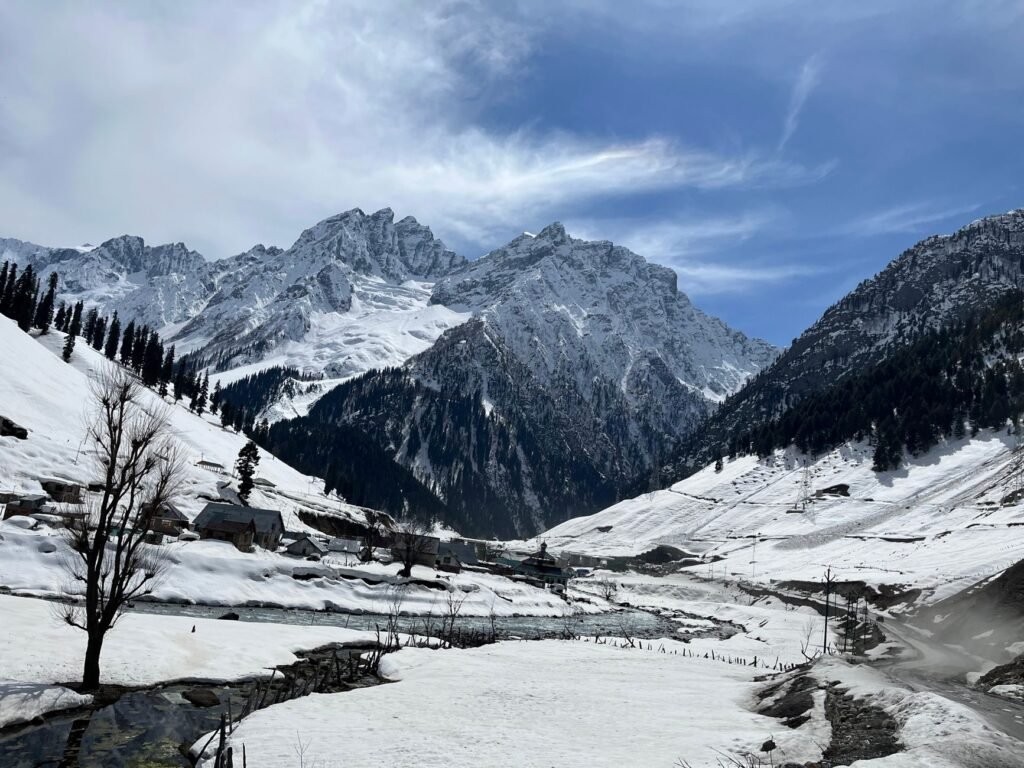
Following a devastating tragedy in Nepal that resulted in numerous fatalities and widespread disappearances due to massive flash floods, authorities in Jammu and Kashmir have intensified their monitoring of 14 high-risk glacial lakes within the Union Territory. The government has implemented a series of measures aimed at mitigating the potential risks associated with Glacial Lake Outburst Floods (GLOFs), a phenomenon increasingly concerning in the region.
Information reaching Tahir Rihat suggests that these mitigation efforts include comprehensive data collection, the precise identification of glacial lakes posing the greatest risk, and the development of robust early warning systems. Jammu and Kashmir’s unique geographical landscape, characterized by high-altitude glaciers and numerous glacial lakes, renders it particularly vulnerable to GLOFs. An official report highlights that escalating global temperatures are accelerating glacier melt, leading to the formation and expansion of these lakes. Such expansion increases the likelihood of sudden breaches, which could unleash millions of cubic meters of water and debris downstream, posing a significant threat to life and infrastructure.
To oversee the implementation of the GLOF mitigation strategy, the government has established a Focused Glacial Lake Outburst Flood (GLOF) Monitoring Committee (FGMC). This committee is tasked with coordinating efforts to assess and manage the risks. To date, the identified glacial lakes in Jammu and Kashmir have been categorized into three tiers: 14 are classified as high-risk, three as moderate-risk, and seven as low-risk. Expeditions have been undertaken to several high-risk lakes, including Sheshnag and Sonsar, to conduct detailed vulnerability assessments and bolster preparedness measures.
The classification of these high-risk glacial lakes is based on an evaluation of 17 critical parameters. These parameters encompass factors such as the size of the lake, its geographical location, and the presence of potential mass-movement zones that could destabilize the lake’s moraine dam. The Jammu and Kashmir government is also actively collaborating with regional universities to establish a sophisticated early warning system. This initiative aims to strengthen preparedness and response mechanisms for potential GLOF events, ensuring a more coordinated and effective reaction should an outburst occur.
The district of Kishtwar has been identified as a region with a particularly high concentration of high-risk glacial lakes. Its topography is also considered to be a factor that could exacerbate the impact of any potential outburst flood. Furthermore, Kishtwar is home to several significant hydropower projects situated along the Chenab River, which increases the potential severity of damage to critical infrastructure in the event of a major flood.
According to an official report compiled by the Kishtwar administration, the district hosts substantial glaciers, including the Brahma Glacier and the Metwan Glacier. These glaciers are vital water sources for the region, feeding local streams that eventually merge into the Marwah River, a principal tributary of the Chenab River. The Kishtwar report indicates that the district possesses the highest number of glacial lakes in Jammu and Kashmir, with a total of 197 lakes, representing 36.08 percent of all glacial lakes within the Union Territory. This concentration underscores the heightened risk profile of the district.
Within Kishtwar, specific lakes have been designated as high-risk, including Hangu and Mundiskar lakes. Additionally, an unnamed lake situated near Patla Pani Lake has been classified as moderate-risk. The proximity of multiple glacial lakes at varying elevations in this region heightens the risk of cascading outburst floods. Such events could be triggered by a combination of factors, including rapid ice melt, landslides, or seismic activity. The potential for a GLOF in Kishtwar poses a severe threat to downstream communities and infrastructure, necessitating continuous monitoring and the implementation of comprehensive risk management strategies to mitigate the potential impacts of these natural disasters, the Kishtwar report warned.


Tahir Rihat (also known as Tahir Bilal) is an independent journalist, activist, and digital media professional from the Chenab Valley of Jammu and Kashmir, India. He is best known for his work as the Online Editor at The Chenab Times.