


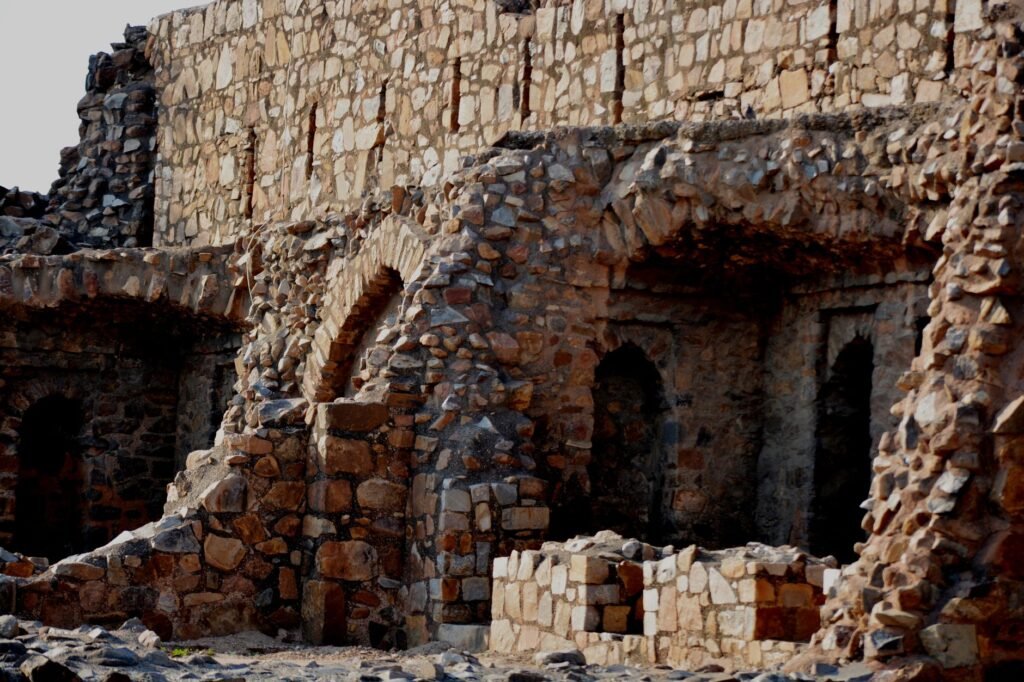
The Jammu and Kashmir government has approved an allocation of ₹10 crore for the comprehensive restoration of the historic Rattan Garh Fort in the Doda district. This significant financial commitment has been met with widespread welcome from local residents, who view the decision as a crucial step towards safeguarding the region’s rich heritage and bolstering its tourism potential. The initiative underscores a broader governmental focus on preserving the cultural and architectural legacy of Jammu and Kashmir.
Information reaching Tahir Rihat suggests that the Rattan Garh Fort, originally constructed in 1733, has a storied past, having transitioned from a royal stronghold to a correctional facility over the centuries. Today, it stands as one of the most prominent historical landmarks within the scenic Bhaderwah valley, a part of the larger Chenab valley region. The approval for its repair and renovation was reportedly sanctioned by the Chief Minister Omar Abdullah-led administration on Sunday.
The primary objectives of this restoration project, as outlined by officials, are to conserve the fort’s historical structure, enhance its overall condition, and develop it into a significant heritage and tourism attraction. The undertaking aims to meticulously preserve the fort’s architectural integrity and historical character while simultaneously improving visitor facilities. This approach is expected to create a more engaging and accessible experience for those interested in exploring the site.
Mohit Kotwal, a scholar deeply versed in the history and culture of Bhaderwah, highlighted the fort’s historical significance by noting that it is the sole remaining fort in the Bhaderwah valley. He recalled the existence of six other forts in the valley: Chattar Garh, Chinal Garh, Hirot Garh, Atal Garh, Tilak Garh, and Rahie Garh, none of which have survived to the present day. Kotwal emphasized that the Rattan Garh Fort, built by Raja Sampat Pal, represents an integral component of the region’s heritage. He further stated that its restoration will not only preserve its architectural and historical essence but also provide enhanced amenities for visitors, thereby enriching their experience.
The restoration of Rattan Garh Fort is anticipated to provide a substantial impetus to the tourism industry in Bhaderwah. Rashid Choudhary, a tourism strategist based in Bhaderwah, expressed his optimism regarding the government’s decision. He remarked that this is a welcome move, particularly given the large number of tourists who visit Bhaderwah annually, many of whom exhibit a keen interest in exploring the area’s heritage sites and historical monuments. Choudhary believes that the revitalization of Rattan Garh will further invigorate tourism in the region.
An official spokesperson elaborated on the initiative, stating that it aligns with the government’s overarching commitment to the preservation of Jammu and Kashmir’s diverse cultural and architectural heritage. The strategy involves developing heritage sites into attractive tourist destinations. The spokesperson identified Rattan Garh Fort as one of the key historical sites intrinsically linked to the rich heritage of Bhaderwah, an area renowned for its distinct cultural traditions, historical architecture, and picturesque landscapes.
The restoration efforts are expected to add a significant heritage dimension to Bhaderwah’s existing tourism circuit. This, in turn, is projected to lead to an increase in visitor footfall and stimulate local economic activity. The spokesperson further indicated that the government has, in recent months, initiated and approved several projects aimed at preserving and developing heritage assets across Jammu and Kashmir. A particular emphasis has been placed on restoring historically significant structures and integrating them into the broader tourism economy, thereby creating sustainable economic opportunities and promoting cultural tourism.
The Rattan Garh Fort’s strategic location and historical importance make it a prime candidate for heritage tourism development. The allocation of funds signifies a recognition of its potential to draw both domestic and international tourists. The project’s scope is expected to encompass structural repairs, aesthetic enhancements, and the development of modern visitor amenities such as interpretation centers, pathways, and viewing decks, all designed to be in harmony with the fort’s historical character. The successful completion of this restoration is anticipated to position Bhaderwah as a more prominent destination on the cultural tourism map of India, offering visitors a tangible connection to the region’s past while contributing to its future economic prosperity.


Tahir Rihat (also known as Tahir Bilal) is an independent journalist, activist, and digital media professional from the Chenab Valley of Jammu and Kashmir, India. He is best known for his work as the Online Editor at The Chenab Times.