


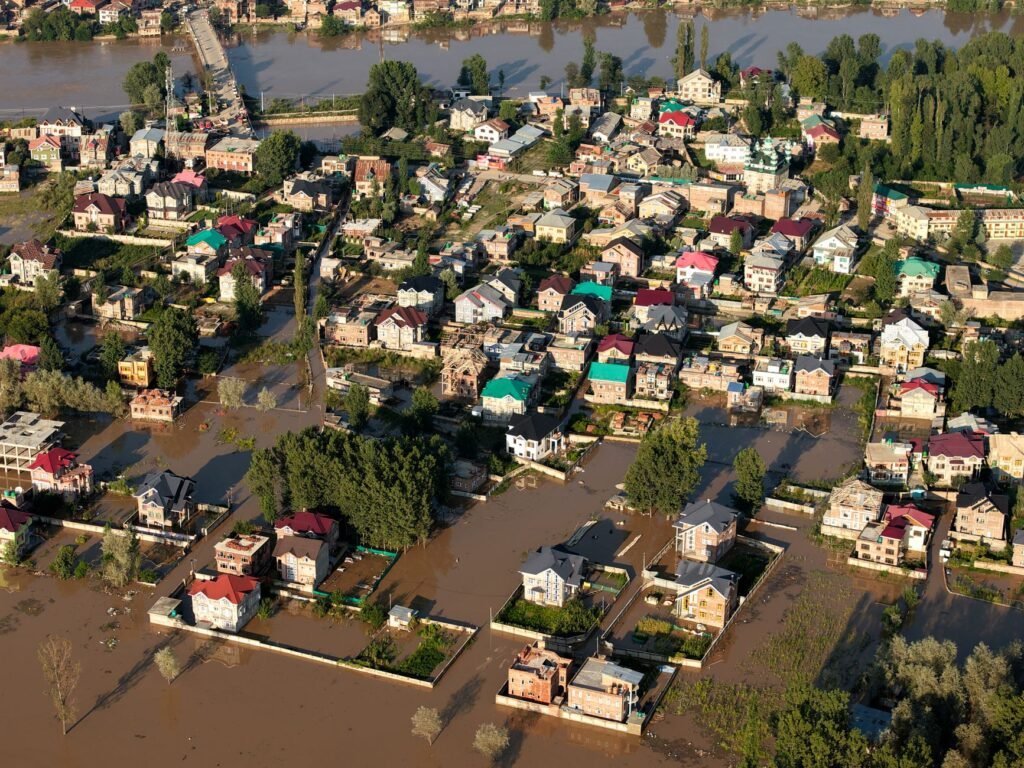
The Kashmir Valley is experiencing a concerning increase in cloudburst incidents, leading to significant loss of human life and widespread property damage. Officials have reported a sharp rise in these extreme weather events during the recent monsoon season.
In Jammu and Kashmir, a total of 44 cloudburst incidents have been recorded this year, resulting in the deaths of more than 20 individuals. The frequency of these events has become a major concern for authorities and residents alike. This week alone, the southern district of Kulgam and the northern district of Baramulla have been struck by cloudbursts, which in many instances triggered devastating flash floods in local streams and rivers. Numerous videos circulating on social media platforms vividly illustrate the sudden and dramatic surge in water levels in these waterways, a direct consequence of intense rainfall in the higher altitudes.
Information reaching Tahir Rihat suggests that other areas within the Union Territory have also been affected, including Bandipora, Shopian, and the popular tourist destination of Pahalgam in Anantnag district. On Thursday, a cloudburst in Shopian district caused floodwaters to inundate several villages, exacerbating the damage and disruption.
Dr. Mukhtar Ahmad, Director of the Meteorological Centre in Kashmir, has attributed the escalating frequency of cloudbursts to a confluence of factors. He pointed to the undeniable linkages with climate change as a primary driver. However, Dr. Ahmad also highlighted that improved reporting mechanisms are contributing to the perception of an increase. “Earlier, cloudbursts weren’t being reported the way these are happening now. If something happens to any remote village, it is on social media within no time. So that way, we get to know about more incidents,” stated Dr. Ahmad. He further elaborated that the number of cloudbursts has indeed seen an upward trend in Jammu and Kashmir over the past few years. According to Dr. Ahmad, the interplay of monsoon rains and local temperature variations is a significant trigger for these events in the region.
Experts in meteorology have emphasized the inherent unpredictability of cloudbursts, noting the current limitations in forecasting such specific phenomena. “Currently, we can predict rainfall, but not cloudbursts…people can only take precautions, especially in the hilly areas,” Dr. Ahmad explained. This lack of predictive capability underscores the vulnerability of communities in mountainous and hilly terrains, where cloudbursts can unleash sudden and destructive torrents of water, causing landslides, flash floods, and severe damage to infrastructure and agricultural land. The economic impact is also substantial, with damage to homes, businesses, and vital infrastructure like roads and bridges requiring extensive and costly repairs. The loss of livestock and damage to crops further compound the economic hardship faced by affected populations.
The geographical characteristics of Kashmir, with its high mountain ranges and deep valleys, make it particularly susceptible to the impacts of cloudbursts. The rapid melting of snow and glaciers, coupled with intense rainfall, can create a volatile environment where these events are more likely to occur. The increasing urbanization and developmental activities in ecologically sensitive areas may also be contributing to increased vulnerability, as natural drainage systems are altered and the capacity of the land to absorb water is reduced. The long-term implications of these increasing extreme weather events extend beyond immediate damage, potentially affecting tourism, agriculture, and the overall socio-economic stability of the region. Authorities are reportedly reviewing disaster preparedness and response mechanisms in light of these recurring incidents, with a focus on early warning systems and community resilience building. The challenge lies in balancing development needs with environmental protection and climate change adaptation strategies to mitigate future risks. The meteorological department continues to monitor weather patterns closely, providing advisories to the public and relevant agencies to minimize potential harm. The recurring nature of these events necessitates a sustained and comprehensive approach to disaster management and climate resilience in the region.


Tahir Rihat (also known as Tahir Bilal) is an independent journalist, activist, and digital media professional from the Chenab Valley of Jammu and Kashmir, India. He is best known for his work as the Online Editor at The Chenab Times.