


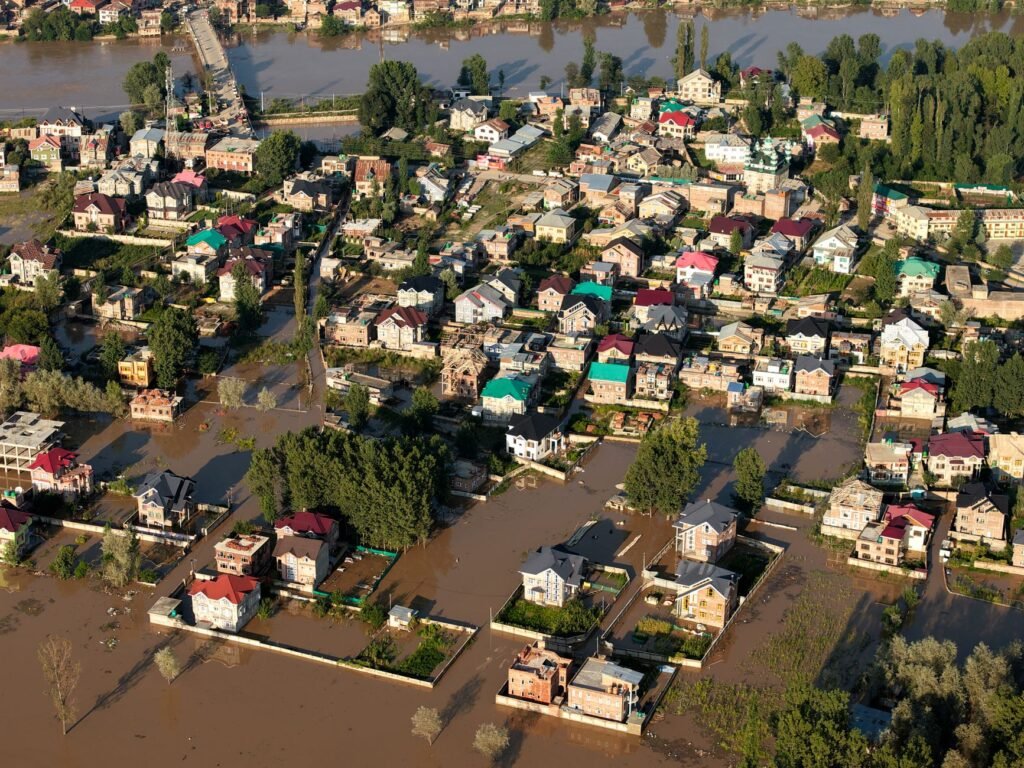
Several parts of Kashmir experienced significant disruption on Friday due to heavy rainfall, which led to flash floods in some districts. The Meteorological Department has issued forecasts indicating widespread light to moderate rainfall over the next 24 hours, raising concerns about further impacts on the region.
Overnight rains persisted into Friday morning across most of Kashmir, with Budgam, Baramulla, and Bandipora districts recording substantial precipitation. The downpour triggered flash floods, particularly in Baramulla and Bandipora, though officials confirmed no loss of life was reported. In Bandipora, the Saderkoot Bala area was affected by flash floods, causing damage to roads and a government school. Muddy water inundated the Government Primary School in Ganie Mohalla, Malpora, damaging classroom mats and necessitating the suspension of classes for the day. Information reaching Tahir Rihat suggests that authorities are closely monitoring the situation in these vulnerable areas, assessing the extent of damage and coordinating relief efforts where necessary.
In Baramulla district, the Brennar area of Sopore township also experienced flashfloods. Officials stated that while the floods impacted the locality, no property damage was reported in this instance. The continuous rainfall and subsequent flooding underscore the region’s vulnerability to extreme weather events, especially during monsoon seasons. The Meteorological Department’s updated forecast predicts continued widespread light to moderate rainfall for the next 24 hours. This includes potential spells of light to moderate rain and thunder across various locations, with a possibility of brief, intense heavy showers at a few spots. The forecast extends until August 4, indicating a sustained period of unsettled weather conditions for Jammu and Kashmir.
The impact of these weather events extends beyond immediate flooding. Infrastructure, including roads and educational facilities, has been directly affected, disrupting daily life and essential services. The suspension of classes at the Government Primary School in Bandipora highlights the challenges faced by the education sector during such natural calamities. Authorities are reportedly engaged in assessing the damage and implementing measures to mitigate further risks. The proactive monitoring by officials in affected districts signifies an effort to manage the ongoing situation and respond to emerging needs. The consistent rainfall pattern observed over the past day suggests a need for preparedness and resilience in the face of increasingly unpredictable weather patterns, a concern echoed by meteorological experts monitoring the region.
The broader implications of such weather events often include potential impacts on agriculture, transportation, and the overall economy of the region. While the source material does not detail these wider economic effects, the disruption to local infrastructure and services points to a direct impact on the daily lives of residents. The Meteorological Department’s forecast for continued precipitation suggests that the current challenges may persist, requiring ongoing vigilance and response from local administrations. The focus remains on ensuring public safety and minimizing damage as the weather system continues to influence the region. The commitment to monitoring the situation by officials is crucial in navigating the immediate aftermath and planning for future resilience against such meteorological phenomena.
The forecast for continued rainfall, including the possibility of heavy showers, indicates that the risk of further flash floods and landslides remains elevated. This necessitates a continued state of alert for residents in low-lying areas and those near riverbanks. The Meteorological Department’s role in providing timely and accurate forecasts is paramount in enabling authorities to implement necessary precautionary measures. The information disseminated by the department serves as a critical tool for disaster management agencies to prepare for potential exigencies. The ongoing weather pattern in Kashmir is a stark reminder of the dynamic nature of climate and its profound impact on communities, particularly in geographically sensitive regions like the Himalayas.
The intensity of the rainfall observed in districts like Budgam, Baramulla, and Bandipora points to localized heavy downpours that can quickly overwhelm natural drainage systems. The resulting flash floods, while not causing loss of life according to official reports, have demonstrated the capacity to disrupt normal life and damage essential facilities. The damage to classroom mats at the school in Bandipora, for instance, is a tangible consequence that affects the learning environment for students. Such incidents, though seemingly minor in isolation, contribute to a larger picture of the challenges posed by extreme weather events. The continuous monitoring by authorities is a testament to the seriousness with which these developments are being treated, aiming to provide a coordinated response to the unfolding situation across the affected areas of Kashmir.
The Meteorological Department’s projection of continued unsettled weather until August 4 suggests that the current spell of rain is not an isolated event but part of a broader weather system affecting the region. This extended forecast is vital for planning and resource allocation by disaster management teams. It allows for a more strategic approach to preparedness, enabling them to anticipate needs and deploy resources effectively. The emphasis on widespread light to moderate rain, coupled with the possibility of intense heavy showers at specific locations, highlights the unpredictable nature of the precipitation, making localized preparedness a critical component of the overall response strategy. The situation in Kashmir remains under close observation as the region navigates this period of inclement weather.


Tahir Rihat (also known as Tahir Bilal) is an independent journalist, activist, and digital media professional from the Chenab Valley of Jammu and Kashmir, India. He is best known for his work as the Online Editor at The Chenab Times.