


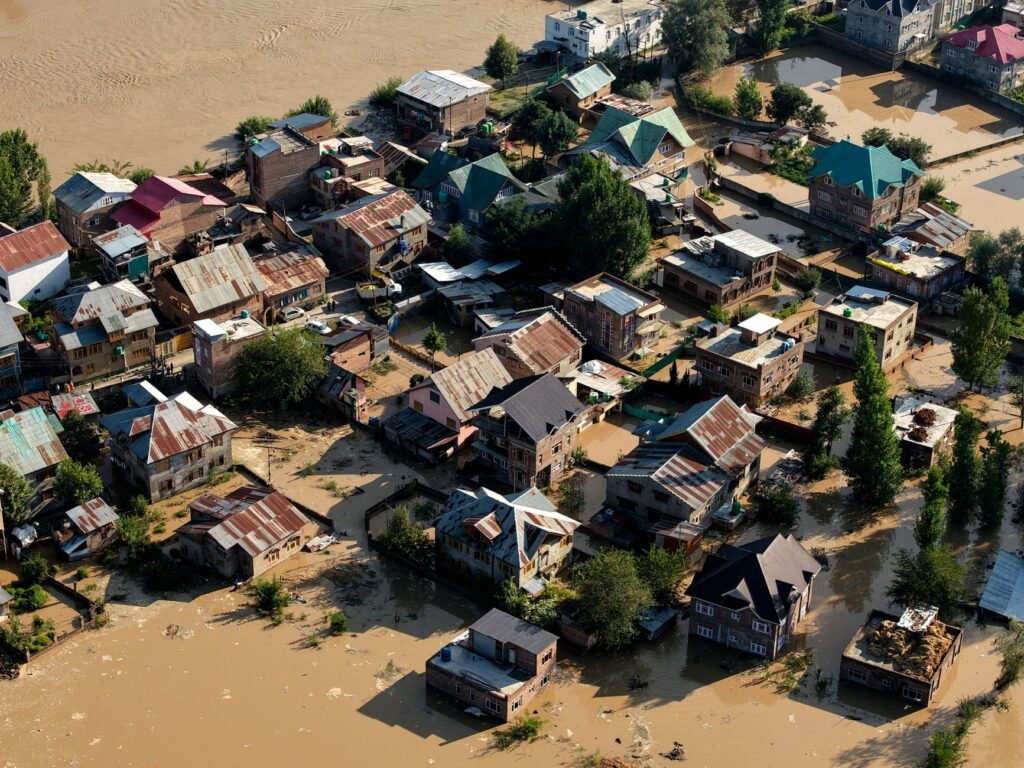
Mirwaiz Umar Farooq, the chief cleric of Kashmir, has issued a stark warning to the region, urging it to take heed of the devastating flash floods in Nepal and recognize the vulnerability of the Himalayas. He emphasized the critical need for the urgent protection of the Valley’s delicate ecosystem, advocating for a careful balance between development initiatives and environmental preservation.
Addressing the Friday congregation at the historic Jamia Masjid, Farooq articulated that the widespread devastation currently being witnessed in Nepal and across the broader Himalayan region should be a cause for profound concern for all inhabitants. “These are not isolated events,” he stated, as reported by Tribune India. “They are warnings of how vulnerable our mountain ecosystems have become as glaciers collapse.” He extended heartfelt solidarity to the people of Nepal during this challenging period, offering prayers for those who lost their lives, for the safety and swift recovery of the many individuals still missing, and for strength and relief for all those affected by the disaster.
Information reaching Tahir Rihat suggests that Jammu and Kashmir shares the same fragile Himalayan belt, making it equally susceptible to environmental threats. The Mirwaiz highlighted that the region is already experiencing an increase in the intensity of rainfall, cloudbursts, flash floods, and landslides. While acknowledging climate change as a significant contributing factor, he posed a critical question regarding the role of the region’s own development patterns in exacerbating the situation. Kashmir, endowed with breathtaking natural beauty encompassing mountains, lakes, and rivers, serves as a major tourist attraction and a vital source of livelihood for a substantial portion of its population. However, Farooq expressed deep concern over the reckless exploitation of this natural heritage for commercial gain and in the name of development. He detailed instances of mountains being cut and blasted for road construction, extensive tree felling, the establishment of hotels and buildings in ecologically sensitive zones, and the disturbance of natural drainage channels. He cautioned that the continuation of such practices without adequate scientific and environmental safeguards would inevitably pave the way for far more catastrophic disasters in the future.
Equally alarming, according to the Mirwaiz, is the persistent encroachment on wetlands, lakes, and flood channels. He implored the public to refrain from occupying or constructing on these vital areas, emphasizing that wetlands are not idle land but crucial natural buffers that absorb excess water and provide protection to human settlements. The precarious condition of the famed Dal Lake, he noted, serves as a stark illustration of how prolonged encroachment, unchecked construction, and environmental neglect can severely damage a precious natural system. He lamented that the lake is visibly shrinking day by day while the community appears indifferent, as if it were of no consequence.
The Mirwaiz asserted that safeguarding the environment is a matter of serious collective responsibility, requiring the active participation of authorities, planners, businesses, and citizens alike. He stressed the need for all stakeholders to recognize the significant consequences that development for infrastructure and tourism carry within a fragile Himalayan region. A critical balance must be struck between ecological preservation and human intervention in the pursuit of progress. The tragedy unfolding in Nepal, he concluded, must be viewed as a potent warning for Kashmir. As inhabitants of the Himalayas, any further disruption of the natural equilibrium of mountains, forests, wetlands, and waterways could lead to irreversible consequences. Protecting the environment today, he emphasized, transcends mere conservation; it is fundamentally about safeguarding lives, homes, and the future of the coming generations.


Tahir Rihat (also known as Tahir Bilal) is an independent journalist, activist, and digital media professional from the Chenab Valley of Jammu and Kashmir, India. He is best known for his work as the Online Editor at The Chenab Times.