


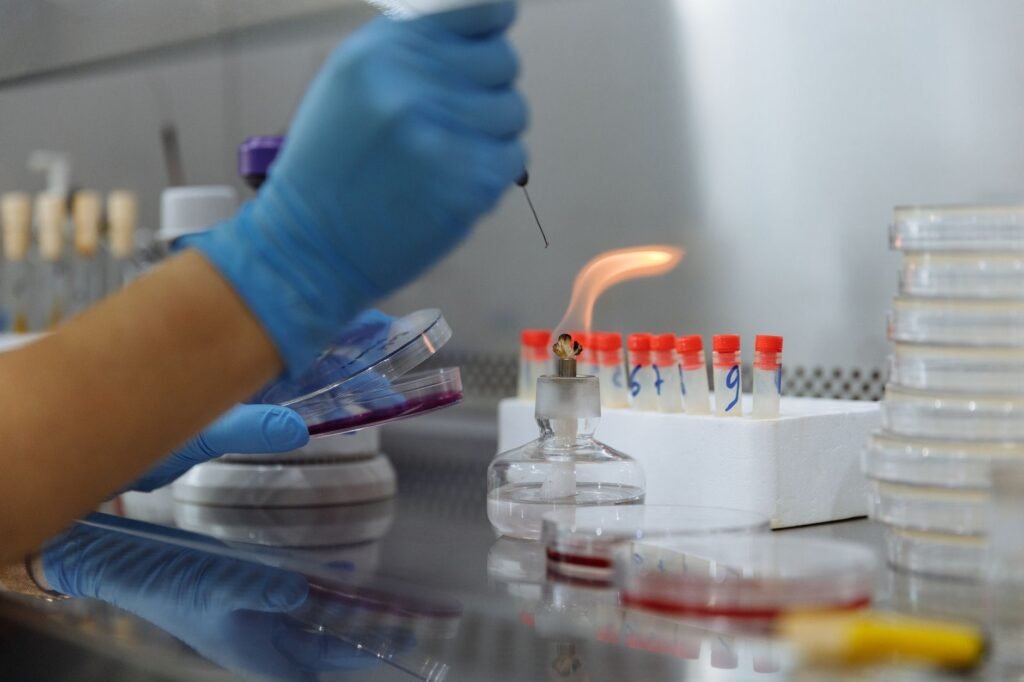
The Industrial Biotech Park (IBP) at Ghatti in Kathua is set to become a pivotal center for biotechnology-driven innovation, startup incubation, research, entrepreneurship, and industrial development, promising to generate new avenues for employment across the Union Territory of Jammu and Kashmir and the broader North India region. This transformative initiative was highlighted by Union Minister Jitendra Singh during a recent ceremony marking a significant Memorandum of Understanding (MoU) signing. The agreement, executed between CSIR-Indian Institute of Integrative Medicine (CSIR-IIIM), Jammu, and the Jammu and Kashmir Science, Technology and Innovation Council, formalizes the operationalization and management of the park.
Information reaching Tahir Rihat suggests that Minister Singh emphasized the strategic importance of the Kathua Biotech Park, describing it as a crucial milestone in the region’s developmental trajectory. He underscored Jammu and Kashmir’s inherent strengths in biodiversity, medicinal and aromatic plants, agriculture, horticulture, and floriculture, asserting that these natural resources hold immense potential for conversion into high-value products through advanced scientific research and biotechnological innovation. The park is envisioned as a collaborative platform, bringing together scientists, researchers, burgeoning startups, established entrepreneurs, industries, and farmers under a unified ecosystem to foster synergy and accelerate progress.
Singh further elaborated on the nation’s evolving innovation landscape under Prime Minister Narendra Modi’s leadership, articulating a governmental vision focused on cultivating job creators rather than solely job seekers. He cited flagship programs like Startup India, noting the dramatic expansion of India’s startup ecosystem since 2014, with the number of recognized startups surging from a few hundred to over two lakh. This growth, he stated, reflects a fundamental shift in the aspirations and entrepreneurial spirit of India’s youth. The minister drew parallels with the success of initiatives like the CSIR Aroma Mission and the ‘Purple Revolution,’ which have demonstrably improved the livelihoods of farmers in Jammu and Kashmir by transforming traditional agriculture into profitable ventures through lavender cultivation. He pointed to this success as a clear example of how scientific interventions, coupled with value addition and robust market linkages, can generate substantial employment, boost farmer incomes, and establish sustainable bio-based enterprises.
The minister highlighted that similar opportunities abound in sectors such as medicinal plants, aromatic crops, floriculture, and other biotechnology-dependent fields. He expressed his expectation that the Industrial Biotech Park will serve as a crucible for converting innovative ideas into successful commercial enterprises. The park is designed to actively promote biotechnology startups, agri-entrepreneurship, technology incubation, and commercialization, while simultaneously encouraging young innovators and researchers to develop solutions that directly address pressing societal needs. Singh outlined the essential components of a thriving innovation ecosystem, identifying four key pillars: ideas generated by the youth, the invaluable experience of elders, supportive government policies, and crucial investment from the industry. He stressed that sustainable innovation can only flourish when these four elements work in concert.
According to the minister, the government is committed to providing enabling policies, robust infrastructure, and institutional support. Scientific institutions will be instrumental in generating knowledge and technology, while the industry will focus on commercializing these innovations. Young entrepreneurs, in turn, will be empowered to transform novel ideas into successful ventures. Describing the MoU as more than a mere formal agreement, Singh characterized it as a testament to the government’s commitment to an integrated and collaborative approach, moving away from isolated efforts towards a unified strategy involving scientific institutions, academia, industry, and government departments. This collaborative framework, he stated, is expected to strengthen research capabilities, expedite technology transfer, promote entrepreneurship, and cultivate a dynamic biotechnology ecosystem within the region.
Singh conveyed strong optimism regarding the future prospects of the Industrial Biotech Park, predicting its emergence as a leading center for biotechnology innovation in North India. He anticipates that the park will bolster research endeavors, facilitate the commercialization of indigenous technologies, foster a vibrant startup culture, create significant employment opportunities, and make a substantial contribution to the knowledge-based economy of Jammu and Kashmir. Referencing Prime Minister Modi’s vision of ‘Viksit Bharat 2047,’ the minister expressed confidence that Jammu and Kashmir is well-positioned to be a major contributor to India’s journey towards becoming a developed nation. He reiterated that the Union Territory’s rich biodiversity, established scientific institutions, skilled youth population, abundant medicinal and aromatic plant resources, and a rapidly developing innovation ecosystem collectively place it in a unique position to drive biotechnology-led economic growth and significantly contribute to the nation’s overall economic transformation.
Earlier, in his welcome address, Dr. Zabeer Ahmed, Director of CSIR-IIIM Jammu, provided the Union Minister with an update on the various milestones achieved in the establishment of the Industrial Biotech Park and outlined the future plans designed to meet the objectives of this advanced facility. He informed the minister that the park, established by CSIR-IIIM with the support of the J&K Science & Technology Department and the Department of Biotechnology, Government of India, represents a significant step forward in leveraging the region’s scientific and natural resources for economic development.


Tahir Rihat (also known as Tahir Bilal) is an independent journalist, activist, and digital media professional from the Chenab Valley of Jammu and Kashmir, India. He is best known for his work as the Online Editor at The Chenab Times.