


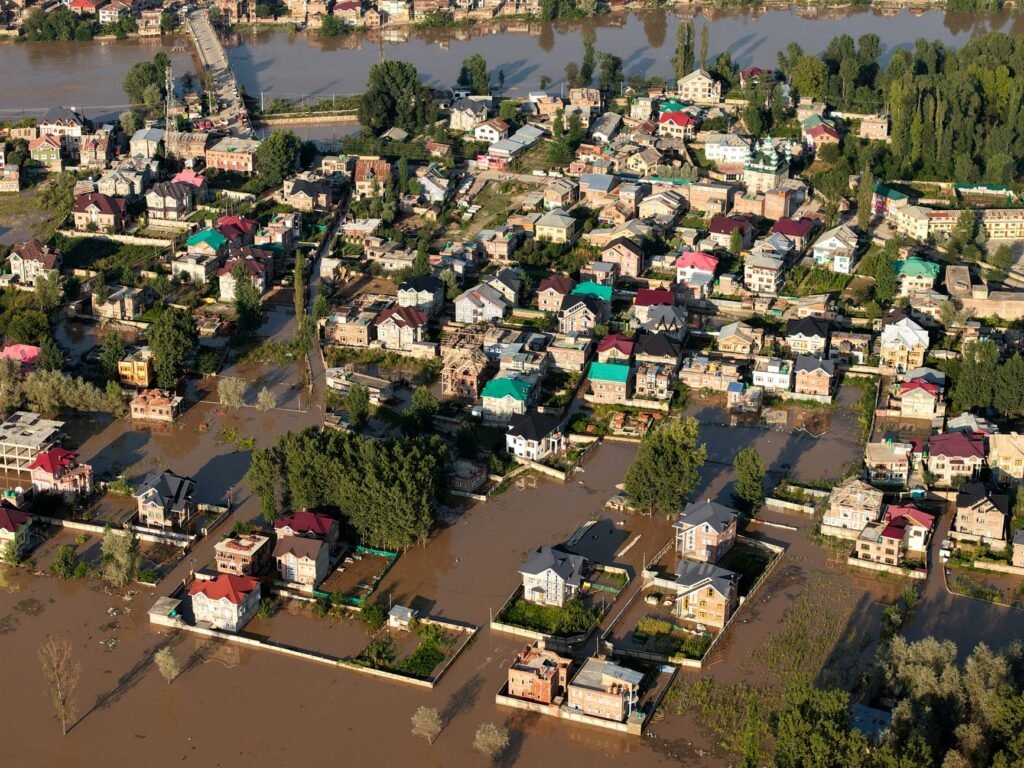
One year after a catastrophic cloudburst unleashed a devastating flash flood in Chashoti village of Kishtwar, Jammu and Kashmir, the anguish of loss continues to grip 30 families who are yet to recover the bodies of their loved ones. The tragedy, which struck on August 14 last year, claimed a total of 93 lives, leaving a scar on the region and raising critical questions about disaster preparedness and response.
The flash flood occurred near the last motorable point leading to the Machail Mata pilgrimage route. Hundreds of pilgrims were present at a community kitchen, partaking in food and water, when the sudden deluge swept through the area. The torrent, carrying boulders, trees, and debris, overwhelmed the unsuspecting devotees, burying many under the accumulated wreckage. The scale of the disaster was immense, affecting men, women, and children indiscriminately.
Information reaching Tahir Rihat from an RTI reply filed by activist Raman Sharma reveals the grim statistics of the incident. While 63 bodies were recovered in the aftermath of the disaster, a somber 30 victims remain unaccounted for, leaving their families in a state of prolonged uncertainty and grief. The incident also resulted in 127 people sustaining injuries, including those who were rescued from beneath the debris. Families of the deceased have reportedly received Rs 4 lakh each as per State Disaster Response Force (SDRF) norms.
In the immediate aftermath, extensive rescue operations were launched, involving the local administration, Army personnel, and police teams. These efforts were not only focused on search and recovery but also on restoring the vital infrastructure that was decimated by the flash flood. The Army played a crucial role in reconstructing roads and bridges, reconnecting the isolated Chashoti village with other parts of the Union Territory and providing essential relief to the affected residents. The sheer force of the cloudburst, which occurred around 11:30 am after nearly 90 mm of rainfall in a highly localized area, underscored the destructive potential of such extreme weather events.
The narrow and steep topography of the valley significantly amplified the impact of the disaster, turning the sudden surge of water into an unstoppable force. A comprehensive study conducted by the University of Jammu on the incident highlighted the increasing vulnerability of the north-western Himalayas to extreme hydrometeorological events, particularly cloudbursts, due to its unique topography and climate. The study delved into the meteorological, geomorphic, and geological factors that contributed to the high-intensity flashflood in the Chashoti nullah.
According to the University of Jammu’s findings, satellite imagery, rainfall data, and field assessments indicated that the cloudburst originated approximately 8 kilometers upstream of Chashoti. The study pointed out that sediment deposited along the left bank of the nullah played a significant role in augmenting the flashflood. Furthermore, active landslides and debris from a lower-order stream merging from the left bank contributed a massive quantity of sediment to the main nullah. This debris, combined with the substantial water flow, gained immense momentum due to the steep gradient of the stream channel, which drops around 40 meters within a kilometer upstream of Chashoti. This geomorphic characteristic, coupled with continuous sedimentation from landslides and temporary damming, significantly increased the destructive power of the debris-laden flashflood.
The Kishtwar administration faced criticism at the time for allegedly not halting the pilgrimage despite weather warnings issued by the Meteorological Department. In the wake of this tragedy, authorities have since adopted a more cautious approach, with measures in place to stop pilgrims from proceeding when weather advisories are issued, aiming to prevent a recurrence of such a devastating event.


Tahir Rihat (also known as Tahir Bilal) is an independent journalist, activist, and digital media professional from the Chenab Valley of Jammu and Kashmir, India. He is best known for his work as the Online Editor at The Chenab Times.