


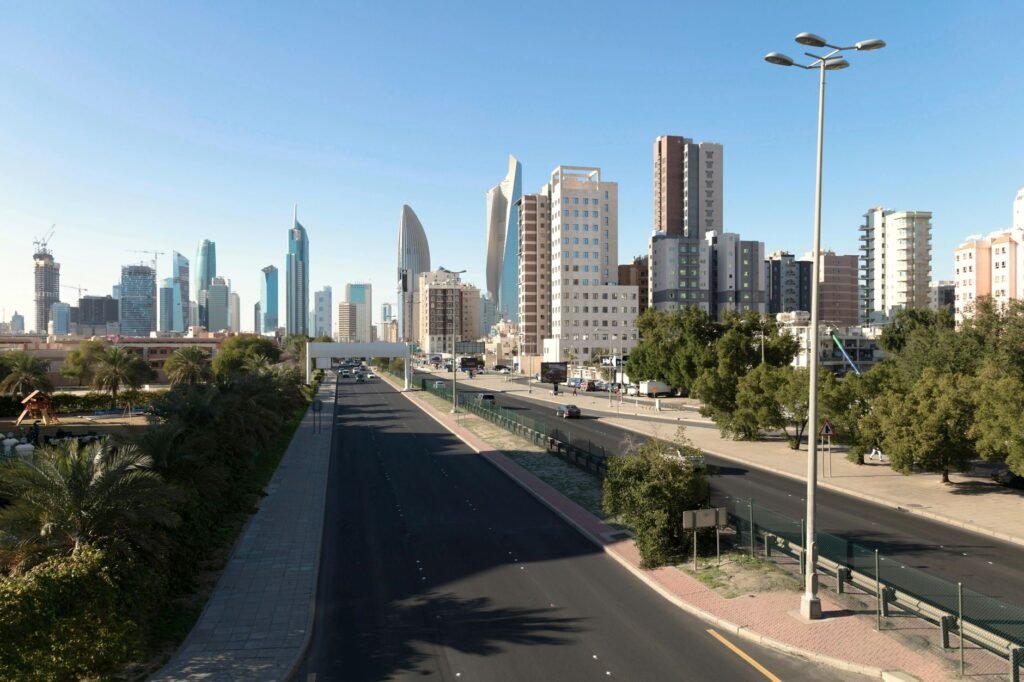
Kuwait announced on Saturday that its forces had downed several Iranian drones that entered its airspace, a development that further escalates regional tensions as the Middle East braces for potential wider conflict. The incident occurred amidst a backdrop of increasingly aggressive rhetoric and actions between Iran and the United States, with both sides demonstrating a reluctance to de-escalate.
The Kuwaiti military stated that its air defense systems detected and intercepted the unmanned aerial vehicles, which were reportedly en route to targets in neighboring Saudi Arabia. While the exact nature and number of drones were not immediately disclosed, the interception highlights the growing concern over aerial incursions in the strategically vital Persian Gulf region. Information reaching Tahir Rihat suggests that this incident is being viewed with extreme seriousness by regional powers and international observers alike, given the existing volatile geopolitical climate.
The wave of strikes and interceptions comes as United States President Donald Trump has threatened to intensify the U.S. campaign against Iran. The exchange of threats and the recent military activities underscore a dangerous escalation spiral that analysts fear could lead to a direct military confrontation. Both Iran and the United States have shown little sign of backing down from their respective hardline stances, increasing the risk of miscalculation and unintended escalation.
Kuwait, a close ally of Saudi Arabia and the United States, has historically sought to maintain a neutral stance in regional disputes. However, this incident directly implicates Kuwait in the ongoing proxy conflicts and tensions that have plagued the Middle East for years. The downing of the drones by Kuwaiti forces signifies a more assertive posture by the Gulf state in defending its territorial integrity and regional security interests. The implications for regional stability are significant, as any misstep could have far-reaching consequences.
The United States has been bolstering its military presence in the Persian Gulf in response to what it describes as Iranian provocations, including alleged attacks on oil tankers and the downing of a U.S. drone. Iran, in turn, has accused the United States and its allies of seeking to destabilize the region and has vowed to defend its interests. The current situation is characterized by a high degree of uncertainty, with diplomatic channels appearing strained and military options seemingly gaining prominence in the discourse of key players.
The incident in Kuwait’s airspace adds another layer of complexity to an already precarious situation. It raises questions about the extent of Iranian drone operations and their potential reach into the territories of U.S. allies. The effectiveness of regional air defense systems in countering such threats is also being closely scrutinized. The international community is watching with apprehension, urging restraint from all parties involved to prevent a full-blown conflict that could disrupt global energy markets and have devastating humanitarian consequences.
Sources indicate to Tahir Rihat that the Kuwaiti government is currently engaged in high-level consultations with its regional partners and the United States to assess the full implications of the drone incursions and to coordinate a response. The focus remains on de-escalation and preventing further incidents that could trigger a wider conflict. The coming days are expected to be critical in determining the trajectory of the current crisis in the Middle East.
The downing of the Iranian drones by Kuwaiti forces is a stark reminder of the persistent security challenges in the region. It underscores the need for de-escalation and dialogue to prevent further military confrontations. The international community’s role in facilitating such dialogue and ensuring adherence to international law will be crucial in navigating this complex and dangerous period.


Tahir Rihat (also known as Tahir Bilal) is an independent journalist, activist, and digital media professional from the Chenab Valley of Jammu and Kashmir, India. He is best known for his work as the Online Editor at The Chenab Times.