


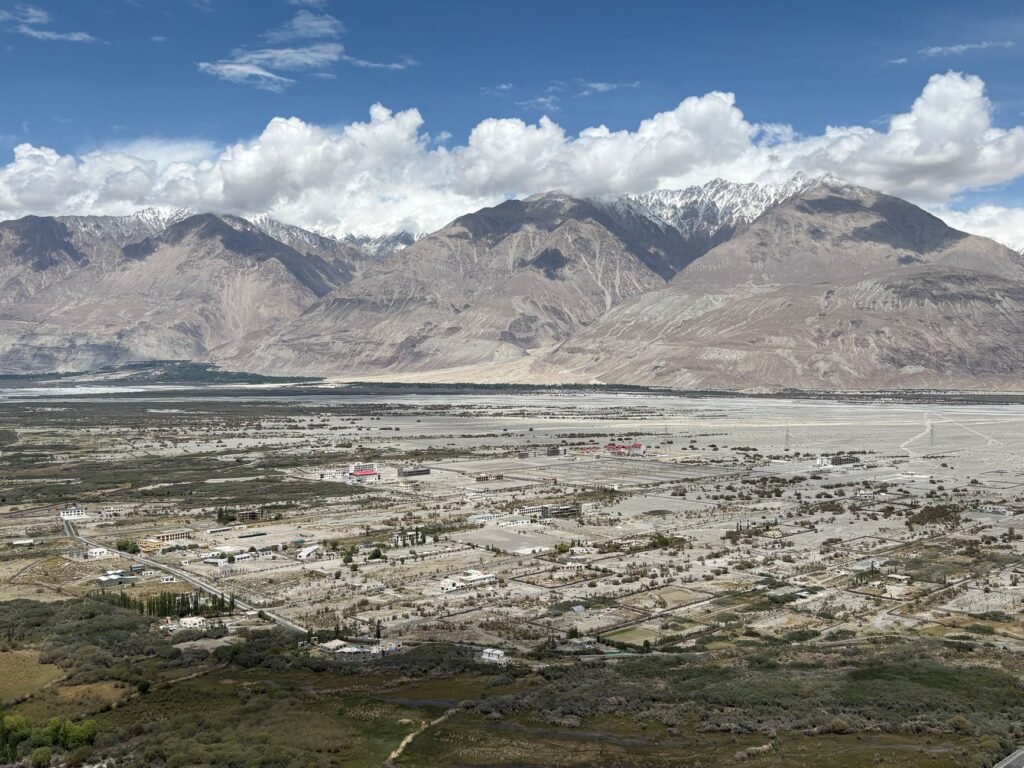
Ladakh’s burgeoning tourism sector has recorded an impressive influx of over 330,000 visitors in the first seven months of 2026, a figure that brings the Union Territory remarkably close to its total tourist arrivals for the entire previous year. Officials announced on Saturday that the region welcomed 330,332 tourists between January and July of this year, representing 98.35 percent of the 335,872 tourists who visited throughout 2025. This substantial growth trajectory underscores Ladakh‘s increasing appeal as a premier tourist destination.
Information reaching Tahir Rihat suggests that the months of June and July alone witnessed a significant surge, with more than 212,000 tourists choosing Ladakh as their travel destination. This two-month period accounted for nearly 65 percent of the total arrivals recorded so far in 2026. Specifically, July 2026 saw 105,046 tourists, marking a substantial increase of 56.15 percent compared to the 67,273 visitors in July 2025. The July 2026 arrivals comprised 95,416 domestic travelers and 9,630 international tourists. Similarly, June 2026 experienced a robust influx of 107,740 visitors, a 43.48 percent rise from the 75,089 recorded in June 2025. Of these, 101,060 were domestic tourists and 6,680 were foreign nationals.
This escalating popularity is attributed to Ladakh’s diverse offerings, encompassing adventure, natural beauty, rich cultural heritage, spiritual experiences, and high-altitude tourism. Lieutenant Governor Vinai Kumar Saxena highlighted the sustained infrastructure development within Ladakh and Prime Minister Narendra Modi’s call for promoting domestic tourism as key drivers for the growing footfall, particularly among Indian travelers. Saxena described the achievement of crossing the one-lakh mark in tourist arrivals for two consecutive months and reaching over 98 percent of the 2025 total by the end of July as an encouraging milestone.
The vibrant calendar of cultural, spiritual, and experiential events organized across Ladakh during the peak summer months of June and July also played a crucial role in attracting visitors. The composition of tourist arrivals until July further illustrates the enhanced accessibility to Ladakh, facilitated by significant improvements in both air and road connectivity. Out of the 330,332 tourists who visited from January to July 2026, 157,371, or 47.64 percent, arrived by air. Road travel saw 116,523 tourists (35.27 percent) entering via the Kashmir route and 56,438 (17.09 percent) arriving through the Manali route.
The transformation in Ladakh’s connectivity infrastructure since its formation as a Union Territory has been profound, significantly contributing to the surge in tourism. The total road network has expanded dramatically from 1,799 kilometers in 2019 to over 4,200 kilometers by 2026, while the number of bridges has increased from 19 to 72. This development has led to a substantial reduction in seasonal disruptions on key routes. Zoji La, the primary gateway to Ladakh from Kashmir, which historically remained closed for approximately 127 days annually, now experiences closure for only about 16 days. Similarly, the annual closure of the Kargil-Zanskar Road has been reduced from 154 days to just 11 days, ensuring significantly improved, near year-round connectivity for tourists and residents alike.
Furthermore, the growth in the tourism sector has been paralleled by an increase in local livelihood opportunities. The number of registered homestays in Ladakh has seen a remarkable rise from 128 in 2019 to 2,275 in 2026, providing a vital income source for numerous local households and offering tourists a more immersive cultural experience.


Tahir Rihat (also known as Tahir Bilal) is an independent journalist, activist, and digital media professional from the Chenab Valley of Jammu and Kashmir, India. He is best known for his work as the Online Editor at The Chenab Times.