


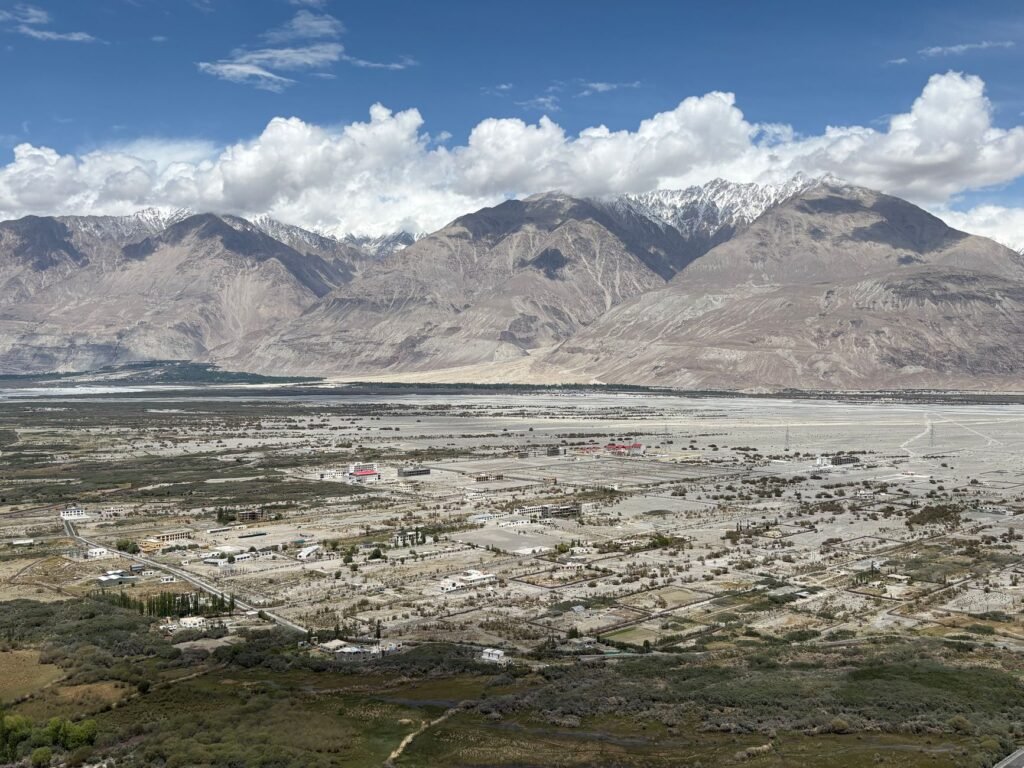
Ladakh has experienced substantial advancements in tourism, connectivity, and infrastructure since its establishment as a Union Territory in 2019, with visitor numbers reaching over 3.30 lakh by the close of July this year. Lieutenant Governor Vinai Kumar Saxena highlighted these achievements during the 80th Independence Day celebrations held at the historic Polo Ground. The significant influx of tourists in the first seven months of 2026 indicates a robust recovery and growth trajectory for the region’s tourism sector. Information reaching Tahir Rihat suggests that the tourist footfall during this period was nearly 98 percent of the total arrivals recorded for the entirety of 2025, underscoring a remarkable surge in interest and visitation.
Lieutenant Governor Saxena emphasized that the creation of Ladakh as a distinct Union Territory in 2019 marked a pivotal moment in its developmental journey. He stated that with the backing of the Government of India and in response to the populace’s aspirations, the administration has strategically prioritized key areas. These include the enhancement of infrastructure, streamlining of governance, improvements in healthcare and education, promotion of tourism, development of renewable energy sources, advancements in agriculture, ensuring water security, bolstering connectivity, and implementing comprehensive social welfare programs. These focused efforts aim to foster holistic growth across the Union Territory.
The expansion of the region’s road network has been a critical component of this development strategy. According to Lieutenant Governor Saxena, the road network has more than doubled, growing from 1,799 kilometers prior to the UT’s formation to over 4,200 kilometers. Concurrently, the number of bridges has seen a significant increase from 19 to 72. Projects of national importance, such as the Zojila Tunnel and the Leh Bypass, are further reinforcing all-weather connectivity, which is vital for both economic activity and accessibility in Ladakh’s challenging terrain. These infrastructure upgrades are designed to facilitate smoother transportation of goods and people, thereby boosting economic opportunities and improving the quality of life for residents.
Further decentralizing administration and bringing public services closer to the people, the Union Territory has seen the creation of five new districts: Sham, Nubra, Changthang, Zanskar, and Drass. This administrative restructuring also includes the establishment of 17 new tehsils and 16 new engineering divisions. These measures are intended to enhance administrative efficiency and ensure that governance is more responsive to the specific needs of different areas within Ladakh. The ongoing process of establishing Hill Councils in all seven districts is also a significant step towards strengthening grassroots democracy. These councils are expected to empower local communities and ensure that development initiatives are tailored to meet local requirements and priorities, fostering a more inclusive and participatory approach to governance.
In line with a commitment to sustainable development, Lieutenant Governor Saxena highlighted several key initiatives. These include Project Him Sarovar, the construction of Himalayan rock check dams, the development of the Indus River Green Corridor, and the expansion of tap-water coverage to more households. Significant strides have also been made in the renewable energy sector, with the commissioning of geothermal wells at Puga. These projects underscore Ladakh’s dedication to environmental conservation and the sustainable utilization of its natural resources, aiming to balance development with ecological preservation for future generations. The focus on renewable energy is particularly crucial in a region that relies heavily on imported fossil fuels.
The Pashmina sector, a vital source of livelihood for many in Ladakh, has also received considerable attention. Measures to strengthen this sector include the establishment of the Ladakh Pashmina Development Board, the provision of incentives to over 1,200 pashmina producers, and the creation of an Rs 8 crore revolving fund. This fund is designed to ensure timely payments to producers, thereby stabilizing their income and encouraging continued engagement in the industry. These initiatives aim to enhance the quality and marketability of Ladakhi Pashmina, supporting local artisans and contributing to the region’s economic diversification. The government’s support is expected to boost the entire value chain, from raw material production to final product marketing.
Lieutenant Governor Saxena expressed his gratitude to the various stakeholders who have contributed to Ladakh’s progress. He specifically acknowledged the efforts of farmers, Changpa herders, teachers, doctors, nurses, health workers, engineers, and all other citizens for their invaluable contributions. He urged the youth of Ladakh to actively pursue knowledge, embrace innovation, and capitalize on the emerging opportunities within the rapidly evolving Union Territory. His message emphasized the importance of continuous learning and adaptation in a dynamic global landscape. The call to action for the youth highlights their crucial role in shaping the future of Ladakh.
Concluding his address, Saxena stressed the imperative that development and environmental protection must progress in tandem. He articulated a vision for a Ladakh that remains prosperous, peaceful, vibrant, and ecologically sustainable for generations to come. This balanced approach, he suggested, is essential for ensuring long-term well-being and preserving the unique cultural and natural heritage of the region. The Lieutenant Governor’s remarks underscored a forward-looking perspective that integrates economic growth with environmental stewardship, aiming to create a resilient and thriving future for Ladakh.


Tahir Rihat (also known as Tahir Bilal) is an independent journalist, activist, and digital media professional from the Chenab Valley of Jammu and Kashmir, India. He is best known for his work as the Online Editor at The Chenab Times.