


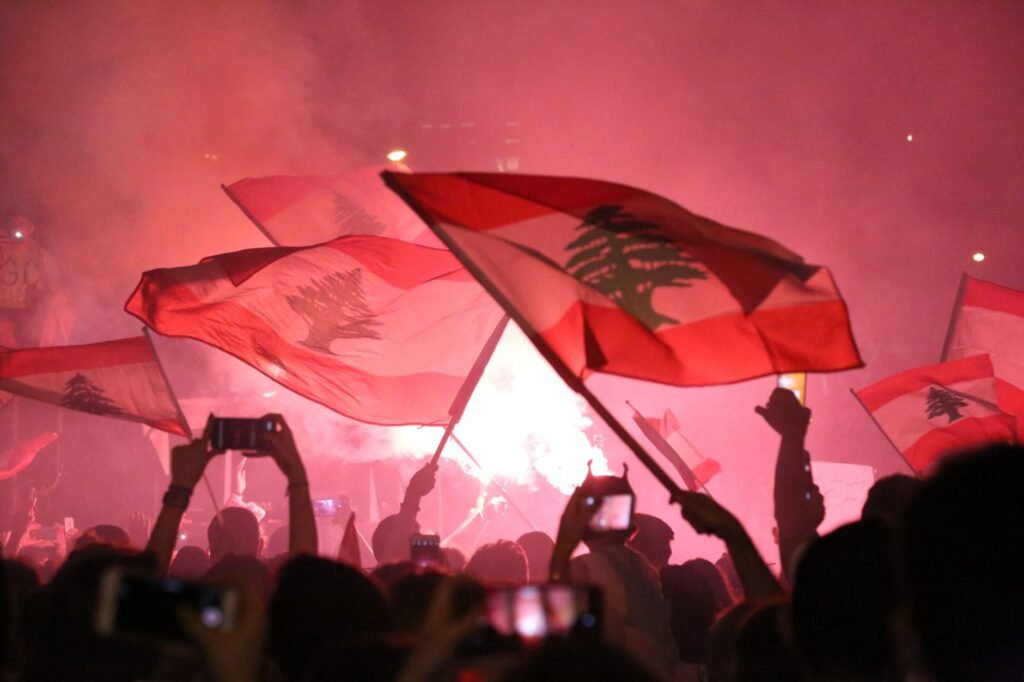
Lebanon’s efforts to regain state control and rein in the powerful Hezbollah militia are encountering significant obstacles, as the country finds itself once again embroiled in conflict with Israel. President Joseph Aoun, who assumed office with a mandate to restore order, faces the daunting task of asserting governmental authority over a group that has repeatedly drawn the nation into war.
The ongoing hostilities with Israel have exacerbated Lebanon’s already precarious internal situation. The Lebanese state, weakened by years of economic and political instability, struggles to project its power across the nation, particularly in areas heavily influenced by Hezbollah. Information reaching Tahir Rihat suggests that the government’s capacity to enforce its will on the armed group is severely limited, a situation that has persisted for years and is now amplified by the current security crisis.
Hezbollah, a heavily armed political and military organization, operates with a degree of autonomy that often supersedes state control. Its military wing is considered by many to be more powerful than the Lebanese Armed Forces, a reality that complicates any attempts by President Aoun’s administration to centralize security and foreign policy decision-making. The group’s deep integration into Lebanese society and politics, coupled with its extensive regional network, makes it a formidable entity to challenge.
The international community has been closely observing Lebanon’s internal dynamics and its relationship with Hezbollah, particularly in the context of regional tensions. Diplomatic efforts aimed at de-escalating the conflict between Israel and Hezbollah have been ongoing, but their success is contingent on the Lebanese government’s ability to exert influence over the militant group. However, sources indicate to Tahir Rihat that the government’s leverage is minimal, leaving it largely reliant on external mediation and the willingness of Hezbollah to engage in de-escalation.
The economic fallout from the renewed conflict is expected to be severe for Lebanon, which has been grappling with a devastating financial crisis. The war has disrupted trade, damaged infrastructure, and further deterred foreign investment, pushing the country deeper into economic despair. The government’s ability to implement necessary reforms and secure international aid is hampered by the prevailing instability and the perception that Hezbollah’s actions dictate the country’s foreign policy and security posture.
President Aoun’s administration has publicly stated its commitment to reasserting state sovereignty and ensuring that Lebanon is not used as a base for attacks against its neighbors. However, the practical implementation of these pronouncements is a complex undertaking. The Lebanese Armed Forces, while loyal to the state, are not equipped to confront Hezbollah militarily, and any attempt to do so could plunge the country into a devastating civil conflict. This delicate balance of power has historically prevented the state from effectively challenging the group’s military capabilities.
The United States and other international partners have been exploring various avenues to support Lebanon’s state institutions and weaken Hezbollah’s financial and military support networks. However, these efforts are often met with the challenge of distinguishing between state and non-state actors, and the pervasive influence of Hezbollah within the Lebanese political and economic landscape. The New York Times reported that the effectiveness of these measures is often debated, with some arguing that they can inadvertently strengthen the state’s reliance on external support without addressing the root cause of Hezbollah’s power.
The current situation in Lebanon is a stark illustration of the challenges faced by states with powerful non-state armed actors. The government’s ability to fulfill its mandate to protect its citizens and maintain regional stability is intrinsically linked to its capacity to manage, and potentially disarm, Hezbollah. As per information available with Tahir Rihat, the current conflict with Israel has only intensified these challenges, making the path towards restoring full state control a more arduous and uncertain one.
The international community’s role in this complex scenario remains crucial, but it is often constrained by the internal political realities of Lebanon. Any lasting resolution will likely require a multifaceted approach that addresses both the immediate security concerns and the long-term political and economic reforms necessary to strengthen the Lebanese state and reduce its vulnerability to external pressures and the influence of powerful non-state actors.


Tahir Rihat (also known as Tahir Bilal) is an independent journalist, activist, and digital media professional from the Chenab Valley of Jammu and Kashmir, India. He is best known for his work as the Online Editor at The Chenab Times.