


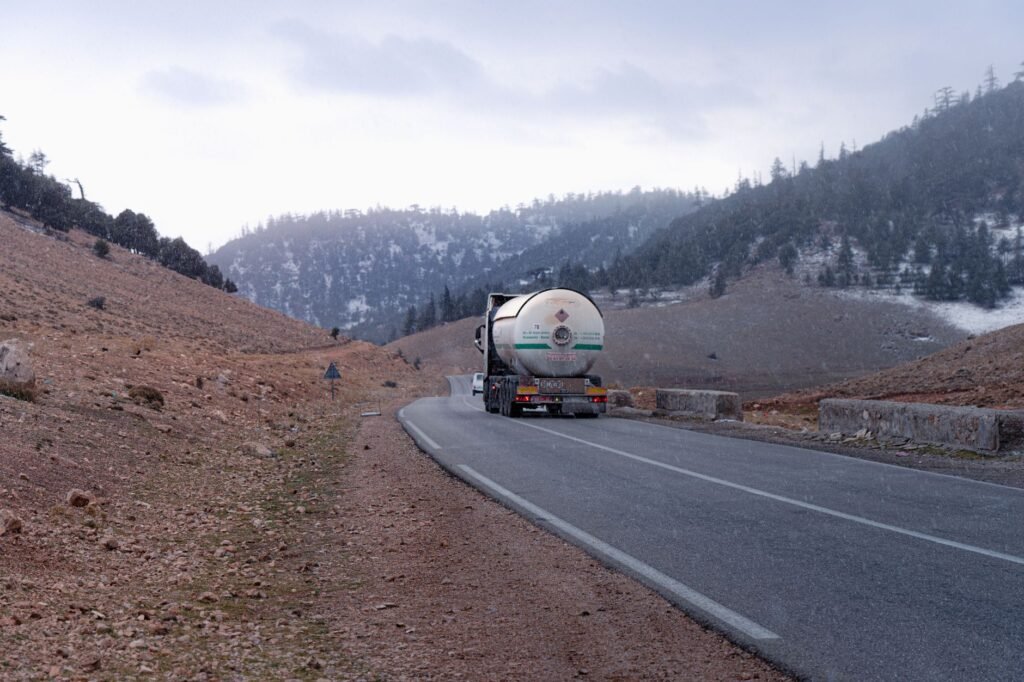
A potentially catastrophic incident was narrowly avoided on Tuesday when a tyre on a gas-filled LPG tanker caught fire along the vital Jammu-Srinagar National Highway. The alarming event occurred near Chanderkote in the Ramban district of Jammu and Kashmir, drawing immediate attention from local authorities and residents.
The tanker, laden with liquefied petroleum gas, was en route from Jammu to Srinagar when the fire erupted in one of its wheels. Information reaching Tahir Rihat suggests that the swift action of nearby individuals, coupled with the rapid deployment of Central Reserve Police Force (CRPF) personnel and the Fire and Emergency Services, was instrumental in preventing a larger disaster. Officials confirmed that the flames were successfully contained before they could spread to the main body of the tanker, which would have had severe consequences given the volatile nature of its cargo.
The incident caused a temporary disruption to traffic flow on the heavily trafficked highway. Commuters faced delays as firefighting operations were underway. However, authorities worked efficiently to manage the situation, and normal traffic movement was restored once the immediate threat was neutralized. The quick response from all involved parties was crucial in ensuring that the incident did not escalate into a major accident.
According to official statements, no casualties were reported as a result of the tyre fire. Furthermore, the LPG tanker itself sustained no damage, a testament to the effectiveness of the emergency response. The incident underscores the inherent risks associated with the transportation of hazardous materials on busy arterial routes and highlights the importance of robust safety protocols and prompt emergency interventions.
The Jammu-Srinagar National Highway serves as a critical lifeline for the Union Territory of Jammu and Kashmir, facilitating the movement of essential goods, supplies, and passenger traffic. Any significant disruption on this route can have cascading economic and social impacts. Therefore, the swift resolution of the LPG tanker fire incident was paramount in minimizing inconvenience to the public and ensuring the continuous flow of traffic.
Investigations into the exact cause of the tyre fire are expected to be initiated to determine if there were any mechanical failures or other contributing factors. Such incidents often prompt reviews of vehicle maintenance standards and transportation regulations, particularly for vehicles carrying inflammable substances. The authorities will likely examine the condition of the tanker and its tyres, as well as the route it was traversing, to identify any potential systemic issues.
The presence of the CRPF alongside local emergency services demonstrates the coordinated approach taken by security and civil defense forces in Jammu and Kashmir to manage such critical situations. Their combined efforts ensured that the scene was secured, the fire was extinguished, and the public was protected from potential harm. This collaborative response is a key element in maintaining safety and security across the region’s infrastructure.
The incident serves as a stark reminder of the constant vigilance required in managing transportation networks, especially those carrying high-risk cargo. The quick thinking and decisive action of the individuals who first noticed the fire and alerted the authorities, as well as the professional response of the emergency services, prevented a situation that could have led to significant loss of life and property. The successful containment of the fire without any casualties or damage to the tanker is a positive outcome in what could have been a dire scenario.
The long-term implications of such events often involve enhanced safety checks and a renewed focus on the training of drivers and support staff involved in the transportation of hazardous materials. Regulatory bodies may also review and update guidelines to ensure compliance with the highest safety standards. The resilience of the highway infrastructure and the efficiency of the response mechanisms were put to the test and proved effective in this instance.
The economic significance of the Jammu-Srinagar National Highway cannot be overstated. It is the primary route connecting the Kashmir Valley with the rest of India, crucial for the movement of goods, including essential commodities, fruits, and other produce from Kashmir, as well as supplies from the plains. Any prolonged closure or major incident on this highway can lead to shortages and price hikes in the valley. Therefore, the rapid restoration of traffic after the fire incident is a positive development for the region’s economy and its residents.
The officials involved in the response are to be commended for their professionalism and dedication. Their prompt action ensured that a potentially devastating event was reduced to a minor disruption. The incident, while alarming, ultimately highlights the effectiveness of the emergency response systems in place in the Ramban district and the broader Jammu and Kashmir region. Further details regarding the cause of the fire and any subsequent safety recommendations are expected to be released as the investigation progresses.


Tahir Rihat (also known as Tahir Bilal) is an independent journalist, activist, and digital media professional from the Chenab Valley of Jammu and Kashmir, India. He is best known for his work as the Online Editor at The Chenab Times.