


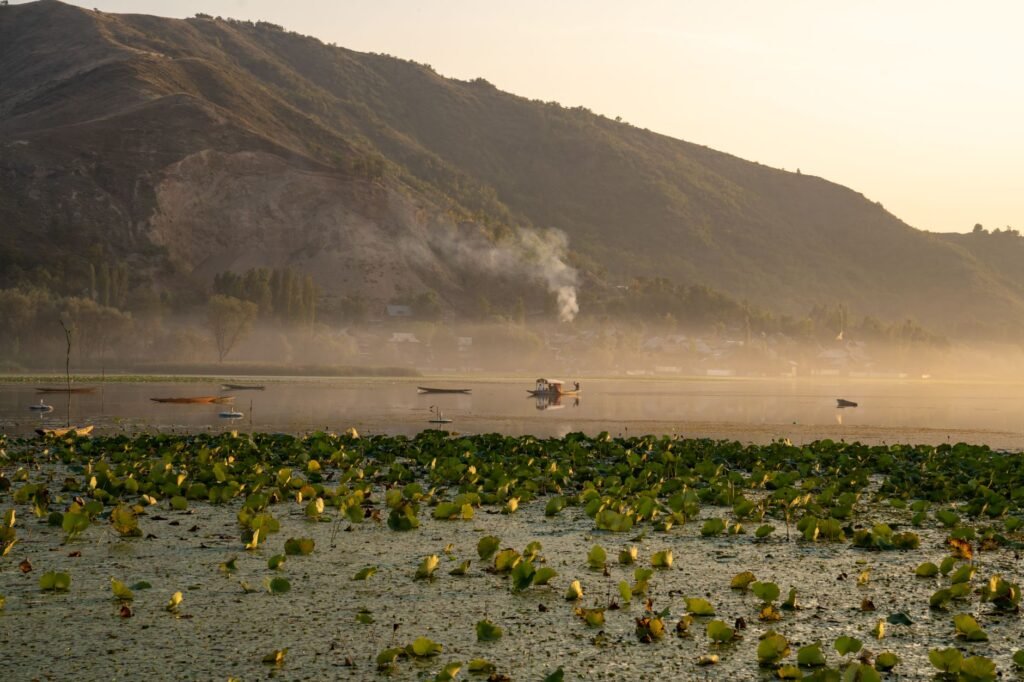
A stark report by the Central Pollution Control Board (CPCB) has revealed alarming levels of pollution in Jammu and Kashmir‘s Manasbal Lake, a vital freshwater body and a primary drinking water source for thousands. The findings indicate severe contamination with faecal matter, raw sewage, and solid waste, raising significant public health concerns across Ganderbal and Bandipora districts.
The CPCB’s assessment, conducted in April following a directive from the National Green Tribunal (NGT), paints a grim picture of the lake’s ecological health. Environmental activist Raja Muzaffar Bhat had filed a petition alleging that untreated sewage, including pesticides from 14 surrounding villages, was being discharged into the lake via the Lar Canal, leading to its degradation. Information reaching Tahir Rihat suggests that the NGT had instructed the CPCB to carry out these water quality tests in January of this year.
The CPCB’s analysis of seven water samples collected from the lake, natural springs, and the Lar Canal revealed that none met the Class B standards, which are considered acceptable even for outdoor bathing. The report categorizes five of the tested locations as Class D, signifying water only suitable for wildlife and fisheries. Only one natural spring managed to meet Class C standards, indicating it could be used for drinking water after treatment, while another spring failed to meet even the most basic quality benchmarks.
Elevated levels of faecal and total coliform bacteria were confirmed in the tested samples, directly pointing to contamination from human and animal sewage. This contamination renders the water unsafe for direct consumption. While most heavy metals were found to be below detectable limits, the presence of coliform bacteria is a critical indicator of potential health risks. The CPCB report specifically noted the direct flow of household wastewater, often referred to as grey water, into the lake. This is compounded by mixed municipal waste and plastics being openly dumped along the lake’s shores, particularly in the Kondabal area.
The primary driver of this widespread contamination, according to the report, is the unchecked discharge of untreated waste. Wastewater from seven neighboring villages enters the lake through the Lar Canal without any form of treatment or filtration. Raja Muzaffar Bhat has strongly condemned this situation, labeling it as criminal negligence on the part of the authorities. He stated that local residents in Safapora have been raising alarms about the deteriorating water quality for years, but their concerns have been consistently overlooked. Bhat further highlighted the dire implications, asserting that the government’s promise of a Sewage Treatment Plant (STP) to safeguard the lake never materialized. He emphasized the gravity of the situation, noting that between 50,000 and 60,000 people are supplied with this contaminated water for drinking purposes.
The ecological damage to Manasbal Lake, renowned for its scenic beauty and importance as a biodiversity hotspot, has far-reaching consequences. As a critical source of drinking water, its pollution poses an immediate threat to the health of the populations in Ganderbal and Bandipora districts. The presence of faecal matter and sewage indicates a high risk of waterborne diseases such as cholera, typhoid, and dysentery. The contamination also impacts the aquatic ecosystem of the lake, affecting fish populations and other wildlife that depend on its waters. The long-term environmental implications include potential eutrophication and a significant decline in the lake’s biodiversity.
Environmental experts have expressed deep concern over the findings, stressing the urgent need for immediate intervention. They point out that the unchecked discharge of untreated sewage is a common issue in many water bodies across the region, often due to inadequate infrastructure and a lack of stringent enforcement of environmental regulations. The case of Manasbal Lake serves as a stark reminder of the challenges faced in managing and protecting natural resources in the face of rapid urbanization and population growth. The failure to establish the promised STP, as highlighted by activist Raja Muzaffar Bhat, underscores a systemic issue of delayed or non-existent implementation of crucial environmental projects, despite clear directives and public outcry.
The CPCB’s classification of the water as unfit even for bathing underscores the severity of the pollution. The report’s detailed findings on coliform bacteria levels provide concrete evidence of the extent of faecal contamination. This contamination not only affects human health but also the overall ecological balance of the lake. The dumping of solid waste and plastics further exacerbates the problem, contributing to the physical degradation of the lakebed and harming aquatic life. The situation demands a comprehensive and multi-pronged approach involving robust waste management systems, effective sewage treatment, and strict regulatory oversight to prevent further environmental damage and protect public health.
The directive from the National Green Tribunal highlights the role of judicial intervention in environmental protection. However, the effectiveness of such directives hinges on their diligent implementation by the concerned authorities. The ongoing pollution of Manasbal Lake suggests a gap between judicial pronouncements and on-ground action. The activist’s accusation of criminal negligence points towards a need for accountability and a more proactive approach from government agencies responsible for environmental stewardship. The long-term sustainability of Manasbal Lake as a drinking water source and a valuable natural asset depends on immediate and sustained efforts to mitigate pollution and restore its ecological integrity.


Tahir Rihat (also known as Tahir Bilal) is an independent journalist, activist, and digital media professional from the Chenab Valley of Jammu and Kashmir, India. He is best known for his work as the Online Editor at The Chenab Times.