


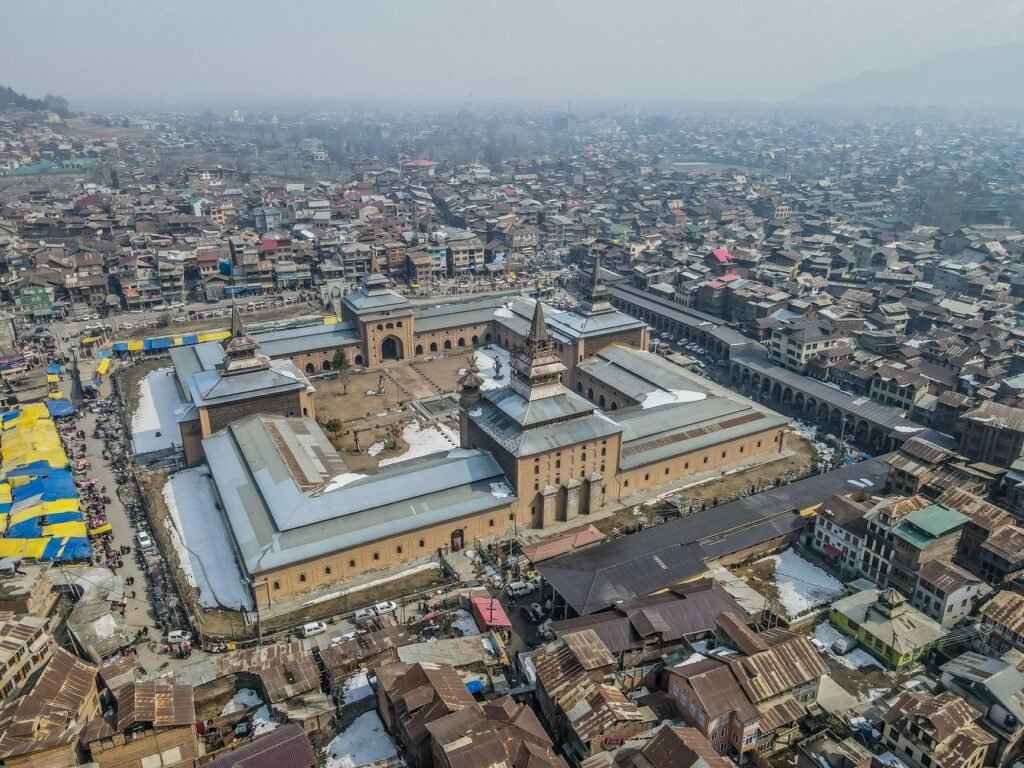
Kashmir’s chief preacher, Mirwaiz Umar Farooq, has asserted that he has been placed under house arrest, preventing him from participating in congregational prayers at the historic Jamia Masjid. The development comes on the eve of the commencement of Rabi-ul-Awwal, a significant month in the Islamic calendar. The Mirwaiz voiced his concerns and condemnation of the restrictions through a post on the social media platform X, formerly Twitter, on Friday.
In his statement, the Mirwaiz stated, “Placed under house arrest yet again, on the eve of the blessed month of Rabi-ul-Awwal. The repeated and arbitrary restrictions imposed on Fridays are highly condemnable.” Information reaching Tahir Rihat suggests that this is not the first instance of such curbs being imposed on the prominent religious leader, particularly on Fridays, which are central to congregational worship for Muslims.
Accompanying his statement, the Mirwaiz shared CCTV footage that appeared to show police personnel stationed outside the entrance to his residence in the Nigeen locality of Srinagar. This visual evidence was presented to substantiate his claim of being confined to his home. The move has raised questions about the prevailing situation in the region, especially in light of official pronouncements regarding a return to normalcy.
The Mirwaiz further articulated his skepticism regarding the administration’s narrative of normalcy, questioning the rationale behind the repeated restrictions. He posed a rhetorical question, asking, “if the authorities themselves do not trust their own ‘narrative of ‘normalcy’ enough to repeatedly prevent me from going to Jamia Masjid, what credibility does that narrative have?” This statement implies a disconnect between the official portrayal of the situation and the ground realities experienced by individuals like himself, who are integral to the religious and social fabric of Kashmir.
The timing of the alleged house arrest, just as the month of Rabi-ul-Awwal begins, is particularly noteworthy. Rabi-ul-Awwal marks the birth anniversary of the Prophet Muhammad, and it is a period of heightened religious observance and gatherings for Muslims. The inability of a prominent religious figure like the Mirwaiz to lead prayers at Jamia Masjid, a central mosque in Srinagar, during such a significant month is seen by many as a curtailment of religious freedom.
The Mirwaiz took the opportunity to extend greetings to Muslims across Jammu and Kashmir and around the world on the occasion of the arrival of Rabi-ul-Awwal. His message of goodwill, however, was overshadowed by his personal predicament, highlighting the ongoing challenges faced by religious leaders and the community in the region. The recurring nature of these restrictions, as alleged by the Mirwaiz, points to a pattern that continues to draw scrutiny and criticism from various quarters, both within and outside the Union Territory.
The Jamia Masjid in Srinagar holds significant religious and historical importance, serving as a focal point for religious discourse and community gatherings. Restrictions on the movement of the Mirwaiz, who is its chief preacher, are often viewed as a sensitive issue with broader implications for religious expression and public assembly. The authorities’ actions, as described by the Mirwaiz, are being interpreted by some as an attempt to manage or control religious activities during sensitive periods, even while maintaining a public stance of restored order.
The implications of such restrictions extend beyond the immediate inconvenience to the individual. They can foster a sense of unease and distrust among the populace, particularly when they are perceived as arbitrary or politically motivated. The Mirwaiz’s public questioning of the official narrative of normalcy suggests a broader debate about the extent of freedoms and the transparency of governance in Jammu and Kashmir. As the region navigates its path forward, such incidents continue to be closely watched by observers keen to understand the evolving socio-political landscape.
The repeated imposition of curbs on the Mirwaiz, especially on occasions of religious significance, raises pertinent questions about the balance between security imperatives and the fundamental rights of citizens. While authorities often cite security concerns as justification for such measures, the recurring nature and the timing of these restrictions invite deeper examination. The Mirwaiz’s public appeal through social media underscores the challenges faced by individuals in expressing their grievances and seeking redressal in the current environment.
The broader context of the region’s political and security situation often influences perceptions of such events. Any restrictions on prominent figures, particularly those who command significant public following, are likely to be interpreted through the lens of the prevailing political discourse. The Mirwaiz’s statement, therefore, serves not only as a personal account of alleged confinement but also as a commentary on the state of affairs in Jammu and Kashmir, prompting a re-evaluation of the claims of normalcy and the extent of civil liberties.
The arrival of Rabi-ul-Awwal is a time for spiritual reflection and community engagement. The alleged house arrest of the Mirwaiz during this period highlights the complex interplay of religious, social, and political factors that continue to shape life in Kashmir. The ongoing debate surrounding these restrictions is expected to persist as stakeholders continue to assess the ground situation and the adherence to democratic principles and human rights.


Tahir Rihat (also known as Tahir Bilal) is an independent journalist, activist, and digital media professional from the Chenab Valley of Jammu and Kashmir, India. He is best known for his work as the Online Editor at The Chenab Times.